
The Science of the Surge: How Luteinizing Hormone Ovulation Tests Help Identify Your Most Fertile Days
For individuals or couples planning for pregnancy, timing can make a meaningful difference. The fertile window is usually a short part of the menstrual cycle, and many people may not know exactly when it occurs. This is where Luteinizing Hormone, commonly known as LH, becomes useful.
An LH ovulation test is designed to detect a rise in LH in urine. This LH surge usually happens before ovulation, giving users a practical way to estimate when their most fertile days may be approaching. Ovulation tests are not a guarantee of pregnancy, but they can support more informed timing and cycle tracking at home. Research reviews on ovulation detection describe urinary LH testing as one of the common approaches used to help identify the fertile window.
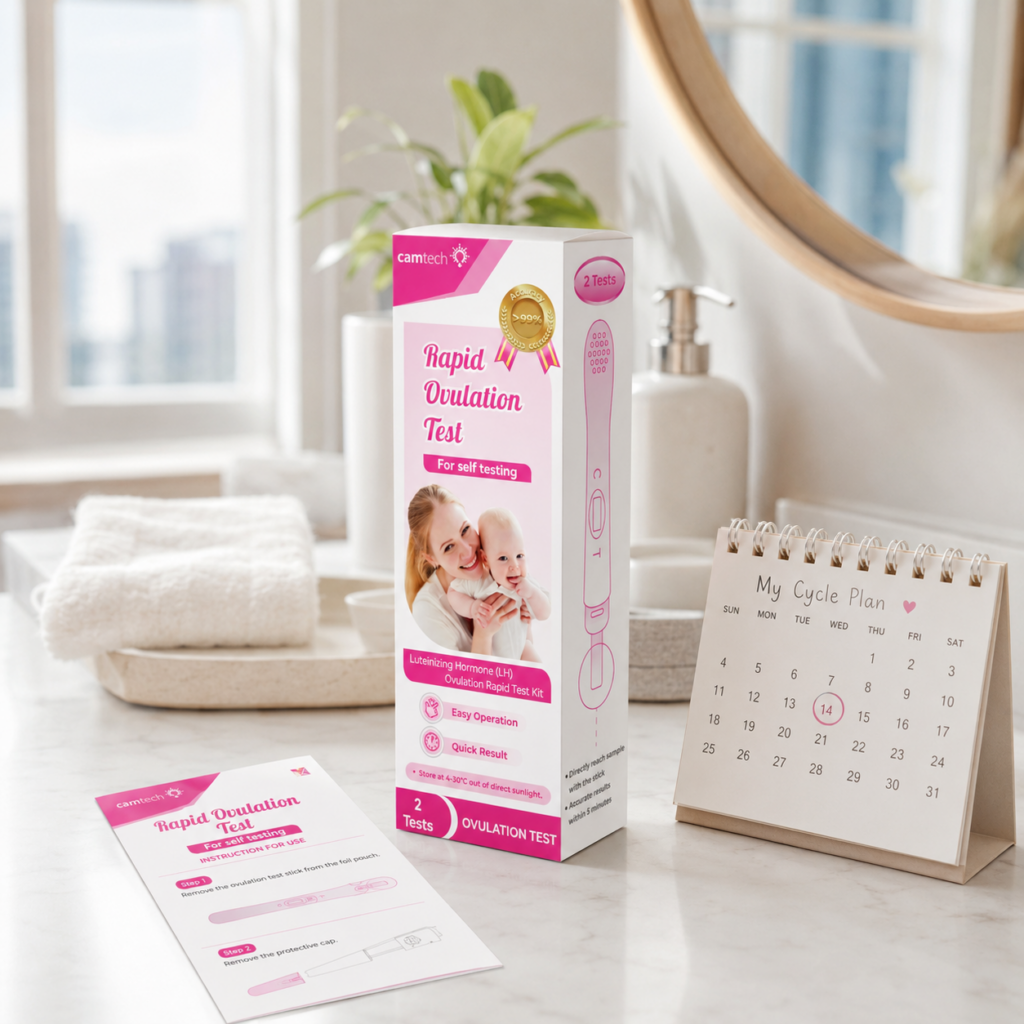
The Camtech Health LH Ovulation Test Kit is positioned as an at-home ovulation predictor that detects increased LH levels using a urine sample, with results typically available within minutes. The product page also notes that users can log results in the Camtech Health app to monitor cycle patterns over time.

What Is Luteinizing Hormone?
Luteinizing Hormone is a reproductive hormone involved in the ovulation process. In a typical menstrual cycle, LH levels remain relatively low for much of the cycle, then rise sharply before ovulation. This rise is known as the LH surge.
The LH surge helps signal the ovary to release an egg. Because this rise happens before ovulation, detecting LH in urine can help estimate when ovulation may be near. Singapore fertility education sources describe LH as one of the key hormones involved in ovulation.
Why the LH Surge Matters for Fertility Timing
The fertile window includes the days leading up to ovulation and the day of ovulation itself. This is because sperm can survive for a period of time in the reproductive tract, while the egg has a shorter window after release.
An LH ovulation test does not confirm that ovulation has definitely happened. Instead, it helps identify the hormonal signal that often comes before ovulation. This can be helpful for people who want to plan intercourse around the days when conception is more likely.
Some patient-facing fertility resources describe LH as rising roughly 24 to 36 hours before ovulation, although timing can vary between individuals and cycles.
How an At-Home LH Ovulation Test Works
An LH ovulation test usually works through a urine sample. The test strip or midstream applicator contains reagents that respond when LH is present above a certain threshold. Depending on the test format, the result may appear as lines or clear visual indicators.
The general process is:
- Collect or apply a urine sample according to the instructions
- Wait for the stated result time
- Read the result within the correct time window
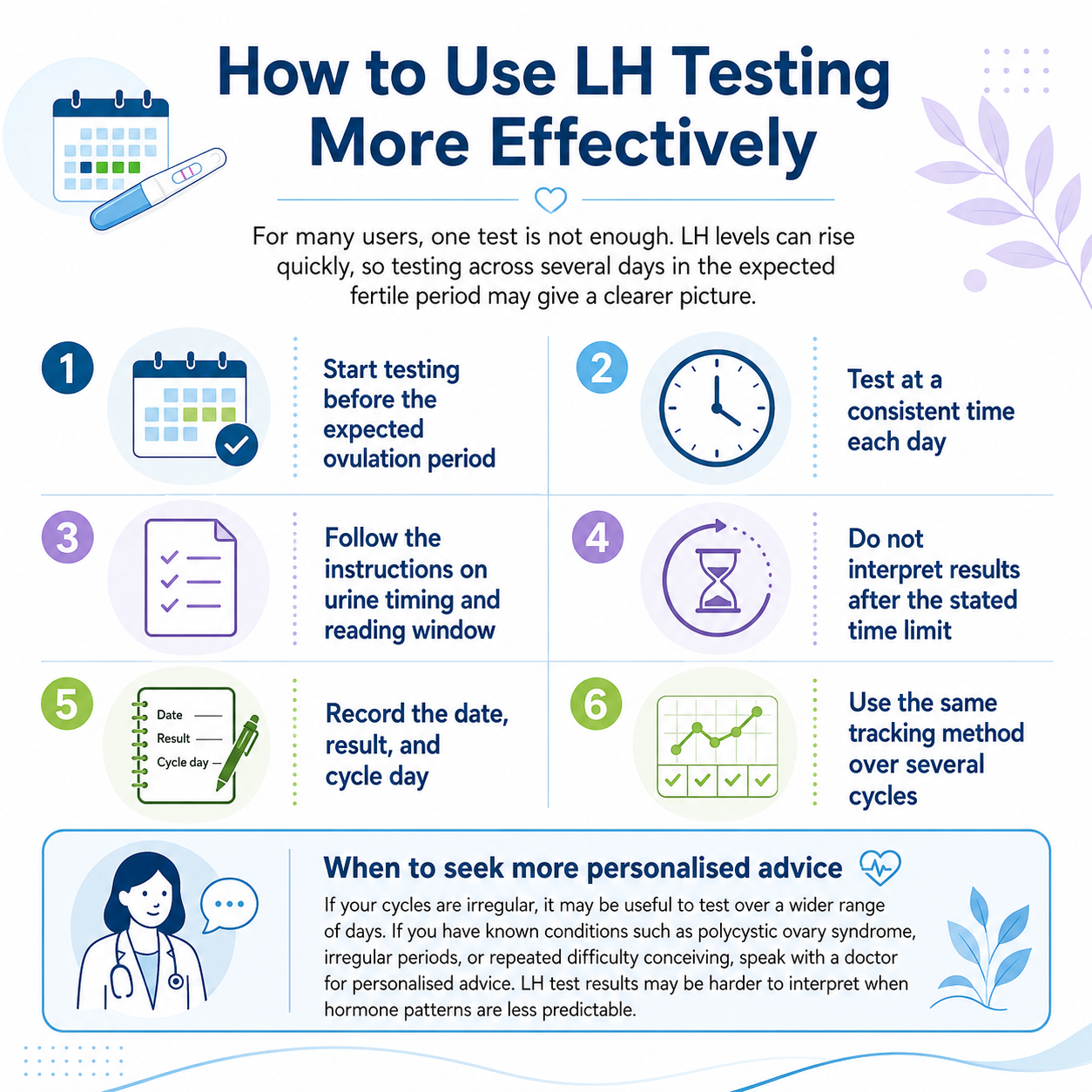
- Record the result and repeat testing across relevant cycle days
The Camtech Health product page describes a similar process: collect a urine sample, detect the LH surge, read the result, and track cycle patterns over time.
Why Testing at Home Can Be Useful
At-home LH testing can be useful for people who want a convenient way to understand their cycle patterns without needing to visit a clinic for every cycle-tracking step.
It may be suitable for those who:
- Want to identify their fertile window more clearly
- Have cycles that vary slightly from month to month
- Prefer private home-based testing
- Want to combine test results with app-based cycle tracking
- Are planning pregnancy and want a practical timing tool
The Camtech Health LH Ovulation Test Kit is available in multiple unit options and is designed for home use with urine samples. Results are typically available within minutes, which may support timely decision-making during the fertile window.
Using the Camtech Health App for Cycle Tracking
Logging LH test results can make cycle patterns easier to review over time. The Camtech Health app can be used to record test results and track cycle patterns, according to the product page.
This may help users notice:
Which cycle days commonly show a positive result
Whether the LH surge appears earlier or later than expected
How cycle length varies across months
When to discuss irregular patterns with a healthcare professional
Digital records should support, not replace, medical advice. If results are confusing or cycles remain irregular, a clinician can help assess whether additional evaluation is needed.


When to Seek Medical Advice
An LH ovulation test is a useful screening and tracking tool, but it does not assess all causes of fertility difficulty.
Consider speaking with a doctor if:
Your periods are very irregular or absent
You repeatedly do not detect an LH surge
You have been trying to conceive without success for a period of time
You have known reproductive health conditions
You experience unusual pain, heavy bleeding, or other concerning symptoms
You are unsure how to interpret your results
A healthcare professional may recommend further assessment, such as hormone testing, ultrasound evaluation, or partner-related fertility checks, depending on your situation.
Conclusion
The LH surge is one of the body’s key signals that ovulation may be approaching. By detecting this hormone rise in urine, an LH ovulation test can help users estimate their fertile window and make more informed decisions when planning pregnancy.
For Singapore users, at-home LH testing can offer a practical and private way to support cycle tracking. The key is to use the test according to instructions, record results consistently, and seek medical advice when cycle patterns or fertility concerns require further review.
References
- Su HW, Yi YC, Wei TY, Chang TC, Cheng CM. Detection of ovulation, a review of currently available methods. Bioengineering & Translational Medicine. (PMC)
- Leiva RA et al. Urinary Luteinizing Hormone Tests: Which Concentration Threshold Best Predicts Ovulation? Frontiers in Public Health. (Frontiers)
- Health Sciences Authority Singapore. Advertisements and promotions of medical devices. (HSA)
Medical Disclaimer
This article is for general educational purposes only and should not be taken as medical advice, diagnosis, or treatment. An LH ovulation test helps detect a luteinizing hormone surge and does not guarantee ovulation, pregnancy, or fertility outcomes. Always read and follow the product instructions. If you have irregular cycles, known reproductive health conditions, or concerns about fertility, consult a qualified healthcare professional in Singapore.
*Visuals assisted by AI.
Frequently Asked Questions (FAQs)
1. What does a positive LH ovulation test mean?
A positive LH ovulation test suggests that an LH surge has been detected. This may indicate that ovulation could occur soon, but it does not guarantee that ovulation will definitely happen or that pregnancy will occur.
2. When should I start using an LH ovulation test?
This depends on your cycle length. Many users begin testing a few days before their expected ovulation period. If your cycles are irregular, you may need to test across a wider range of days or speak with a healthcare professional for guidance.
3. Can I use an LH ovulation test if my period is irregular?
You can, but the results may be harder to interpret if your hormone patterns vary significantly. If you often have irregular or missed periods, it is advisable to consult a doctor, especially if you are actively trying to conceive.
4. Is an LH ovulation test the same as a pregnancy test?
No. An LH ovulation test detects luteinizing hormone to help estimate the fertile window. A pregnancy test detects hCG, a different hormone associated with pregnancy. The two tests serve different purposes.