
Guide to LH Ovulation Test Kits
By Stuart Chan

For many couples and individuals, the journey toward parenthood is an exciting yet complex process. One of the most critical factors in successful conception is timing. Since a woman is only fertile for a few days each month, knowing exactly when ovulation occurs is essential.
This is where the LH Ovulation Test Kit becomes an invaluable tool. By detecting the hormonal shifts that precede the release of an egg, these kits take the guesswork out of your cycle.
What is LH and Why Does it Matter?
Luteinizing Hormone (LH) is a hormone produced by the pituitary gland. While it is always present in small amounts, levels rise significantly approximately 24 to 48 hours before ovulation. This dramatic increase is known as the “LH Surge.”
The LH surge serves as the biological trigger that tells the ovary to release a mature egg. Because the egg only lives for about 12–24 hours after release, and sperm can survive inside the female reproductive tract for up to five days, identifying this surge allows you to time intercourse during your “fertile window” for the highest chance of pregnancy.
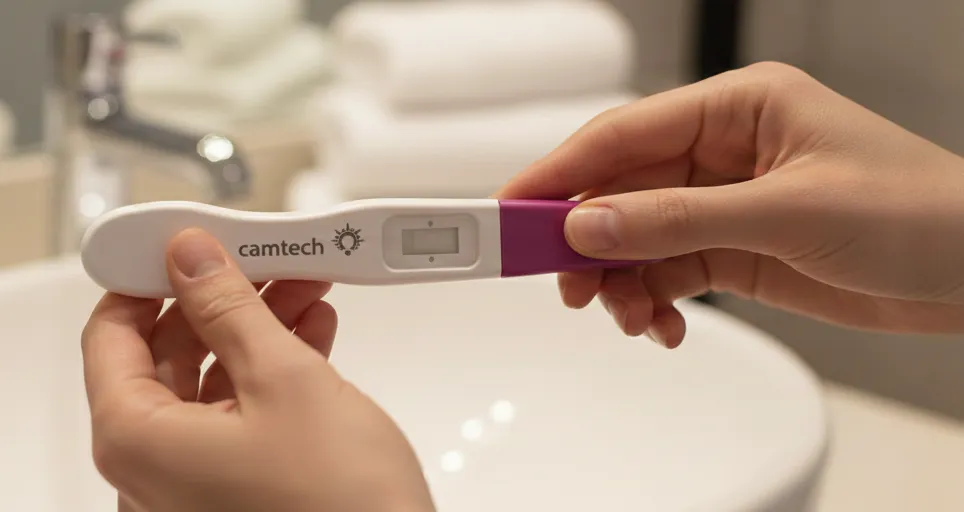
How Does the Camtech Health LH Ovulation Test Kit Work?
The Camtech Health LH Ovulation Test Kit is a rapid, lateral flow immunoassay designed for the qualitative detection of LH in urine. Much like a pregnancy test, it uses antibodies to detect specific hormone levels.
When the LH in your urine reacts with the reagents on the test strip, a coloured line appears. A positive result, where the test line is as dark as or darker than the control line, indicates that you are likely to ovulate within the next two days.
When Should You Start Testing?
To use an LH ovulation test kit effectively, you first need to determine the length of your menstrual cycle. Count the first day of your period (bleeding) as Day 1.
- For a 28-day cycle: Start testing on Day 11.
- For irregular cycles: Use your shortest cycle length in the last six months to determine your start date.
Consistency is key. It is generally recommended to test at the same time each day, ideally between 10:00 AM and 8:00 PM, as LH is often synthesised in the morning and may not appear in the urine until later in the day.
Benefits of Using At-Home Fertility Kits
In the modern era of digital health and diagnostics, at-home testing provides privacy, convenience, and empowerment.
- Accuracy: High-sensitivity kits provide results with 99% accuracy in laboratory studies at detecting the LH surge when used according to instructions.
- Ease of Use: Simple “dip and read” or “midstream” methods make it accessible for everyone.
Stress Reduction: Switching from ‘best-guess’ counting to data-driven accuracy can reduce the emotional stress often associated with trying to conceive.

Tips for the Best Results
- Limit Fluid Intake: Avoid drinking large amounts of water for two hours before testing, as diluted urine can mask the LH surge.
- Don’t Use First Morning Urine: Unlike pregnancy tests, LH is better detected later in the day.
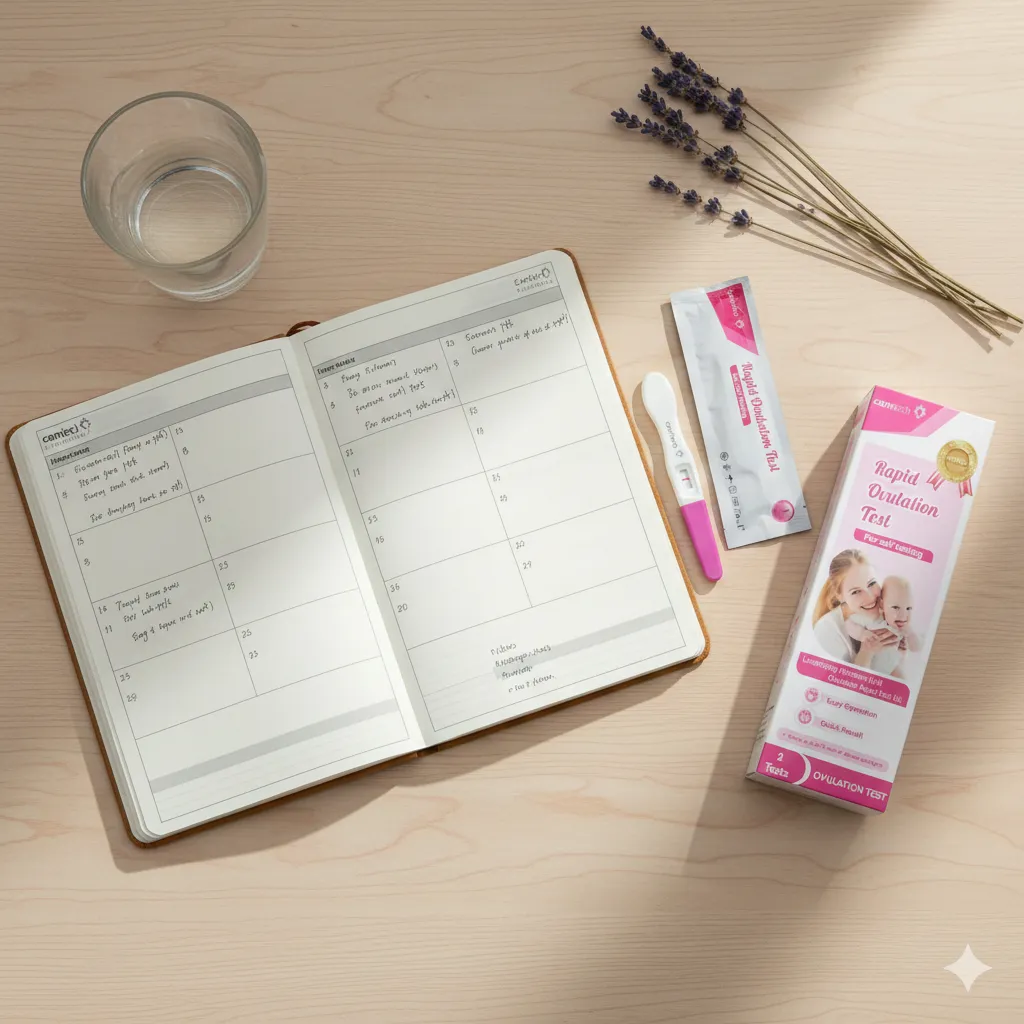
- Track Your Results: Keeping a log (either in a journal or the Camtech health app) helps you spot patterns over several months.
This article is for informational purposes only and does not constitute medical advice. Always consult with a healthcare professional or fertility specialist for personalised diagnostic information and treatment.
References
- NHS (UK): Planning a pregnancy – How to get pregnant.
- Mayo Clinic: How to use ovulation predictor kits.
- Journal of Clinical Medicine: Diagnostic Accuracy of Home Ovulation Predictor Kits.
Frequently Asked Questions (FAQs)
- Can an LH test kit guarantee I will get pregnant?
No. While the kit accurately predicts the LH surge that precedes ovulation, pregnancy depends on many factors, including sperm health, fallopian tube patency, and uterine environment. - What if I get a faint line on the test?
A faint line is usually considered a negative result. For an LH test to be positive, the test line must be as dark as or darker than the control line. - Does PCOS affect LH test results?
Women with Polycystic Ovary Syndrome (PCOS) may have elevated LH levels throughout their cycle, which can lead to “false positives.” If you have PCOS, consult your GP for alternative tracking methods. - How many days in a row should I test?
Most women identify their LH surge within five days of testing. By beginning on Day 11 of your cycle, the Camtech Health 5-unit pack provides focused coverage for your most fertile window, turning calendar estimates into data-driven insights for your fertile window..
DISCLAIMER
General Information Only: This article is provided for educational and informational purposes only and is not intended as a substitute for professional medical advice, diagnosis, or treatment. Always seek the advice of your physician or a qualified fertility specialist with any questions you may have regarding a medical condition or reproductive health.
Diagnostic Limitations: The Camtech Health LH Ovulation Test Kit is an in-vitro diagnostic (IVD) medical device intended for the qualitative detection of Luteinizing Hormone (LH) in urine to aid in the prediction of ovulation. A positive result indicates the presence of an LH surge and suggests that ovulation is likely to occur in the next 24–48 hours; it does not guarantee that ovulation will occur or that conception will be achieved.
Not a Definitive Diagnosis: This test is a screening tool and should not be used as the sole basis for a diagnosis of infertility or for contraceptive purposes. Results should be interpreted in conjunction with other clinical symptoms and professional laboratory findings. Certain medical conditions (e.g., PCOS, pregnancy, or recent use of fertility drugs) may yield inaccurate or “false positive” results.
Advisory: If you have been trying to conceive unsuccessfully for over 12 months (or 6 months if over age 35), please consult a licensed healthcare professional. In accordance with Singapore’s Health Sciences Authority (HSA) guidelines, users should always read the product insert and instructions for use (IFU) provided in the packaging before testing.