
An Introduction to Non-Invasive Colorectal Health Screening
By Stuart Chan

It is a statistic that is hard to ignore: according to the Singapore Cancer Registry, colorectal cancer consistently ranks as the number one cancer among men and the number two cancer among women in Singapore.The significance of these figures was recently highlighted in March, which is observed globally and locally as National Colorectal Cancer Awareness Month—a time dedicated to increasing screening rates and education.
Despite these efforts, a recent commentary in The Straits Times highlighted a worrying trend: Singapore’s cancer screening gap is widening at a critical moment. Data shows that screening rates for colorectal cancer hover around 44.9%, significantly lower than international benchmarks.
Routine screening is essential, yet many asymptomatic individuals delay it due to the preparation and time required for clinical procedures. For those seeking supplementary screening options to stay proactive about their health, there is now an alternative stool test available.
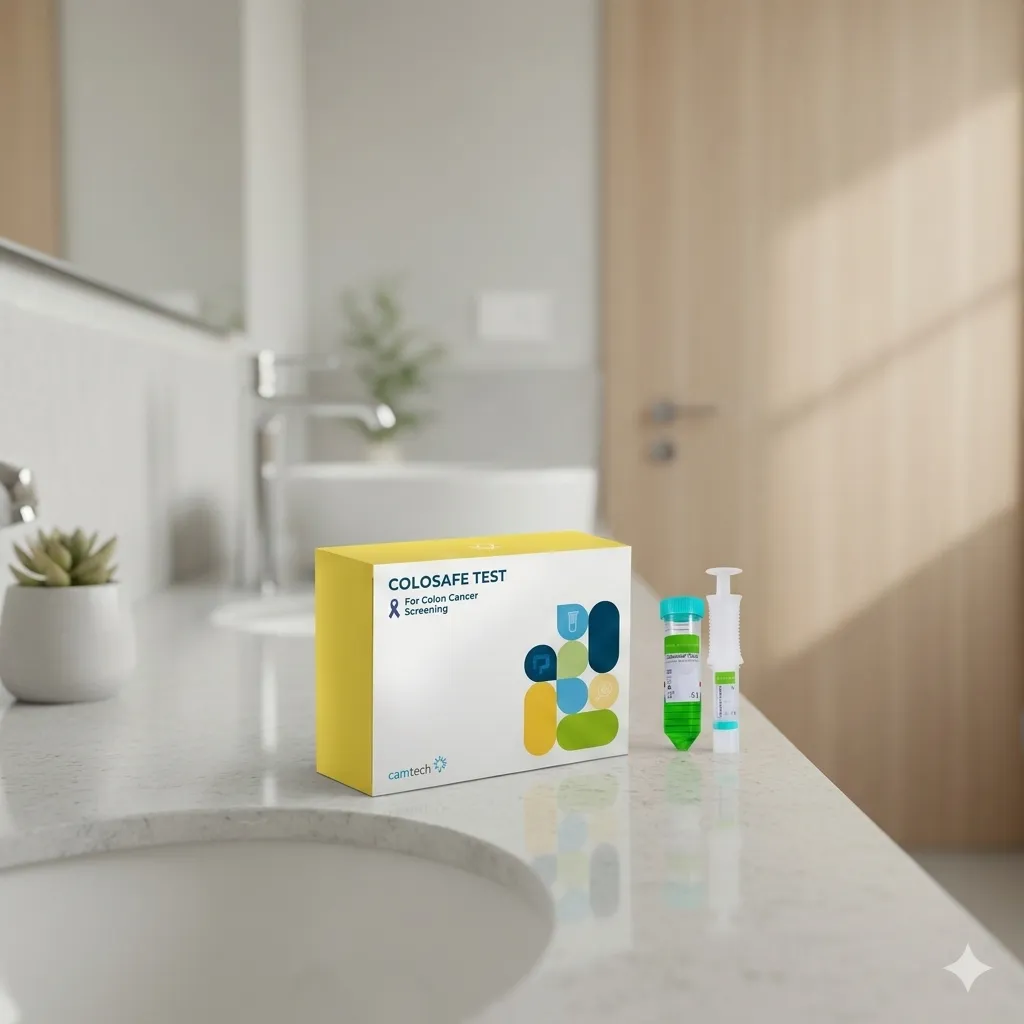
Enter Colosafe, a non-invasive, gene-based screening tool designed to detect early signs associated with colorectal cancer and precancerous lesions.

What is Stool DNA Testing?
Stool DNA testing is a screening method that analyses your sample for specific genetic markers.
As abnormal cells (such as those from polyps or tumours) travel through the colon, they shed DNA into the stool. By detecting these specific genetic alterations, tests like Colosafe can help identify potential risks.
The Science: How Colosafe Works
Colosafe utilises advanced fluorescence PCR technology to detect SDC2 methylation.
SDC2 methylation is a specific gene modification that occurs frequently in colorectal tumours but is rarely found in normal, healthy tissue. By targeting this specific biomarker, the test focuses on early genetic changes in the disease development process.
According to product specifications and clinical data, this targeted approach offers reliable screening:
- High Specificity: A high specificity rate means the test is effective at correctly identifying healthy individuals, which helps in reducing unwarranted follow-up procedures.
- High Sensitivity: The test has a high probability of correctly detecting the targeted genetic markers if they are present.
- Early Detection Capability: Colosafe detects genetic changes that can occur early in the development of precancerous lesions.
Features of the Colosafe Test
This test is designed as an accessible option for individuals who require convenience in their healthcare routine.
- No Dietary Restrictions or Bowel Prep
The test does not require fasting, dietary changes, or bowel preparation prior to sample collection. You can maintain your normal routine. - Non-Invasive Process
The process consists of a stool collection (approx. 4.5g sample size) and does not involve scopes, sedation, or needles. - Privacy and Comfort
The sample collection can be done entirely in your own bathroom at your convenience. - Lab-Verified Results
Once you return your sample, it is processed in a licensed laboratory in Malaysia. You typically receive your results within 5 working days.

Who Is This Test For?
Given the rising diagnosis rates among younger demographics noted in recent reports, proactive screening is vital. Colosafe is generally recommended for:
- Adults aged 50 and above (as per national screening guidelines).
- Individuals with a family history of colorectal issues.
- Health-conscious individuals who prefer a non-invasive alternative for routine screening.
- Those participating in corporate health check-ups.
How It Works
Taking charge of your colorectal health is a simple 3-step process:
- Order: Purchase the kit online. It arrives discreetly at your doorstep.
- Collect: Follow the instructions to collect a small stool sample using the provided tools.
- Return: Pack the sample and send it back to the laboratory.
Understanding Your Results
It is important to understand the role of this test in your health journey.
- Negative Result: No elevated genetic markers (SDC2 methylation) were detected. You can continue with routine screening intervals as recommended by your doctor.
- Positive Result: This indicates the presence of genetic markers associated with colorectal cancer or precancerous lesions. This is not a diagnosis of cancer. However, it is a strong signal that you must visit a specialist for a follow-up colonoscopy to investigate further.
Early Detection Matters
Colorectal cancer is highly treatable when detected early. By providing a convenient screening option, Colosafe empowers you to close the screening gap and monitor your health with confidence. Stay proactive about your health today.
FAQ: Colorectal Screening in Singapore
- Is Colosafe a replacement for a colonoscopy?
No. While Colosafe is a screening tool, the colonoscopy remains the “gold standard” for diagnosis because it allows doctors to see the colon and remove polyps immediately. Colosafe is a non-invasive first step or supplementary screening option. - How often should I perform a stool DNA test?
While guidelines vary, many healthcare professionals suggest DNA-based stool testing every 1 to 3 years for average-risk individuals. Always consult your GP to determine the best schedule for your specific health profile. - Does a “Positive” result mean I have cancer?
Not necessarily. A positive result means the SDC2 genetic marker was detected. This could be due to a precancerous polyp or other factors. It serves as an early warning sign that requires a follow-up colonoscopy for a definitive diagnosis. - Can I use this test if I already have symptoms like abdominal pain or blood in my stool?
If you are already experiencing symptoms, you should consult a doctor or gastroenterologist immediately for a diagnostic assessment rather than taking a screening test.
Disclaimer:
This article is for informational purposes only and does not constitute medical advice. Under Singapore’s Health Products Act, Colosafe is a screening device intended for the detection of specific genetic markers (SDC2) associated with colorectal cancer and precancerous lesions. It is not a substitute for professional medical diagnosis, and a negative result does not guarantee the absence of cancer. A positive result requires immediate follow-up with a doctor for a diagnostic colonoscopy. Always consult a GP or specialist registered with the Singapore Medical Council (SMC) regarding your specific health risks.
*Visuals are assisted by AI
References:
- Singapore Cancer Registry Annual Report 2023. National Registry of Diseases Office (NRDO).
- Colosafe Product Specifications (Human SDC2 Gene Methylation Detection Kit). Creative Biosciences (Guangzhou) Co., Ltd.
- Singapore’s cancer screening gap is widening at a critical moment. The Straits Times, Opinion Published Feb 5, 2026.