
Lateral Flow: Rapid Diagnostics Explained
By Stuart Chan

Lateral Flow Assays (LFAs) have become a recognized component of the global healthcare landscape. While widely identified through their use in infectious disease screening, the science behind these rapid tests has a long-standing history in clinical diagnostics. Today, LFA technology continues to evolve, offering supportive tools for managing hormonal health and monitoring chronic biomarkers as part of a proactive, physician-led wellness plan.
The Evolution: From Screening Tool to Health Management
The primary utility of lateral flow technology lies in its accessibility and rapid turnaround. By utilizing capillary action to move a liquid sample across a reactive membrane, LFAs can detect specific biomarkers without the immediate need for complex laboratory infrastructure.
While recent global events increased the public’s familiarity with these tests, the technology has also demonstrated the utility of decentralized testing. For many, the ability to receive supplemental health data in real-time is an important component of contemporary health management.

1. Tracking Hormonal Health and Wellness
One of the most established applications of LFA technology is the home pregnancy test, which detects the hormone hCG. Modern lateral flow assays have been further developed to provide insights into more complex hormonal cycles:
- Menopause Support: Contemporary tests allow individuals to monitor Follicle-Stimulating Hormone (FSH) levels. This data can provide helpful context when discussing the perimenopause transition with a healthcare professional.
- Fertility Monitoring: Advanced LFAs offer semi-quantitative results for Luteinising Hormone (LH) and progesterone. This helps individuals identify fertile windows with greater precision to support family planning goals.
By integrating these tools with digital health platforms, users can track longitudinal data to share with their General Practitioner (GP) for a more informed clinical consultation.
2. Infectious Disease Screening and Stewardship
LFAs remain a vital component in the global effort to manage infectious diseases. In specific clinical and resource-limited settings, rapid diagnostics for conditions such as Malaria and HIV serve as a critical first line of screening where laboratory access may be constrained.
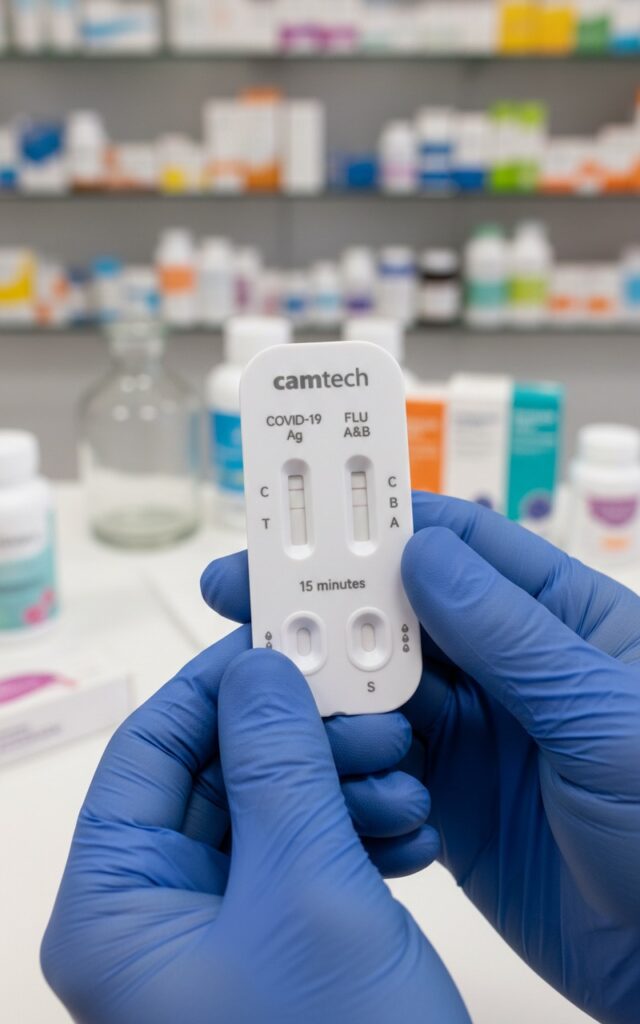
In a domestic setting, multiplex technology, detecting several pathogens on a single test strip, is used to differentiate between common respiratory markers such as Influenza (Flu) A and B, and RSV. This provides timely information that can support clinical decisions regarding the appropriate use of antivirals and support antimicrobial stewardship.
3. Monitoring Markers for Long-Term Health
An emerging area for lateral flow technology is the monitoring of biomarkers associated with long-term wellness. Under the guidance of a healthcare provider, point-of-care LFAs can be used to track specific markers of systemic health:
- Lipid Profiles: Supportive tools for monitoring cholesterol levels between comprehensive laboratory panels.
- C-Reactive Protein (CRP): A marker that can indicate levels of systemic inflammation, used by clinicians as one of several predictors of cardiovascular health.
References
- NIH (2024):Lateral flow assays: Progress and evolution of recent trends in point-of-care applications.
- World Health Organization (2023):The role of rapid diagnostic tests in malaria control.
- The Guardian (2025):How lateral flow tests are becoming a diagnostic gamechanger.
- DCN Dx (2025):2024 Year in Review and 2025 Predictions for Lateral Flow Diagnostics.
Medical Disclaimer:
The information provided in this article is for educational and informational purposes only and does not constitute medical advice, diagnosis, or treatment. These tests are not intended to diagnose or treat any disease. Always seek the advice of your physician or other qualified health provider with any questions you may have regarding a medical condition.
*Visuals are assisted by AI
Frequently Asked Questions
- How do lateral flow tests compare to laboratory tests?
While laboratory-based molecular tests (such as PCR) typically offer higher analytical sensitivity, modern lateral flow assays are designed to be highly specific for detecting active markers or high viral loads. They are optimized for “point-of-need” use, providing rapid data to support immediate, informed decision-making. - Can LFAs be used for chronic health monitoring?
LFAs are increasingly utilized to monitor markers associated with chronic conditions, such as HbA1c for glucose management or lipid profiles for heart health. These tools allow patients to track trends and maintain a record of their health data between formal clinical visits. - What is the benefit of “multiplex” testing?
Multiplex tests allow a single sample to be screened for multiple conditions simultaneously (e.g., distinguishing between Flu and COVID-19). This efficiency supports more rapid triage and helps ensure that subsequent care is appropriately directed by a healthcare professional.