From Data to Action: How to Use Your DNA Results to Improve Your Lifestyle
By Stuart Chan

Receiving the results of a DNA test can feel like opening a manual for your own body. For many people, the initial excitement is followed by a practical question: what should I do next?
Moving from raw data to meaningful action is one of the most important steps in using genetic insights responsibly. Your results may highlight biological predispositions related to nutrition, environmental triggers, physical response patterns or allergy-related risk factors. They should not be treated as a diagnosis, but they can help you ask better questions and make more informed lifestyle choices.
At Camtech Health, laboratory testing insights are designed to support clearer, more personalised health decisions. When used alongside professional guidance, at-home testing and digital health tools can help turn information into practical daily habits.
The Power of Personalised Laboratory Testing Insights
Traditional health advice is often broad. People are commonly told to eat more vegetables, exercise regularly, sleep well and avoid known allergens. These are useful foundations, but they do not always explain why one person may respond differently from another.
Genomics looks at the complete set of genes and how genes interact with each other and the environment. The World Health Organization describes genomics as an area that is increasingly relevant to health, disease understanding and public health applications. In everyday terms, this means your genetic data may provide clues about how your body is likely to respond to certain internal and external factors.
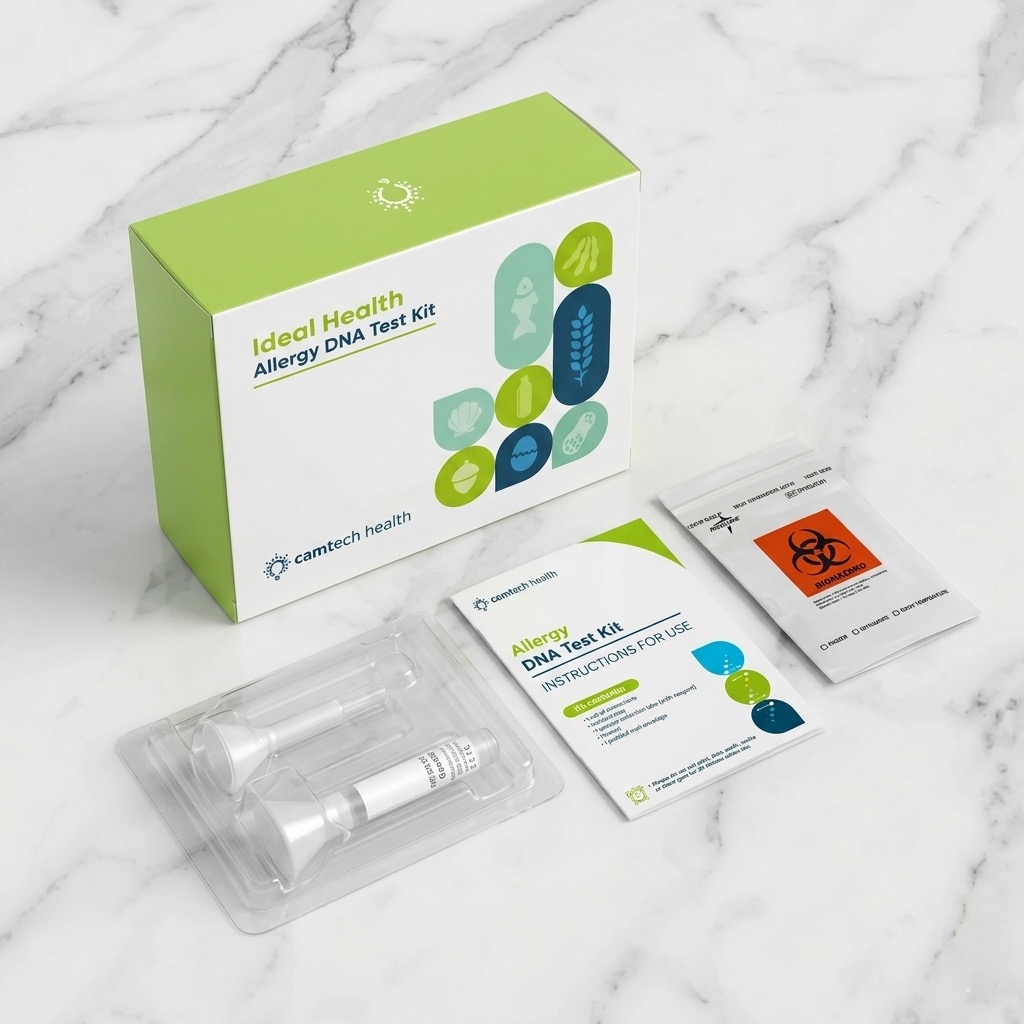
For example, DNA results may suggest a higher predisposition to certain environmental sensitivities, food-related responses or nutrition-related traits. The Ideal Allergy DNA Test is described by Camtech Health as an at-home test that screens genetic variations linked to potential risk across food, plant, airborne and chemical allergen categories.
It is important to keep this in perspective. A genetic predisposition is not the same as having a diagnosed allergy, disease or medical condition. As the CDC explains, genetic testing looks for changes in DNA that may help guide care or risk understanding, but people should speak with a healthcare provider about whether testing is appropriate and how to interpret results.

What DNA Results Can and Cannot Tell You
DNA results can provide useful context about inherited traits and predispositions. They may help you understand where to pay closer attention, such as dietary patterns, environmental exposure, physical activity response or allergy-related risk awareness.
However, a DNA test should not be used on its own to diagnose a current allergy, intolerance or medical condition. The NHS notes that genetic and genomic testing can show whether someone may be at higher risk of certain health conditions, but interpretation may require professional support, especially when results affect medical decisions.
For suspected allergies, clinical assessment is still important. The NHS allergy guidance explains that allergy testing may include skin prick tests, blood tests or supervised dietary approaches depending on the situation. This is why DNA-based insights should be viewed as supportive information rather than a replacement for clinical allergy diagnosis.
Transforming Your Environment Based on Genetic Risk Awareness
One of the most practical ways to use DNA results is to review your surroundings. If your report indicates a predisposition towards airborne allergen sensitivity, such as dust mites, mould spores, pollen or pet dander, you can consider targeted environmental adjustments.
Camtech’s article on understanding the four key allergen categories explains how allergen-related factors can be grouped into food, plant, airborne and chemical categories. This can help you move from general avoidance to more focused lifestyle planning.
Practical environmental steps to consider
- Air quality: Use a HEPA air purifier in rooms where you spend the most time, especially bedrooms or home offices.
- Bedding choices: Consider hypoallergenic mattress protectors, pillow covers and regular hot washing of bedding if dust mites are a concern.
- Humidity control: Keep indoor humidity at a comfortable level to reduce the conditions that may encourage mould growth.
- Pet management: If pet dander is a relevant concern, create pet-free zones in sleeping areas and clean soft furnishings regularly.
- Product selection: If chemical sensitivities are highlighted, consider fragrance-free laundry products, gentle skincare and careful label reading.
These steps do not guarantee that symptoms will be prevented. They are practical risk-reduction habits that may be worth discussing with a qualified healthcare professional, especially if you already experience respiratory, skin or digestive symptoms.

Diet and Nutrition: Beyond the Calorie Count
Your DNA may also provide clues about how your body handles certain nutrients, food groups or metabolic patterns. These insights can help you think beyond calories and look more carefully at dietary quality, consistency and personal tolerance.
For example, a report may encourage you to pay closer attention to lactose, gluten, histamine-related foods, vitamin metabolism or broader nutrition patterns. This does not mean you should immediately remove entire food groups. Overly restrictive diets can be difficult to sustain and may create nutritional gaps if they are not planned carefully.
Instead, use your results as a starting point for observation and professional discussion. Keep a short food and symptom diary, review your usual meals and speak with a GP, dietitian or qualified nutrition professional before making major changes. You can also explore Camtech’s broader DNA wellness tests to understand how different tests relate to nutrition, fitness, skin and general health traits.
Using Digital Health Tools to Turn Results Into Habits
One challenge with any health report is consistency. A result may feel useful on the day you receive it, but behaviour change happens through small, repeated actions over time.
The Camtech Health App supports access to health reports, test management and digital health insights. This can make it easier to revisit your results and connect them with everyday actions. Camtech’s article on the rise of home health testing also explores how biotechnology, digital health and at-home testing are changing how people engage with health information outside traditional clinic settings.
A Simple Framework for Turning DNA Data Into Action
DNA insights are most useful when they are translated into a manageable, practical plan. The framework below explains five practical steps: review high-priority findings, separate genetic insight from diagnosis, choose one small change, track what changes and discuss your results with a qualified healthcare professional.
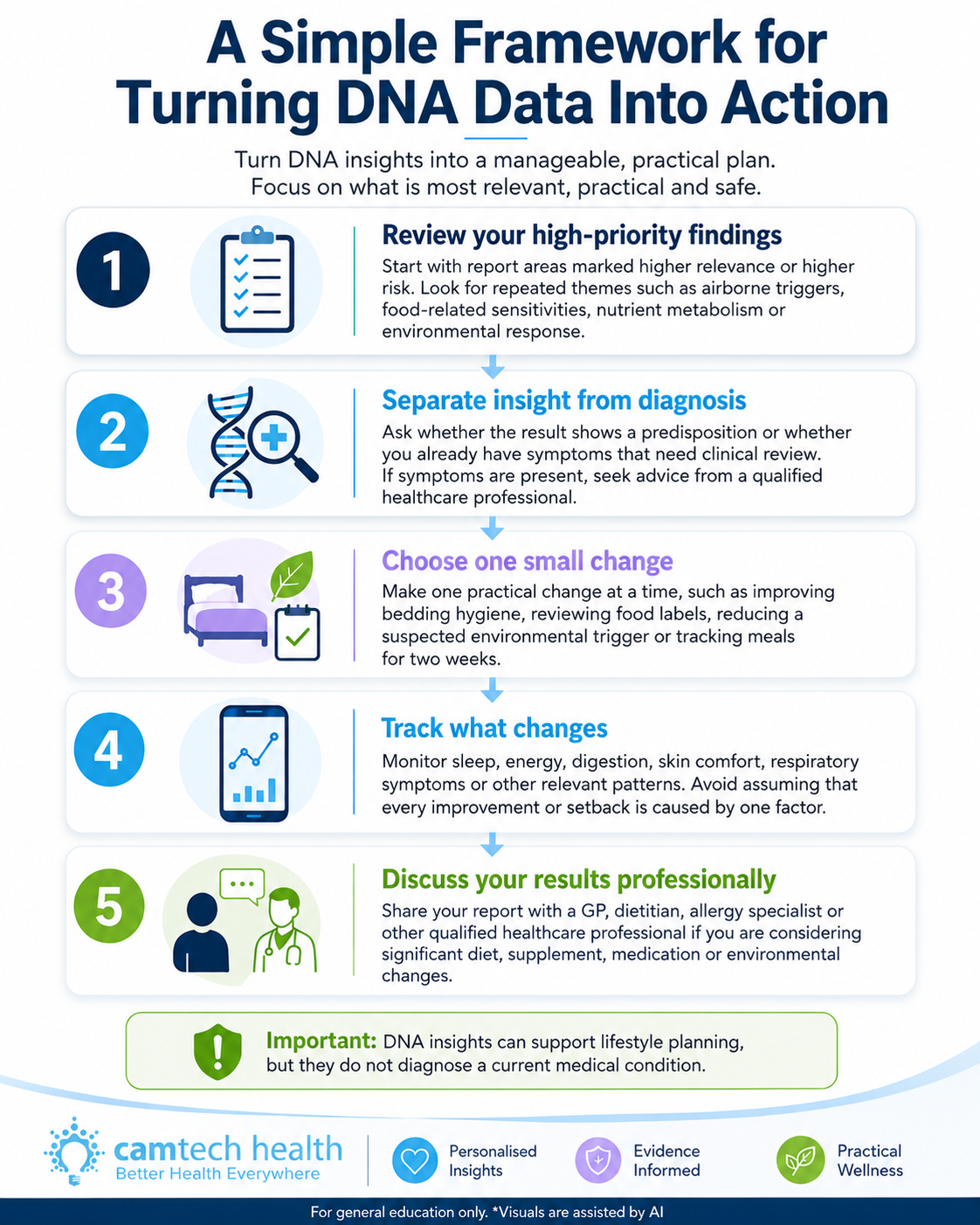
Key steps shown in the infographic
- Review your high-priority findings: Start with report areas marked as higher relevance or higher risk.
- Separate insight from diagnosis: DNA results may show predispositions, but they do not diagnose a current medical condition.
- Choose one small change: Make one practical adjustment at a time, such as reviewing food labels or improving bedding hygiene.
- Track what changes: Monitor patterns such as sleep, energy, digestion, skin comfort or respiratory symptoms.
- Discuss your results professionally: Share your report with a GP, dietitian, allergy specialist or qualified healthcare professional before making significant changes.
Taking Lasting Health Action with Camtech Health
The move from knowing to doing is easier when your results are clear and practical. The Ideal Allergy DNA Test from Camtech Health provides at-home sample collection and digital reporting for allergy-related genetic predispositions across food, plant, airborne and chemical categories.
For broader education, you may also find these internal resources useful: Understanding the Four Key Allergen Categories, The Rise of Home Health Testing and The Science of Genetics in Personalised Skin Health.
Key takeaway: DNA results are not a final answer or a diagnosis. They are a guide for better questions, more focused habits and more informed conversations with healthcare professionals.
References
- NHS: Genetic and genomic testing
- World Health Organization: Genomics
- CDC: Genetic Testing
- PubMed PMID 33302460: Exploring Attitudes, Subjective Norms and Perceived Behavioural Control in a Genetic-Based and a Population-Based Weight Management Intervention
- NHS: Allergies
Medical Disclaimer
This article is for general educational purposes only and does not replace advice, diagnosis or treatment from a qualified healthcare professional. DNA testing for lifestyle and health insights provides information about genetic predispositions and is not intended to diagnose, treat, cure or prevent any medical condition. Always consult a qualified healthcare professional before making significant changes to your diet, environment, supplements, medication or health routine. Follow local healthcare guidance where relevant.
*Visuals are assisted by AI
Patient FAQ
Can a DNA test diagnose a current food allergy?
No. A DNA test can identify genetic predispositions, but it does not diagnose a current food allergy. A doctor or allergy specialist may use a clinical history, skin prick test, blood test or supervised food challenge depending on the situation.
How do DNA results help with lifestyle changes?
DNA results can highlight areas where you may have a biological predisposition, such as nutrition patterns, environmental sensitivities or certain allergy-related risks. This can help you focus on practical changes and have more informed conversations with healthcare professionals.
What is the difference between DNA testing and traditional allergy testing?
Traditional allergy tests assess current immune responses to specific allergens, while DNA testing looks at genetic markers associated with predisposition. The two types of testing answer different questions and should not be treated as interchangeable.
Does a genetic predisposition mean I will definitely develop an allergy?
No. Genetic predisposition does not guarantee that an allergy or sensitivity will develop. Environment, exposure, lifestyle, immune function and other health factors also matter.
How often do I need to take a DNA test?
Your DNA sequence generally does not change, so many DNA tests only need to be taken once. However, your lifestyle, health status and clinical needs can change over time, so discuss follow-up testing or clinical monitoring with a qualified healthcare professional if needed.