
Guide to Paternity DNA Testing
By Stuart Chan
In the realm of modern diagnostics, few tests carry as much emotional and personal significance as the paternity DNA test. Whether for peace of mind, personal curiosity, or family clarity, understanding the science behind these tests is essential for anyone considering the procedure.
At Camtech Health, we prioritise precision and privacy, offering a seamless experience for those seeking almost certain answers. In this guide, we explore how paternity testing works, its reliability, and why choosing a professional-grade kit is vital.

What is a DNA Paternity Test?
A paternity test compares the genetic panel of a child with that of an alleged father to determine the biological relationship. Because a child inherits exactly half of their DNA from each biological parent, scientists analyze specific DNA regions, called loci, to compare genetic patterns between the child and the alleged parent.
How Does the Process Work?
Advancements in digital health have made it possible to conduct a paternity test from the comfort of your home. The process typically follows these steps:
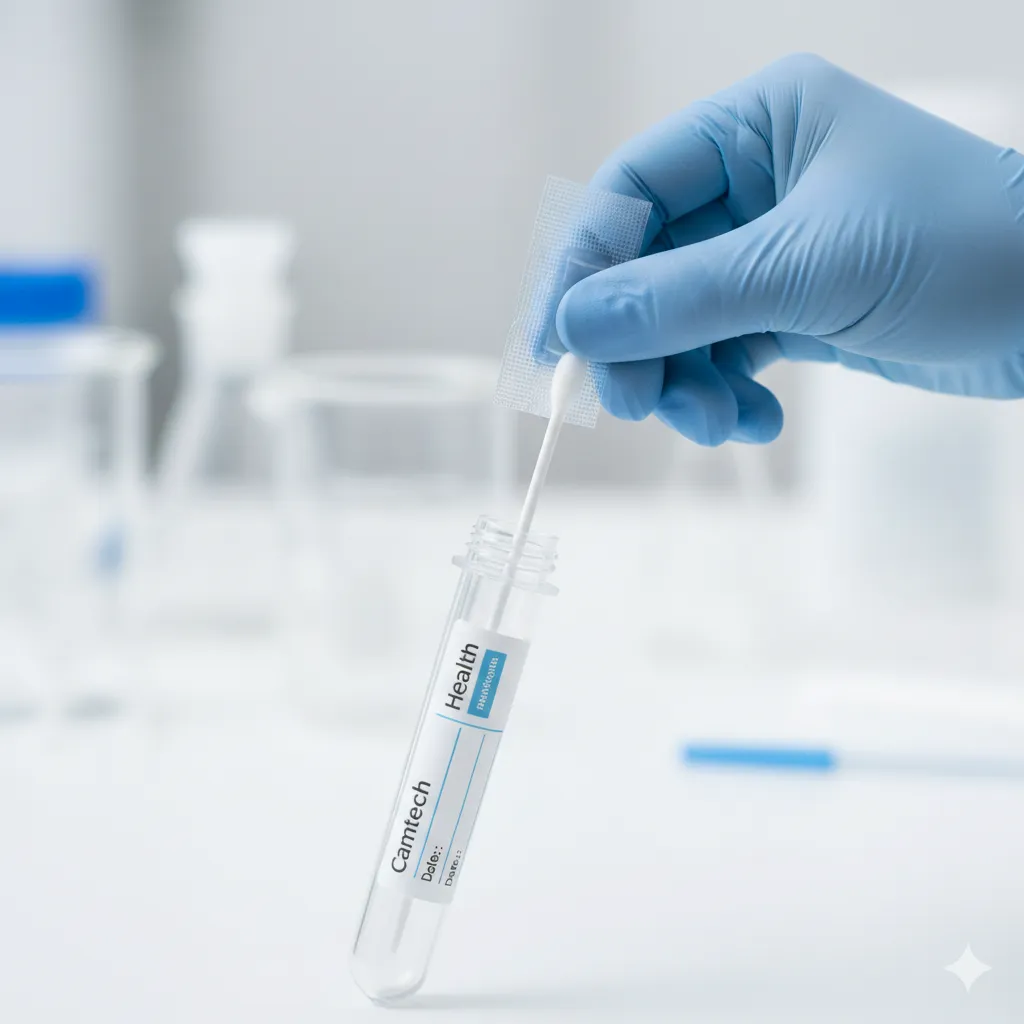
- Sample Collection: Using the provided kit, you rub a sterile swab against the inside of the cheek. This collects epithelial cells containing DNA.
- Laboratory Analysis: The samples are sent to a laboratory where DNA is extracted and amplified using a process called Polymerase Chain Reaction (PCR).
- Genetic Mapping: Scientists examine specific regions of the DNA to see if the child’s markers match the father’s.
- Reporting: You receive a confidential report indicating the probability of paternity.
Understanding Accuracy: Inclusion vs. Exclusion
When you receive your results, you will typically see one of two outcomes:
- Inclusion (The father is the biological parent): The results will show a “Probability of Paternity” of 99.9% or higher. No test can technically reach 100% due to statistical modeling, but 99.9% is considered definitive proof in the scientific community.
- Exclusion (The father is not the biological parent): The results will show a “Probability of Paternity” of 0%, indicating that the genetic markers do not match.
To ensure the highest level of accuracy, it is often recommended (though not always mandatory) to include the mother’s DNA sample. This helps “mask” the maternal half of the child’s DNA, making the paternal comparison even more precise.
Privacy and Confidentiality in Testing
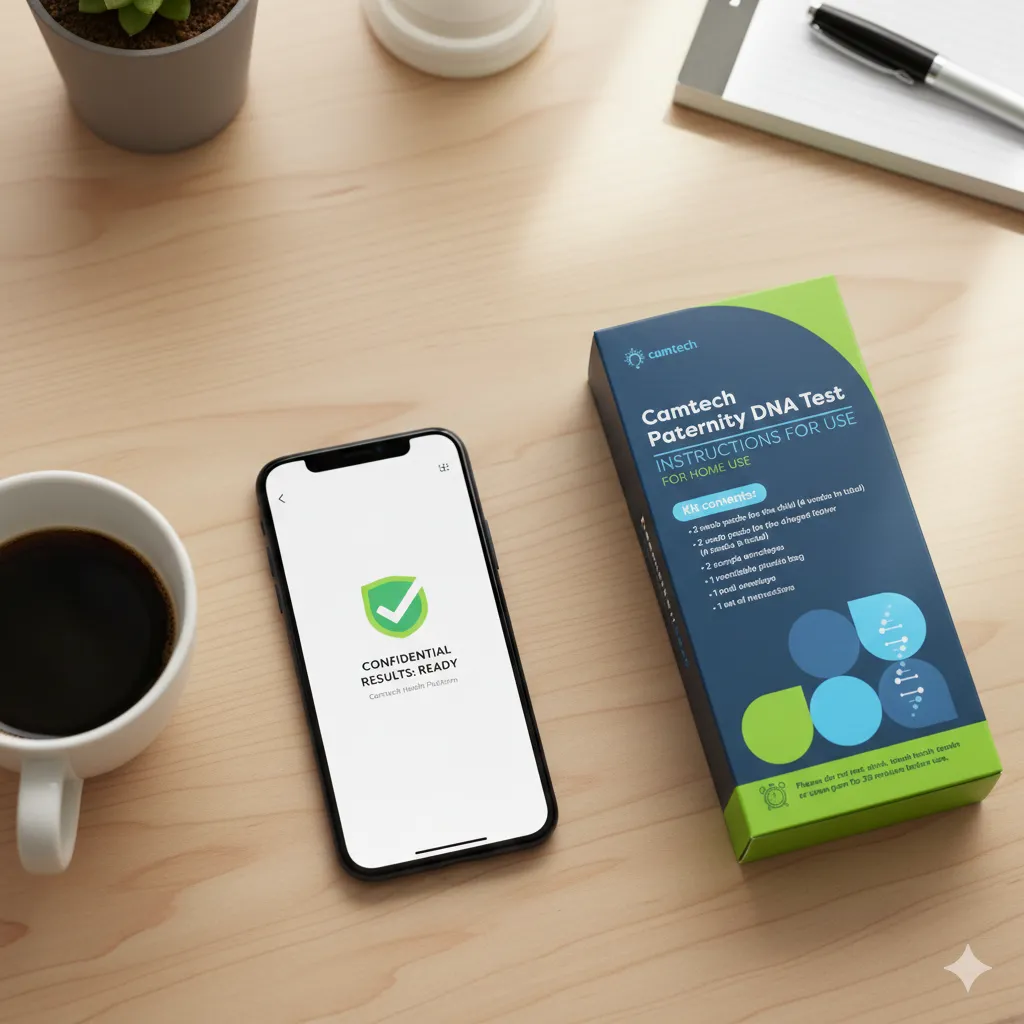
We understand that paternity testing is a sensitive matter. At Camtech Health, we ensure that everyPaternity Test kit is handled with the strictest confidentiality. From discreet packaging to secure digital result delivery via ourHealth Platform, your data and identity are protected through every stage of the diagnostic journey.
Choosing the Right Test: Peace of Mind vs. Legal
It is important to distinguish between a “Peace of Mind” test (like the Camtech kit) and a “Legal/Chain of Custody” test (in accredited labs or specialised clinics).
- Peace of Mind: This is a home-collected test for personal knowledge. Because the identity of the person being swabbed cannot be independently verified, these results are generally not admissible in a court of law.
- Legal Testing: Requires a neutral third party (like a doctor or nurse) to verify identities and oversee the collection to ensure the samples are not tampered with.
Why Quality Matters
Not all DNA tests are created equal. Using a lab that employs the latest sequencing technology ensures that common pitfalls—such as sample degradation or insufficient genetic markers—are avoided. By choosing high-quality diagnostics, you are investing in certainty.
Frequently Asked Questions
- Is a cheek swab as accurate as a blood test for paternity?
Yes. DNA is identical in every cell of your body. Whether the laboratory extracts DNA from blood or cheek cells, the resulting genetic profile is the same. - Can a paternity test be done without the mother?
Yes, a paternity test can be performed with just the samples from the child and the alleged father. However, including the mother’s sample can increase the statistical certainty of the result. - How long does it take to get results?
Once the laboratory receives the samples, results are typically processed and delivered within 3 to 5 working days, depending on the specific testing requirements. - Can you do a paternity test while pregnant?
Yes, this is known as a Non-Invasive Prenatal Paternity (NIPP) test. It involves taking a blood sample from the mother to find the baby’s “cell-free DNA” and comparing it to a swab from the father. This can be done as early as the 7th or 8th week of pregnancy.
References
- NHS: DNA Paternity Testing Overview
- National Human Genome Research Institute (NIH): DNA Sequencing Fact Sheet
Medical Disclaimer:
This article is for informational purposes only and does not constitute medical or legal advice. Always consult with a qualified healthcare professional or legal expert regarding your specific circumstances before undergoing diagnostic testing.
*Visuals assisted by AI