
At-Home Diagnostics: The Future of Preventive Care
By Stuart Chan


May is Women’s Health Care Month, a timely reminder for women in Singapore to review their health screening routines and take practical steps toward preventive care.
For many women, personal health appointments can be difficult to prioritise. Work, caregiving, family planning, and day-to-day responsibilities can make it hard to schedule a clinic visit. For women in the “sandwich generation”, this can be even more challenging.
At the same time, regular screening remains an important part of health maintenance. In Singapore, women aged 25 to 29 who have ever had sex are recommended to undergo a Pap test, while women aged 30 and above are recommended to undergo HPV testing. Cervical cancer screening is recommended every three years after a Pap test and every five years after an HPV test.
At-home diagnostics offer another practical option for women who want privacy, convenience, and clearer access to health information. They are not a replacement for medical care, but they can complement existing clinical pathways in Singapore.
Why At-Home Testing Matters for Women’s Preventive Care
Preventive screening is most useful when it is done at the right time and followed up appropriately. However, some women delay testing because of time constraints, discomfort with clinic-based procedures, or uncertainty about what screening involves.
At-home testing can reduce some of these barriers by allowing users to collect samples in a familiar environment. This may be especially helpful for women who want to take the first step before speaking with a doctor.
For broader context on how this category is developing, read Camtech Health’s article onThe Rise of Home Health Testing.
HPV Self-Sampling and Cervical Health
Human Papillomavirus, or HPV, is associated with cervical cancer risk. Many HPV infections clear naturally, but persistent high-risk HPV infections can lead to cervical cell changes that require medical follow-up.
For women aged 30 and above in Singapore, HPV testing is recommended as part of cervical cancer screening.
TheCamtech At-Home HPV Test Kit allows users to collect a sample at home and receive results from an accredited laboratory in Singapore. Camtech’s product page states that results are available within five working days after the returned sample is processed.
This type of self-sampling may be useful for women who prefer privacy or who find it difficult to schedule a clinic appointment. If a high-risk HPV result is detected, the next step should be a consultation with a qualified healthcare professional for appropriate assessment and follow-up.
For more background, see Camtech’s guide onCervical Health Awareness: Understanding Your Screening Options.
Ovulation Tracking and Family Planning
For women who are planning for pregnancy, understanding the menstrual cycle can support more informed timing and discussions with a healthcare professional.
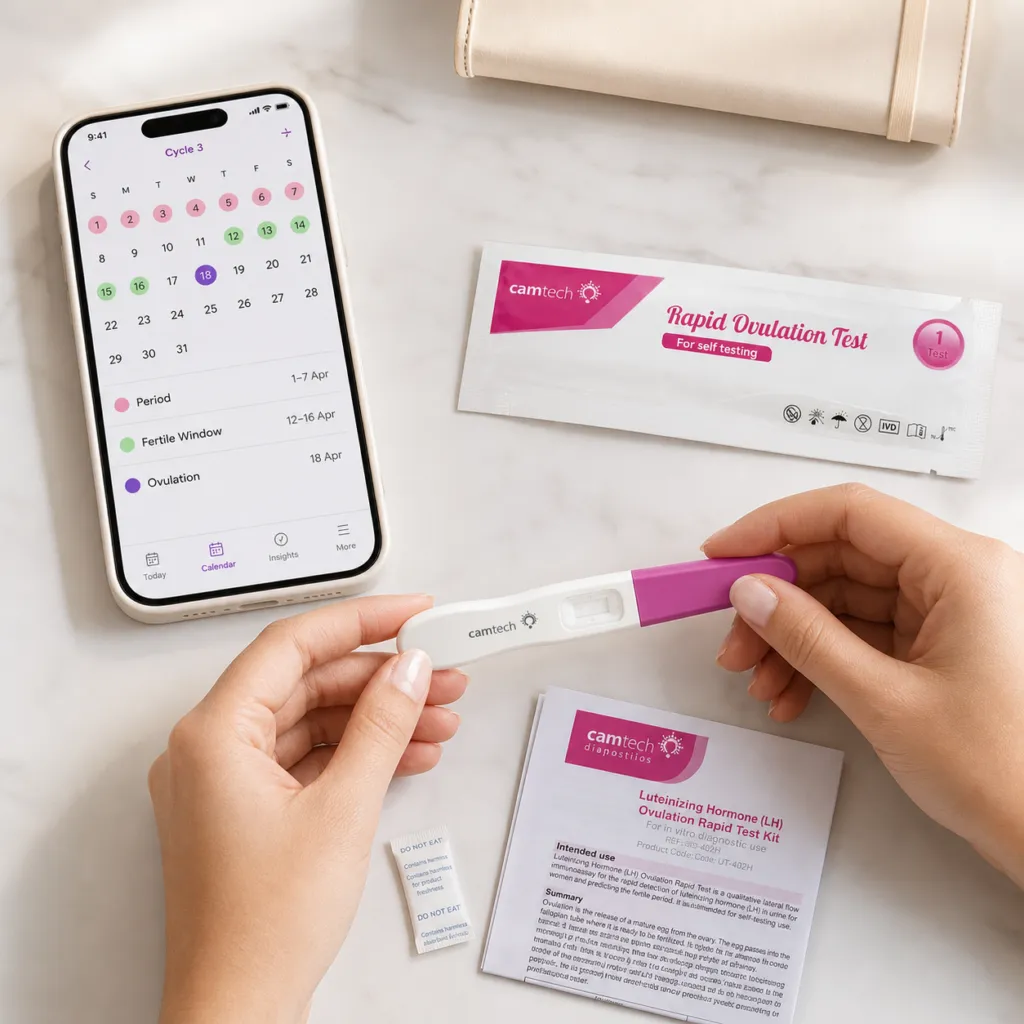
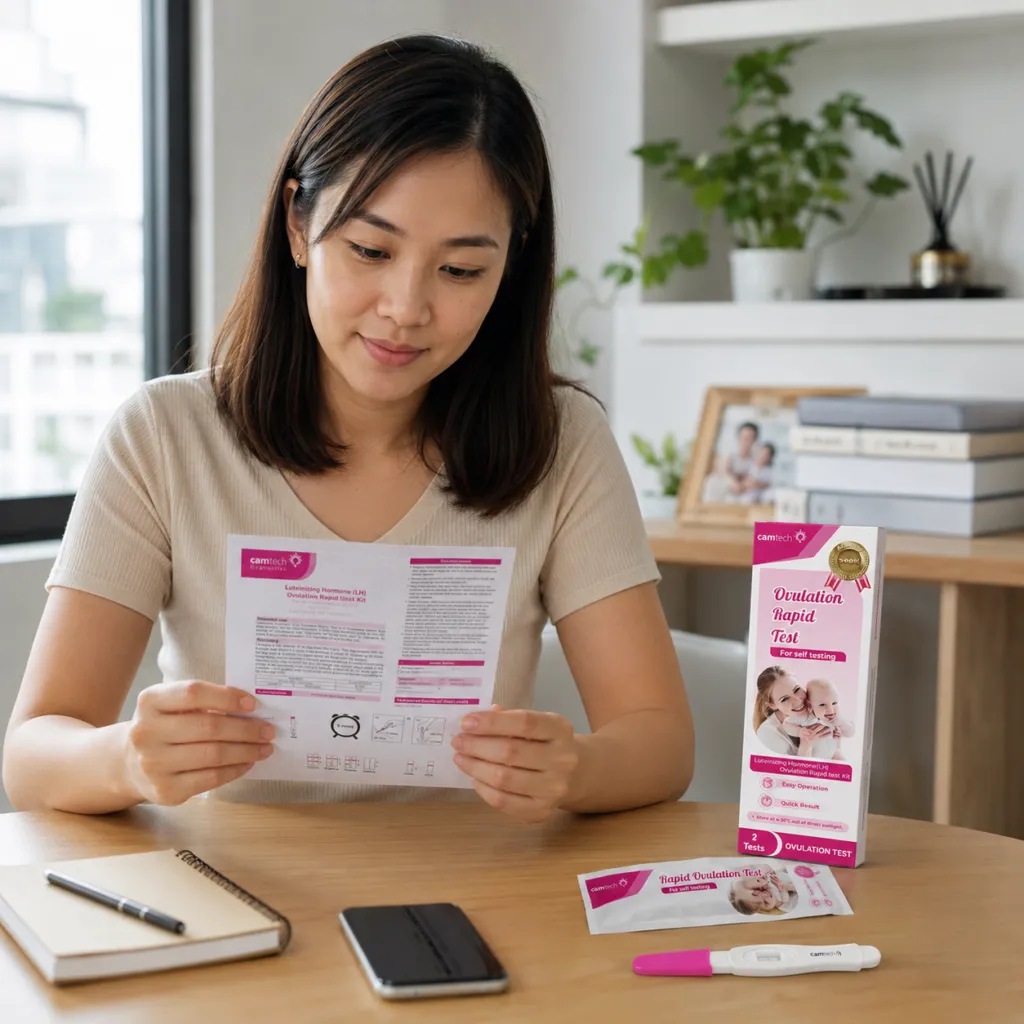
Luteinising Hormone, or LH, rises before ovulation. Tracking LH can help identify the fertile window. TheCamtech LH Ovulation Test Kit is designed for home use and allows users to check for LH changes through urine testing. Camtech also notes that users can log results and track their fertility cycle through the Camtech Health App.
For a deeper explanation of cycle tracking, read Understanding Your Menstrual Cycle: A Guide to Cycle Monitoring.
The Role of Digital Health Records
A test result is more useful when it is organised and easy to refer to later. Digital records can help users keep track of screening history, cycle patterns, and follow-up information.
This is particularly relevant when speaking with a GP, gynaecologist, or specialist. Instead of relying on memory, users can refer to their recorded results and timelines during consultation.
At-home diagnostics should be seen as part of a larger care pathway. They can support early action, but any abnormal, unclear, or concerning result should be discussed with a healthcare professional.
Supporting Singapore’s Screening Goals
Singapore has established national screening recommendations, including cervical cancer screening through Pap tests and HPV tests. Subsidised screening may be available through programmes such as Screen for Life and Healthier SG, depending on eligibility.
At-home testing can help some women take an earlier step toward health maintenance, especially if they have delayed screening due to time, discomfort, or privacy concerns.
For further reading, Camtech has also coveredClosing Singapore’s Cancer Screening Gap.
Conclusion
Women in Singapore often carry multiple responsibilities, but preventive care should not be postponed indefinitely. At-home diagnostics can make health screening more accessible by offering privacy, convenience, and structured digital records.
Whether you are monitoring cervical health, tracking ovulation, or reviewing your screening routine, the key is to act early, keep clear records, and seek medical guidance when needed.
To explore available options, visit Camtech Health’s Approved Tests or view theAt-Home HPV Test Kit andLH Ovulation Test Kit.
References:
- Ministry of Health Singapore. (2023). Screen for Life: Recommended Screening for Women.
- Health Sciences Authority (HSA). Regulatory Guidelines for Home-Use Diagnostic Test Kits in Singapore.
- Anne Lesack 2022, Willingness to Self-Collect a Sample for HPV-Based Cervical Cancer Screening in a Well-Screened Cohort: HPV FOCAL Survey Results
Frequently Asked Questions (FAQs)
Can I use the HPV self-sampling kit if I have already received the HPV vaccine?
Yes. While the HPV vaccine significantly reduces the risk of cervical cancer, it does not protect against all high-risk HPV types. The Ministry of Health (MOH) recommends that all women who have ever been sexually active, including those who are vaccinated, continue with regular HPV screening every five years from age 30.
How accurate is at-home LH testing compared to a blood test at a polyclinic?
The Camtech LH Rapid Test offers over 97 percent accuracy in detecting the LH surge that precedes ovulation. While a blood test at a clinic is the gold standard for clinical diagnosis, our midstream tests provide a reliable, lab-grade alternative for daily monitoring without the need for repeated clinic visits or invasive blood draws.
Is my health data secure when using the Camtech Health App?
Data security is a priority. The Camtech Health App employs industry-standard encryption and security protocols to ensure your personal health information remains confidential. This allows you to store your results safely and present them to your healthcare provider only when you choose to do so.
What should I do if my at-home HPV test returns a “High-Risk” result?
A high-risk result indicates the presence of HPV, not necessarily cancer. If you receive such a result, the Camtech Health App will provide specific guidance on the next steps. You should book a follow-up consultation with your GP or a gynaecologist, who may recommend further investigations such as a colposcopy in line with Singapore’s clinical guidelines.
Medical Disclaimer:
The information provided in this article is for educational purposes only and should not be substituted for professional medical advice, diagnosis, or treatment. Always seek the advice of your physician or other qualified health providers with any questions you may have regarding a medical condition. Do not disregard professional medical advice or delay in seeking it because of something you have read in this article.
*Visuals are assisted by AI