
The Science of Ageing Gracefully: Using Genetic Risk Scores for Skin and Longevity
By Stuart Chan
The quest for longevity has evolved from simple anti-ageing creams to more advanced molecular insights. While we all age chronologically, our biological age, the way our cells, tissues and body systems change over time, can vary greatly between individuals.
This variation is influenced by lifestyle, environment, health history and genetics. Understanding the science of ageing gracefully is therefore not about predicting the future with certainty. It is about using reliable information to make more informed decisions about skin health, preventive health and long-term wellbeing.
One area of growing interest is the use of polygenic risk scores, sometimes called genetic risk scores. These scores help estimate how multiple genetic variants may contribute to a person’s predisposition for certain traits. For skin and longevity, this can offer useful context around collagen maintenance, photoageing, oxidative stress and broader healthy ageing pathways.
Understanding Genetic Risk Scores
A genetic risk score, also known as a polygenic risk score, is a calculation based on many genetic variants across the genome. Unlike single-gene tests that focus on one specific variant, a genetic risk score looks at the combined effect of multiple small genetic differences.
For health-related interpretation, this distinction matters. A genetic risk score does not provide a guaranteed outcome, diagnosis or timeline. It gives a relative indication of predisposition. The National Human Genome Research Institute notes that polygenic risk scores show probabilities and correlations, not certainties.
In the context of longevity, these scores may help researchers explore how the body handles processes such as cellular repair, inflammation and oxidative stress. For the skin, genetic insights may relate to areas such as collagen breakdown, pigmentation, UV response, skin barrier function and visible signs of ageing.
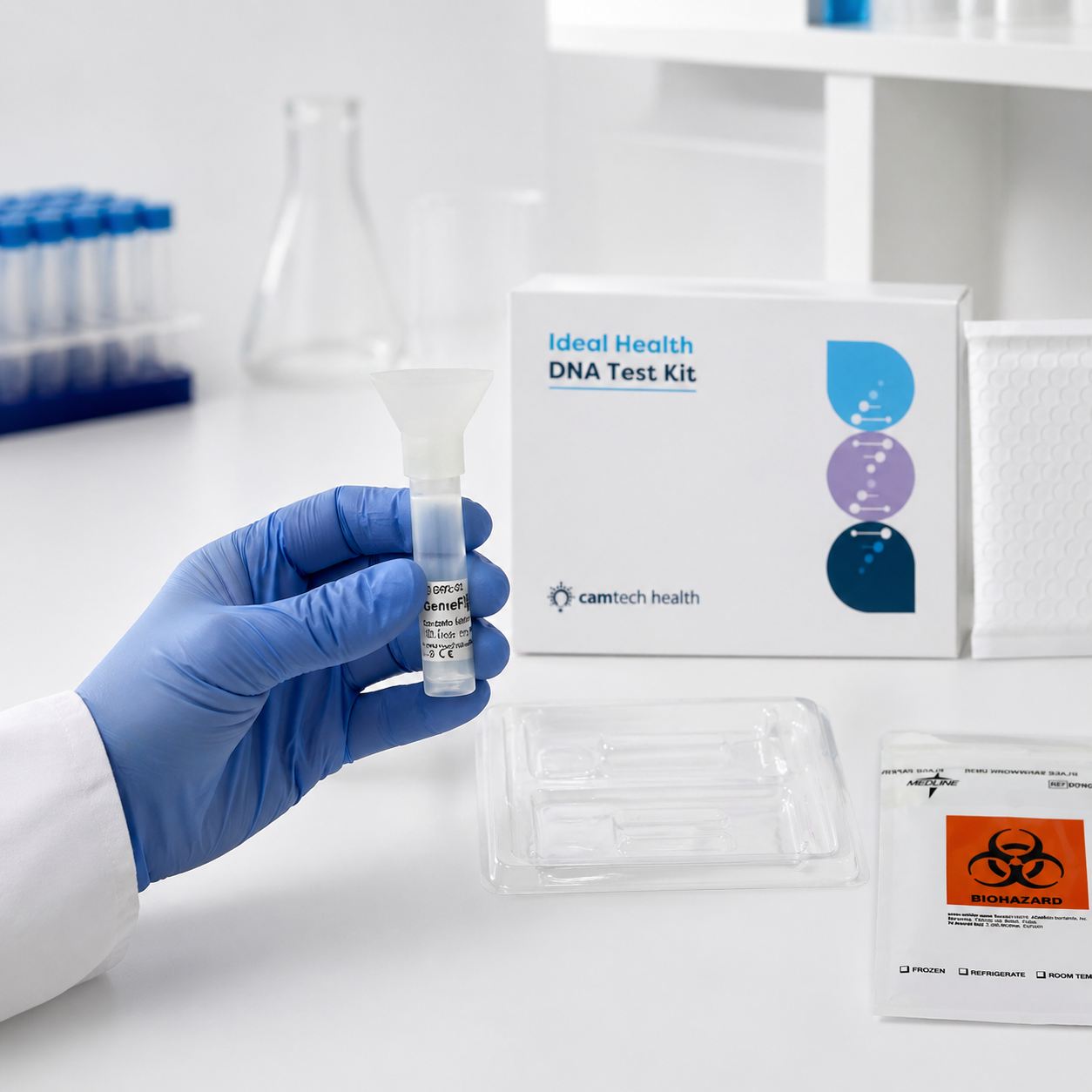
Camtech Health’s IDEAL Skin & Ageing DNA Test focuses on skin and ageing-related traits, while the broader IDEAL Health DNA Test provides personalised ethnicity-based insights across skin, fitness, nutrition, ageing and genetic risk scores.
How Your DNA May Influence Skin Ageing
Your skin is one of the most visible indicators of biological ageing. Genetics can influence how your skin responds to the environment, how well it maintains its structure and how efficiently it manages oxidative stress.
A 2025 systematic review and meta-analysis published in the Journal of Physiological Anthropology found that skin ageing is influenced by complex genetic factors, with multiple loci linked to phenotypes such as wrinkling, pigmentation changes and sagging.
Collagen Breakdown and Elasticity
Collagen is a structural protein that helps maintain firmness and elasticity in the skin. Some people may carry genetic variants linked to faster collagen degradation or reduced support for skin structure. Knowing this predisposition does not mean visible ageing is inevitable, but it may encourage earlier, more consistent skin-supportive habits.
For example, a person with a genetic tendency towards collagen-related changes may wish to discuss appropriate skincare ingredients, nutrition patterns and lifestyle strategies with a dermatologist or qualified healthcare professional. Common areas of interest may include sun protection, retinoids, peptides, dietary protein adequacy and antioxidant-rich foods.
UV Sensitivity and Photoageing
Sun exposure is a major contributor to visible skin ageing. However, not everyone responds to ultraviolet radiation in the same way. Genetic markers can influence inflammatory response, pigmentation, antioxidant capacity and the skin’s ability to respond to environmental stress.
If a DNA report suggests a higher predisposition to photoageing, the practical takeaway is not panic. It is consistency. Broad-spectrum sunscreen, protective clothing, shade-seeking behaviour and antioxidant support may become higher priorities. Readers should follow local sun safety guidance and speak with a qualified healthcare professional if they have concerns about skin changes.

The Longevity Connection: Beyond the Surface
Ageing gracefully is about more than looking youthful. It is also about supporting healthspan, which refers to the years of life spent in good health and functional ability.
The World Health Organization explains that biological ageing results from the accumulation of molecular and cellular damage over time. These changes are not linear and are only loosely associated with a person’s age in years.
Genetic research has identified biological pathways related to DNA repair, cellular maintenance and oxidative stress response. Genes such as SIRT1 and FOXO3 are often discussed in longevity research because of their roles in cellular stress response and healthy ageing pathways. However, no single gene determines how well a person will age. Longevity is shaped by genetics, environment, lifestyle, healthcare access and many other factors.

For readers interested in translating genetic insights into everyday habits, Camtech’s guide on how to use DNA results to improve your lifestyle explains how to move from data to safe, practical action.
Making Informed Decisions for Preventive Health
The value of genetic risk scores lies in turning data into a more personalised plan. Rather than following every health trend, genetic insights can help people prioritise the areas most relevant to their biological predispositions.
Practical ways genetic insights may support daily habits
- Optimised nutrition: If genetic insights suggest a predisposition towards glycation-related skin ageing, a person may choose to prioritise a balanced, lower-glycaemic dietary pattern with professional guidance.
- Targeted skincare: If a report suggests lower antioxidant capacity or higher UV sensitivity, consistent sun protection and antioxidant support may become more important.
- Lifestyle adjustments: If inflammatory response or recovery traits are highlighted, it may be useful to consider sleep, stress management and exercise recovery patterns.
- Professional discussion: Genetic results are most useful when interpreted alongside personal history, symptoms, lifestyle and qualified healthcare advice.
For more background on genetic testing from home, you may also read Camtech Health’s article on at-home genetic DNA testing and its guide to personalised skin wellness.
How Camtech Health Fits Into Personalised Ageing Insights
At Camtech Health, DNA testing is positioned as a way to support more informed lifestyle and self-care decisions. The IDEAL Skin & Ageing DNA Test focuses on genetic traits related to skin type, dermal sensitivities and ageing-related insights. The IDEAL Health DNA Test provides broader genetic insights across skin, fitness, nutrition and ageing traits.
These tests are intended for general wellness and lifestyle insight unless otherwise stated. They should not be used to diagnose, treat, cure or prevent any disease or medical condition. If you have symptoms, skin changes, a family history of disease or concerns about your health, speak with a qualified healthcare professional and follow local healthcare guidance.
Frequently Asked Questions
What is a genetic risk score for longevity?
A genetic risk score for longevity is a calculation that estimates genetic predisposition by analysing multiple genetic variants associated with ageing-related biological pathways. It does not predict lifespan with certainty and should be interpreted as one part of a wider health picture.
Can a DNA test tell me exactly how my skin will age?
No. A DNA test cannot tell you exactly how your skin will age. It may identify markers related to collagen maintenance, UV sensitivity, pigmentation, antioxidant capacity or skin barrier function. These insights can help guide more personalised skincare and lifestyle conversations.
Are genetic predispositions for skin ageing permanent?
Your DNA sequence generally does not change, but lifestyle, environment, skincare, nutrition, sleep and sun exposure can influence how genetic predispositions are expressed. This is why genetic insight should be used as a guide, not as a fixed prediction.
How does the IDEAL Health DNA Test help with ageing insights?
The IDEAL Health DNA Test provides personalised ethnicity-based insights across skin, fitness, nutrition, ageing and genetic risk scores. These insights may help users consider more tailored lifestyle habits, but they do not replace medical advice, diagnosis or treatment.
Is genetic testing for skin health scientifically supported?
Research has linked multiple genetic loci and SNPs with skin ageing-related traits such as wrinkling, pigmentation and sagging. However, genetic testing should be interpreted carefully because skin ageing is influenced by genetics, sun exposure, lifestyle, environment and overall health.
References
- National Human Genome Research Institute: Polygenic Risk Scores
- World Health Organization: Ageing and Health
- Zhan, Y., & Hägg, S. Association between genetically predicted telomere length and facial skin aging in the UK Biobank. GeroScience. 2021.
- Tesi, N. et al. Polygenic Risk Score of Longevity Predicts Longer Survival Across an Age Continuum. The Journals of Gerontology. 2021.
- Wong, C. et al. Genetic determinants of skin ageing: a systematic review and meta-analysis of genome-wide association studies and candidate genes. Journal of Physiological Anthropology. 2025.
- Akeju, O. et al. Genetic Correlates of Biological Aging and the Influence on Prediction of Mortality. The Journals of Gerontology. 2024.
Medical Disclaimer
This article is for general educational purposes only and does not constitute medical advice, diagnosis or treatment. DNA testing for lifestyle and health insights provides information about genetic predispositions and is not intended to diagnose, treat, cure or prevent any medical condition. Always seek the advice of a qualified healthcare professional with any questions you may have about a medical condition, skin concern, health objective, supplement, medication or lifestyle change. Never disregard professional medical advice because of something you have read on this website. Follow local healthcare guidance where relevant.
*Visuals are assisted by AI