
Collagen, Oxidative Stress and Skin Ageing Explained
By Stuart Chan
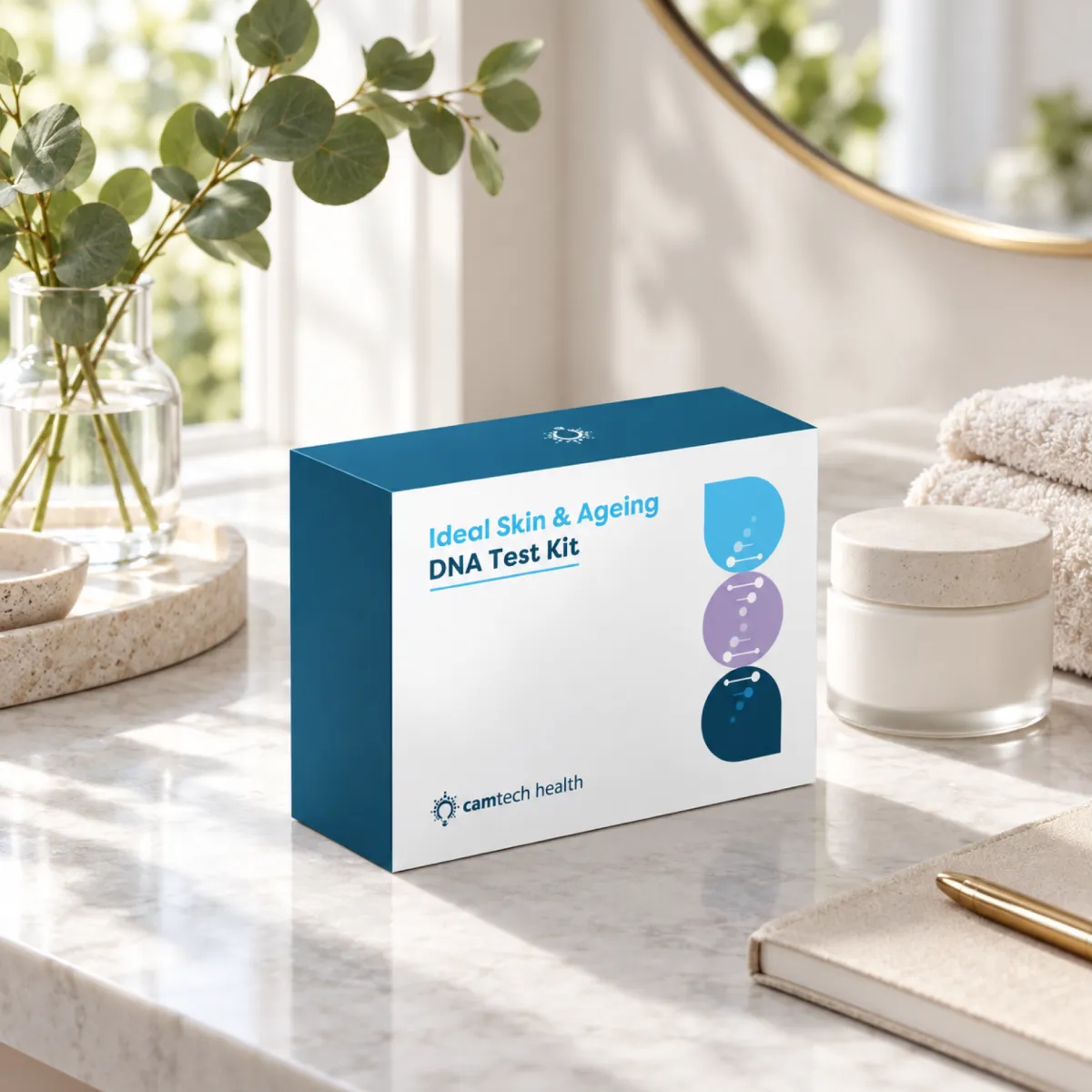
If you are thinking about skin ageing, collagen is more than a beauty buzzword. It is part of the support structure that helps maintain firmness, texture and resilience. Skin ageing is shaped by collagen turnover, oxidative stress, ultraviolet exposure, sleep, nutrition, smoking, pollution, skincare habits and inherited biological tendencies. A skin deoxyribonucleic acid (DNA) test cannot diagnose a skin condition or predict exactly how your skin will age, but it may help you understand why a personalised prevention routine could be useful.
Why collagen matters in visible skin ageing
Collagen is one of the main structural proteins in the dermis, the layer of skin beneath the surface. Together with elastin and other extracellular matrix components, it helps skin stay firm and flexible. Over time, collagen production and repair can become less efficient, while collagen-degrading processes may become more active.
That does not mean skin ageing has a single cause. The World Health Organization notes that ultraviolet A can penetrate deeper layers of the skin where connective tissue is affected, contributing to gradual loss of elasticity and premature ageing. This is why collagen health is closely linked to daily environmental protection, not only to creams or supplements.
Camtech Health’s IDEAL Skin & Ageing DNA Test is positioned as a general wellness and lifestyle insight test. The product page states that it focuses on skin and ageing traits, including skin type, dermal sensitivities and longevity-related wellness insights, using a painless saliva sample. The same page is clear that the test is not for assessing disease risk, detecting, diagnosing, managing or treating medical conditions.
What oxidative stress has to do with skin
Oxidative stress refers to an imbalance between reactive molecules, often called free radicals, and the body’s ability to neutralise or repair the effects of those molecules. In skin, oxidative stress can be triggered by normal metabolism as well as external exposures such as UV radiation, pollution and tobacco smoke.
Oxidative stress matters because it can affect lipids, proteins and DNA inside skin cells. It is also linked with pathways that influence inflammation and matrix remodelling. For readers, the practical takeaway is simple: antioxidant capacity is not only a skincare buzzword. It is part of the skin’s broader response to daily environmental stress.
Oxidative stress is not destiny
Inherited tendencies may affect how efficiently you handle environmental stress, but lifestyle and exposure still matter. Daily photoprotection, avoiding tobacco smoke, supporting sleep, using products that suit the skin barrier and seeking professional help for persistent symptoms can all be part of a realistic prevention plan. The American Academy of Dermatology explains that dermatologists can offer several evidence-based options for sun-damaged skin, but prevention remains important because photoageing builds over time.
Key points
- Collagen supports skin structure, but collagen health is influenced by ageing, UV exposure, oxidative stress and lifestyle.
- Skin DNA insights may help explain predispositions, but they are not a diagnosis and should not replace dermatology advice.
- A practical skincare plan should combine genetic context with daily sun protection, barrier support and locally appropriate professional guidance.
Where Skin DNA insights can fit
Genetic wellness testing looks at variations in DNA that may be associated with biological tendencies. In skin ageing, these may relate to themes such as collagen maintenance, antioxidant response, inflammation, pigmentation, barrier function or UV sensitivity. Camtech’s article on genetics in personalised skin wellness explains how single nucleotide polymorphisms can be used to frame skin-related predispositions rather than to give a medical diagnosis.
This distinction matters. A Skin DNA result can point to areas worth discussing or prioritising, but it cannot tell you that you will definitely develop wrinkles, pigmentation, sensitivity or any medical skin condition. It should sit beside visible skin assessment, personal history, product tolerance, local climate, sun exposure, health status and professional advice.

From report to routine
A useful report should lead to questions, not anxiety. For example, someone with a tendency toward collagen breakdown might ask whether their routine includes consistent sunscreen, adequate moisturiser, appropriate retinoid use, sufficient dietary protein and vitamin C intake, and whether any active ingredients are suitable for their skin. Someone with a tendency toward sensitivity might prioritise fragrance-free products, barrier repair and gradual introduction of actives.
Camtech’s broader DNA Wellness Tests page describes DNA-based reports as personalised wellness insights. If you are outside Singapore, availability, interpretation and product suitability can vary by region, so local professional guidance remains important.
Building a collagen-aware skincare plan
A collagen-aware plan is not about chasing perfect skin. It is about reducing avoidable stressors and choosing routines that are realistic enough to maintain. The first layer is broad: protect skin from excessive UV exposure, avoid smoking, manage irritation, support sleep and nutrition, and treat persistent skin concerns with qualified help.
The next layer is personalisation. If Skin DNA insights suggest a tendency around oxidative stress, collagen breakdown or sensitivity, the routine can be adjusted thoughtfully. That might mean stricter daily photoprotection, barrier-supportive moisturisers, careful use of antioxidant products, or a professional conversation about retinoids or other evidence-based ingredients.

Questions to ask before changing your routine
- Is this product or habit aimed at prevention, appearance support or treatment of a medical concern?
- Is the ingredient suitable for my skin type, pregnancy status, medical history and local climate?
- Am I introducing too many active ingredients at once?
- Would a dermatologist or qualified healthcare professional be more appropriate for this concern?
What Skin DNA testing cannot tell you
Skin DNA testing does not replace a dermatology examination. It cannot diagnose eczema, rosacea, acne, melasma, skin cancer, infection, allergy or another medical condition. It also cannot confirm that a specific skincare ingredient will work for an individual. Skin changes are influenced by many factors, including hormones, medications, immune conditions, climate, occupation and cumulative sun exposure.
It is also important not to over-medicalise normal ageing. Fine lines, changes in texture and changes in elasticity are part of life. The value of genetic insight is strongest when it supports calmer, more informed choices, not when it creates pressure to optimise every visible change.
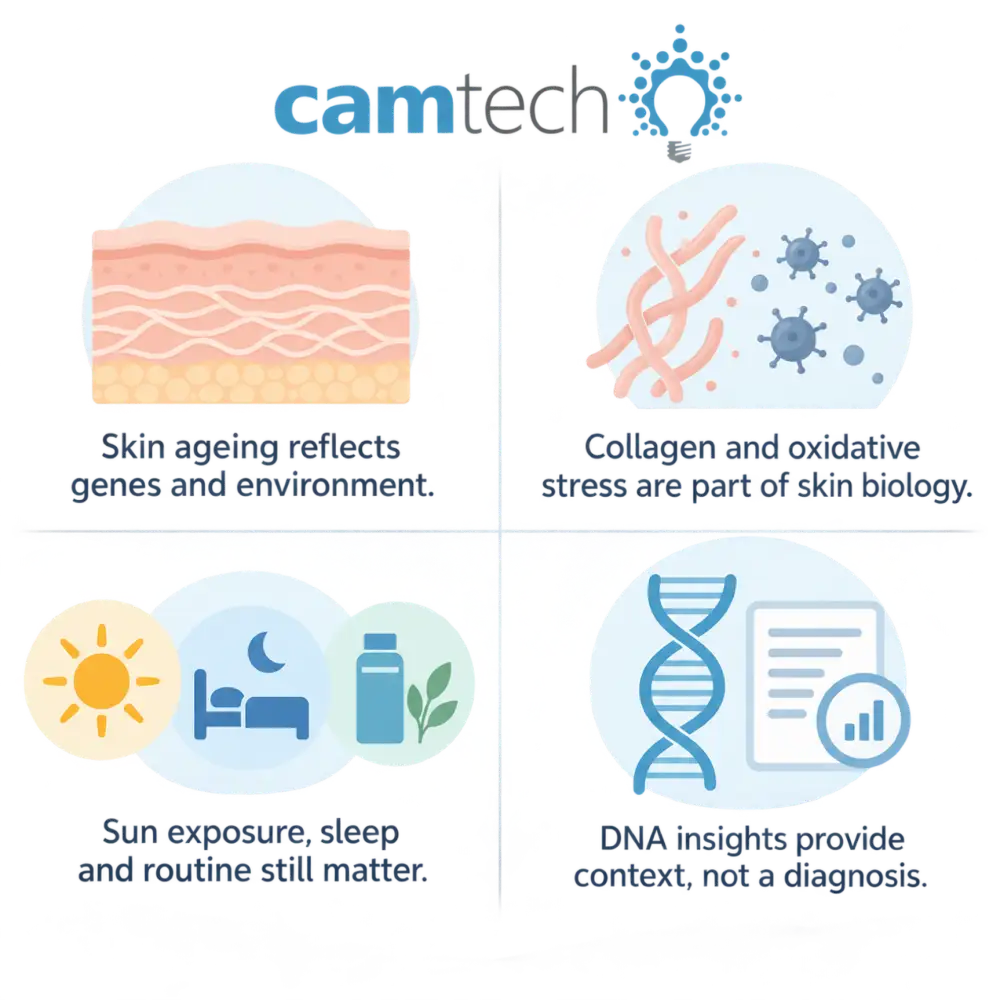
How to use the information responsibly
If you choose to use a Skin DNA test, start by treating it as one layer of information. Read the report carefully, check the limitations, and avoid making sudden changes to treatment plans or prescribed products without professional advice. Use the findings to prepare better questions for a skincare professional, dermatologist or qualified healthcare provider.
If you are exploring Camtech Health, the IDEAL Skin & Ageing DNA Test may help frame wellness conversations around skin type, dermal sensitivities and ageing-related traits. For any worrying, changing or persistent skin symptom, seek professional assessment and follow guidance in your country.
References
- Radiation: The known health effects of ultraviolet radiation, World Health Organization, 2024.
- How dermatologists treat sun-damaged skin, American Academy of Dermatology.
- IDEAL Skin & Ageing DNA Test, Camtech Health.
- The Science of Genetics in Personalized Skin Wellness, Camtech Health, 2026.
- Skin Ageing DNA Test for Personalized Care, Camtech Health, 2026.
Important information
This article is for general educational purposes only and does not replace advice, diagnosis or treatment from a qualified healthcare professional. Skin DNA tests and other wellness tests should be interpreted according to their stated purpose, product instructions and applicable local guidance. If you have a persistent, changing or worrying skin symptom, consult a dermatologist or qualified healthcare professional.
*Visuals are assisted by artificial intelligence (AI)
Frequently Asked Questions
Can a Skin DNA test tell me how fast my skin will age?
No. A Skin DNA test may describe inherited tendencies linked to skin traits, but it cannot predict exactly how your skin will age. UV exposure, lifestyle, hormones, skincare tolerance, medical history and environment also matter.
Does oxidative stress mean my skin is damaged?
Not necessarily. Oxidative stress is a biological process that can affect skin over time, especially with repeated environmental exposure. It is one reason daily protection, barrier support and professional advice for persistent concerns are important.
Can genetic insights replace a dermatologist?
No. Genetic wellness insights are not a diagnosis and cannot replace a skin examination. See a dermatologist or qualified healthcare professional for changing moles, persistent rashes, acne, pigmentation concerns, pain, bleeding or any symptom that worries you.
What should I do if my report suggests collagen breakdown risk?
Use the result as a prompt for prevention-focused questions. Consider consistent sun protection, skin-barrier support, healthy lifestyle habits and a professional discussion about suitable evidence-based skincare, rather than making sudden changes on your own.
Is the IDEAL Skin & Ageing DNA Test a medical test?
Camtech Health describes the IDEAL Skin & Ageing DNA Test as a wellness and lifestyle insight test. It is not intended to assess disease risk, diagnose, manage or treat medical conditions.