
Cross-Reactivity and Lifestyle Triggers: Allergy Planning
By Stuart Chan

Noticing a reaction after particular foods, pollen or other exposures can raise questions. A simple record of what happened and when can help you spot patterns and prepare for an informed conversation. This guide explains cross-reactivity, everyday circumstances that may coincide with reactions and where genetic insight may fit into a broader allergy plan.
What allergy cross-reactivity means
Cross-reactivity occurs when the immune system recognises similar proteins in different substances. Someone sensitised to one protein may test positive to a related protein, but that does not always mean ordinary exposure will cause symptoms. Research shows that cross-sensitisation is more common than clinical cross-reactivity.
One well-known example is pollen-food allergy syndrome. Some people with pollen allergy develop itching or swelling in the mouth after eating particular raw fruits or vegetables because their proteins resemble pollen proteins. The 2024 international consensus on pollen-food allergy syndrome advises avoiding the raw food that caused the reaction, not automatically excluding every food that might be related.

Cross-reactivity is not the same as cross-contact
The terms sound similar but describe different problems. Cross-reactivity is an immune response to structurally related proteins. Cross-contact happens when an allergen is unintentionally transferred into another food during preparation, storage or serving. For a person with a confirmed food allergy, cross-contact can create a real exposure even when the meal was not meant to contain that allergen.
A third issue is food intolerance. Intolerance does not usually involve the same immune pathway as food allergy and may cause symptoms such as bloating or discomfort. These categories need different evaluation, so broad food restriction based only on symptoms or a consumer report can be misleading.
Keep the categories clear
- Genetic predisposition describes potential susceptibility, not a diagnosis.
- Sensitisation on a test does not always equal symptoms during exposure.
- Clinical allergy is assessed using history and appropriate allergy testing, sometimes including a supervised food challenge.
- Intolerance and allergy can overlap in everyday language but are medically different.
How lifestyle circumstances can shape the pattern
Exercise, alcohol, illness, sleep loss, seasonal pollen and some medicines can be useful context when you are tracking reactions. These are sometimes called cofactors. Evidence about their role varies; food-dependent exercise-induced anaphylaxis is a recognised example. Note what was happening, but do not deliberately recreate a reaction.
The most useful record captures the food or exposure, amount, preparation method, timing, symptoms, exercise, alcohol, medicines, illness and seasonal setting. Photos of packaging and ingredient lists can help. This creates a clearer history for an allergy professional without turning correlation into a self-diagnosis.

Where an allergy DNA test may fit
The IDEAL Allergy DNA Test explores selected genetic variations linked with potential sensitivity across food, plant, airborne and chemical categories. Customers collect a saliva sample at home. The result can give you lifestyle questions to explore alongside your symptom history.
Genetic insights can help you organise questions, while clinical allergy is assessed through symptoms and a clinician’s choice of testing. If you have a reaction, an allergy professional can explain whether skin-prick testing, blood testing or a supervised food challenge is appropriate.
Camtech’s guide on using DNA results to improve lifestyle suggests treating results as one source of context for informed decisions.

Build a personalised allergy plan
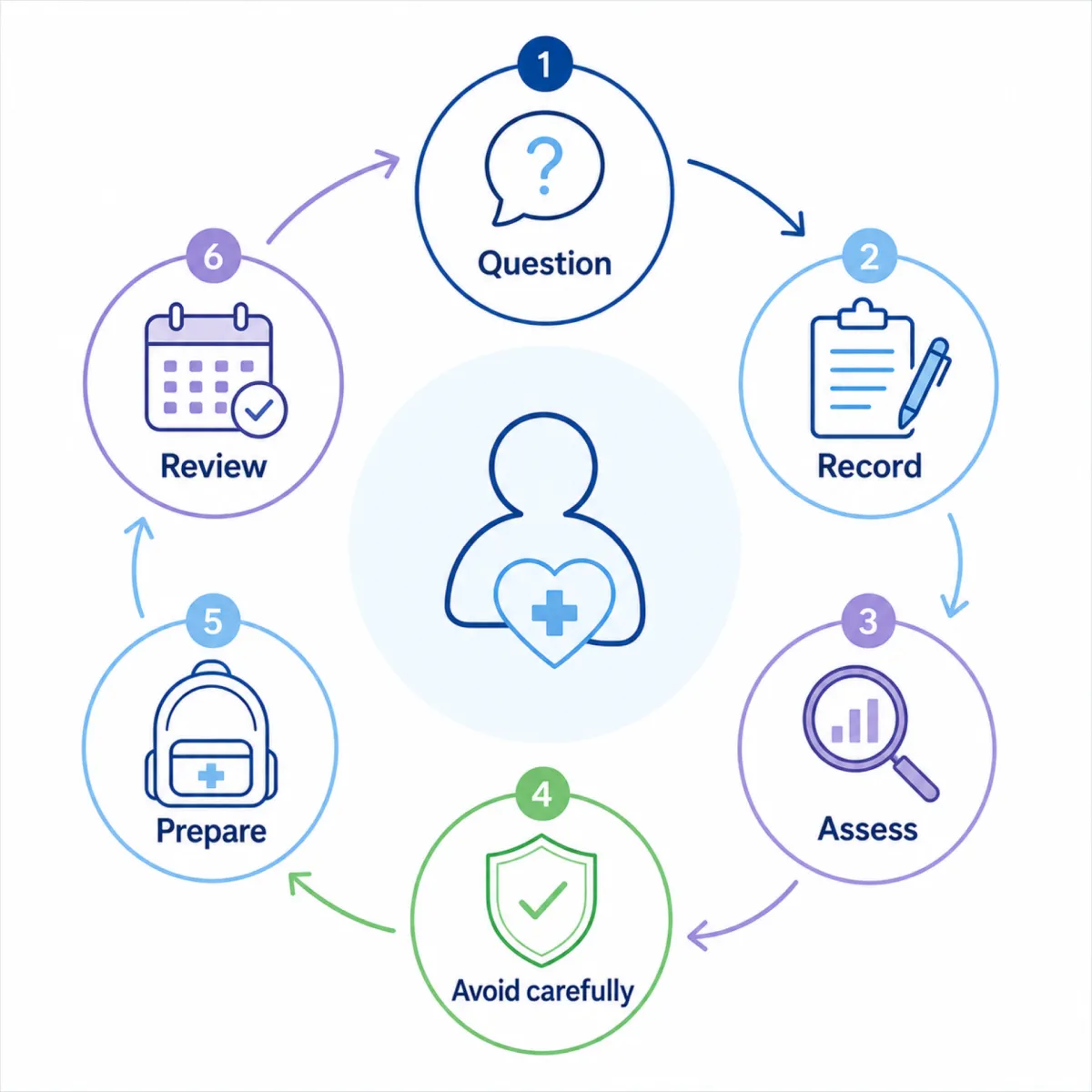
- Define the question. Separate immediate reactions from chronic or non-specific symptoms.
- Keep a structured record. Note exposure, timing, preparation, symptoms and possible cofactors.
- Seek clinical interpretation. An allergy professional can decide whether targeted testing is appropriate.
- Avoid unnecessary restrictions. Do not remove whole food families solely because they are botanically related or appear on a risk report.
- Prepare for emergencies. Follow the action plan and prescribed medicines provided by your clinician.
- Review the plan. Update it when exposures, symptoms, medicines or local guidance change.
Seek urgent medical help for breathing difficulty, throat tightness, collapse, rapidly worsening symptoms or a severe reaction affecting more than one body system. Follow the emergency guidance and medication plan provided in your country.
References
- Food Allergy Symptoms, Diagnosis and Treatment, AAAAI.
- International Delphi Consensus on Pollen-Food Allergy Syndrome, Journal of Allergy and Clinical Immunology: In Practice.
- Common Food Allergens and Cross-Reactivity, Journal of Food Allergy.
- Risk Factors for Severe Reactions in Food Allergy, Clinical and Experimental Allergy.
Frequently Asked Questions
Does a positive allergy test prove cross-reactivity?
A positive test can show sensitisation, but it does not by itself show that everyday exposure will cause symptoms. A compatible history and professional interpretation help clarify the result.
Can lifestyle factors cause a food allergy?
Lifestyle circumstances can coincide with or influence some reactions. Note the pattern and discuss it with a healthcare professional.
Can an allergy DNA test diagnose pollen-food allergy syndrome?
No. The test can provide genetic context, while pollen-food allergy syndrome is assessed through symptoms, exposure history and clinically appropriate allergy testing.
Should I avoid every related food after one reaction?
No. Keep a record of the suspected trigger and ask a clinician about related foods before making broad dietary changes.
When is an allergy reaction an emergency?
Breathing difficulty, throat tightness, collapse or rapidly worsening multi-system symptoms need urgent medical help. Follow your local emergency plan and prescribed medication instructions.
Important information
This article is general information and does not replace professional allergy assessment. Follow your clinician’s allergy action plan, and seek urgent help for breathing difficulty, throat tightness, collapse or rapidly worsening symptoms.
*Visuals are assisted by artificial intelligence (AI)