
HYROX Fiasco: Gut Health and DNA Insights
By Stuart Chan

The HYROX Beijing fiasco has made one reality of hard competition impossible to ignore: your gut is part of your training system, and "pushing through" a serious symptom is not a performance strategy. Reports described an athlete experiencing faecal incontinence during the race and continuing to the finish, which led to public criticism and an apology from HYROX. The incident raises useful questions about race safety, exercise-related gastrointestinal (GI) symptoms and how athletes can prepare more intelligently.
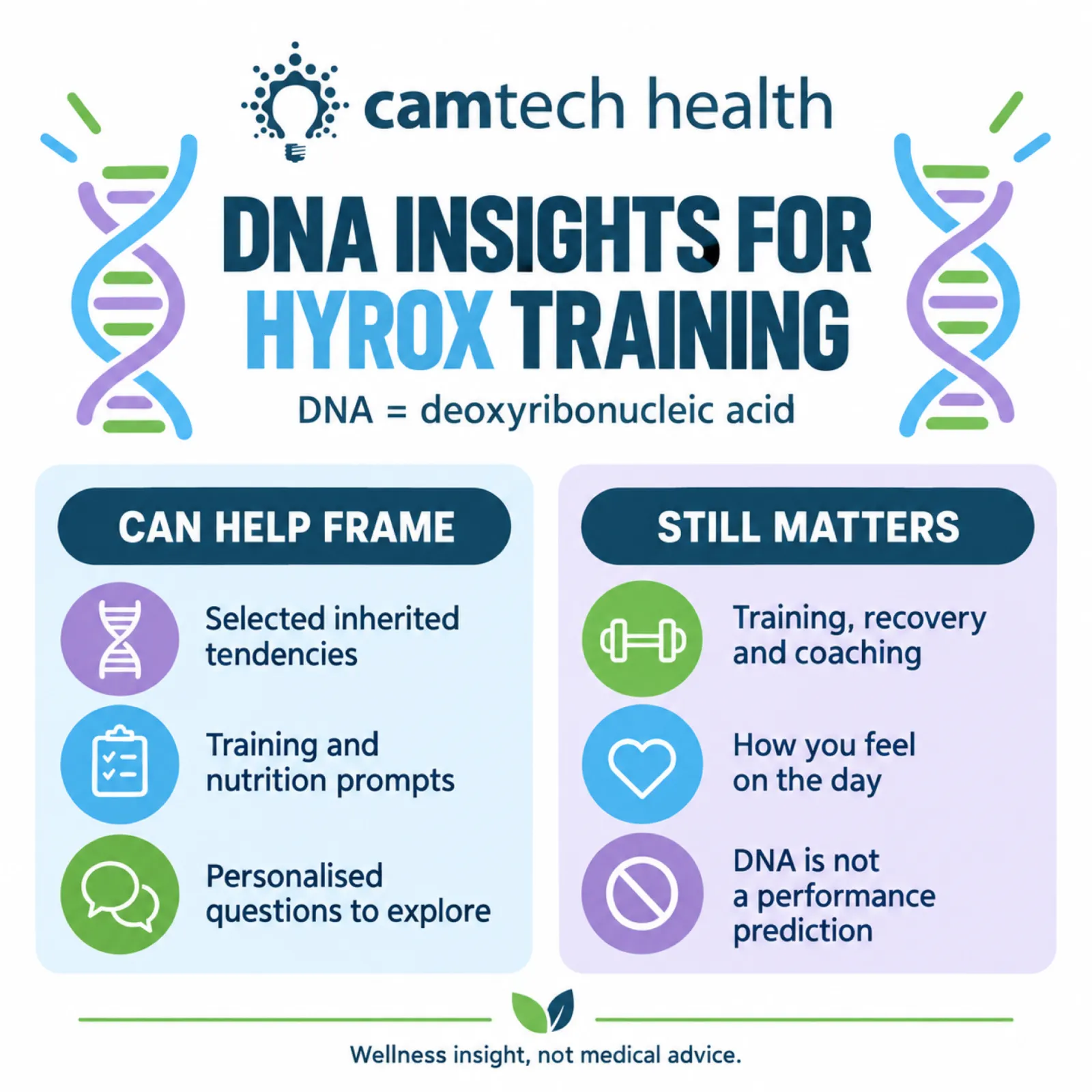
It also shows why personalised fitness advice needs humility. A deoxyribonucleic acid (DNA) test may provide context about selected inherited tendencies linked to fitness and nutrition, but it cannot predict whether you will have a bowel event, determine whether you are medically fit to race, or replace a coach, dietitian or clinician. Use DNA insights as one layer in a broader plan built around your symptoms, training response, recovery, nutrition, sleep and professional advice.
What the HYROX fiasco can teach athletes
The Beijing controversy was not simply a story about embarrassment. It exposed the tension between competitive ambition and a participant's immediate health. When an athlete becomes acutely unwell, organisers need clear procedures for stopping, assessing and supporting that person. Athletes also need permission to slow down or withdraw without treating that decision as failure. You can review the HYROX rulebooks and the reported apology and response to the Beijing incident.
No article or social-media post can diagnose the athlete involved. A sudden bowel event during intense exercise can have multiple possible contributors, including exercise intensity, mechanical movement, heat, food and fluid choices, nerves, infection, medication or a pre-existing gastrointestinal condition. The responsible lesson is not to guess at the cause; it is to recognise that a severe or repeated symptom should be assessed.
For your own event preparation, make safety part of the plan. Know where the toilets and medical points are, agree a stop signal with a teammate or coach, and decide in advance which symptoms mean you will stop. A personal best is never a reason to ignore fainting, confusion, severe pain, repeated vomiting, blood in the stool or new loss of bowel control.

Why gut symptoms happen during hard training
GI symptoms are familiar to many endurance athletes. Nausea, bloating, cramps, urgency and diarrhoea can occur during strenuous exercise, and running can be particularly challenging for the lower gut. A 2026 study of endurance and ultra-endurance athletes found that symptoms reported during training were associated with a greater likelihood of symptoms during competition. That finding is a population-level association, not a forecast for you; it does suggest that recurring training symptoms deserve attention before race day. Read the research on digestive vulnerability and race withdrawal.
HYROX combines running with repeated high-effort functional movements. The physical stress, breathing demand and movement of the gut happen while an athlete is also managing fuel and fluid. Research reviews describe exercise-related GI symptoms as multifactorial, with factors such as intensity, duration, heat, nutrition and individual susceptibility interacting rather than one universal trigger. This is why copying an elite athlete's fuelling plan can be unhelpful or unsafe.
Build a simple training record. Note the session, intensity, duration, temperature, sleep, stress, food, drinks, supplements, medication and symptoms. Look for patterns over several sessions. If symptoms are frequent, severe or progressing, speak with a qualified healthcare professional before experimenting with restrictive diets, supplements or medicines. A sports dietitian can then help translate a medically appropriate plan into race practice.

What a Fitness DNA test can and cannot tell you
Camtech Health's IDEAL Fitness and Nutrition DNA Test explores 35 selected genetic traits across fitness, metabolism, body type, vitamin absorption and nutrient intake from a saliva sample. The report is intended to provide lifestyle and wellness insight, not a prescription for training or a diagnosis.
For a HYROX athlete, that may make the report a starting point for better questions. You might use selected fitness or nutrition tendencies to discuss training structure, fuelling habits or recovery with a coach or dietitian. You can also use the Camtech Health guide to strength and endurance genetics as broader reading about why inherited tendencies are only one part of exercise response.
The limits matter just as much as the possible usefulness. The test cannot tell you that you are "built" for HYROX, predict an exact race time, identify the cause of diarrhoea or incontinence, assess an injury, measure your current vitamin levels, or determine medical fitness to exercise. A higher or lower tendency is not a certainty. Training history, technique, programme design, sleep, food, hydration, age, environment, health conditions and consistency all remain relevant.

Turn genetic context into safer training decisions
The most responsible way to use a Fitness DNA report is to combine it with what your body actually does. If a report highlights a tendency related to endurance, power, metabolism or nutrient handling, treat it as a prompt for a conversation rather than an instruction. Compare it with your training log, performance history, recovery, digestion and goals. If the data conflicts with your lived response, do not force your programme to match the report.
Use the result to ask practical questions: Do I recover well from two hard sessions close together? Which fuelling pattern has been comfortable during training? Do I need a longer transition between food and exercise? Is my training load increasing faster than my sleep and recovery can support? Would a coach or dietitian change the plan after seeing my history? These questions are more useful than searching for a single "best" gene or a guaranteed answer.
Do not make significant changes to prescribed medication, supplements, diet or exercise based on the report alone. If you have ongoing GI symptoms, a diagnosed condition, an injury, unexplained weight change, bleeding or concerns about your ability to exercise, seek professional advice. DNA wellness information does not replace clinical testing or medical assessment.
A practical HYROX preparation checklist
Start with a training plan that progresses gradually and includes recovery. Practise food and fluid choices under conditions that resemble the event, but change one variable at a time so you can learn what suits you. Schedule toilet access, understand the venue layout and tell your team what symptoms mean you will stop. Avoid a last-minute supplement, diet or hydration experiment.
Before race day, review any symptoms that have appeared during training. Mild, isolated discomfort may be manageable with qualified guidance, but severe, recurrent or worsening symptoms need medical attention. Seek prompt help for blood in the stool, black stools, persistent diarrhoea, severe abdominal pain, repeated vomiting, fever, fainting, confusion, dehydration, unexplained weight loss or new loss of bowel control.
The best use of a Fitness DNA test is measured and personal: one information layer that may help you have a more informed conversation about training and nutrition. The best response to the HYROX fiasco is equally measured: clear safety decisions, honest symptom reporting and a willingness to stop when health comes first.
References
- HYROX rulebooks
- ABC News: HYROX co-founder apologises after athlete continues Beijing race
- PubMed: Digestive Vulnerability and Exercise Exposure as Correlates of Gastrointestinal Symptoms and Race Withdrawal
- PubMed: Gastrointestinal pathophysiology during endurance exercise
- Camtech Health: IDEAL Fitness and Nutrition DNA Test
Medical disclaimer
This article is for general education and does not diagnose gastrointestinal symptoms, determine medical fitness for HYROX, predict athletic performance or replace advice from a qualified healthcare professional. The IDEAL Fitness and Nutrition DNA Test is a non-diagnostic wellness test and does not measure current vitamin levels, injury status or exercise safety. Product availability and intended use vary by region. Seek medical advice for persistent or concerning symptoms.
*Visuals are assisted by artificial intelligence (AI)
Patient frequently asked questions
Can a Fitness DNA test predict how I will perform in HYROX?
No. It provides selected genetic wellness insights, not a race-time prediction. Training, technique, recovery, nutrition, sleep, health and race conditions all influence performance.
Can DNA explain why I had diarrhoea during training?
No. The test is not designed to diagnose gastrointestinal symptoms. Repeated or severe diarrhoea needs appropriate medical assessment, followed by qualified nutrition advice if needed.
Does a higher endurance tendency mean I should train harder?
No. A tendency is not a command or certainty. Use it as one discussion point alongside your training history, recovery and goals, and increase workload cautiously.
What should I do if I lose bowel control during exercise?
Stop if you are unwell, seek help and arrange medical advice, particularly if the episode is new, recurrent or accompanied by pain, bleeding, weakness, numbness or other warning signs.
How should I use genetic insights in my training plan?
Discuss them with a coach, dietitian or healthcare professional and compare them with your real-world response. Do not change medication, supplements, diet or exercise significantly based on the report alone.