
Personalised Skincare: Ingredients and Genetic Tendencies
By Stuart Chan
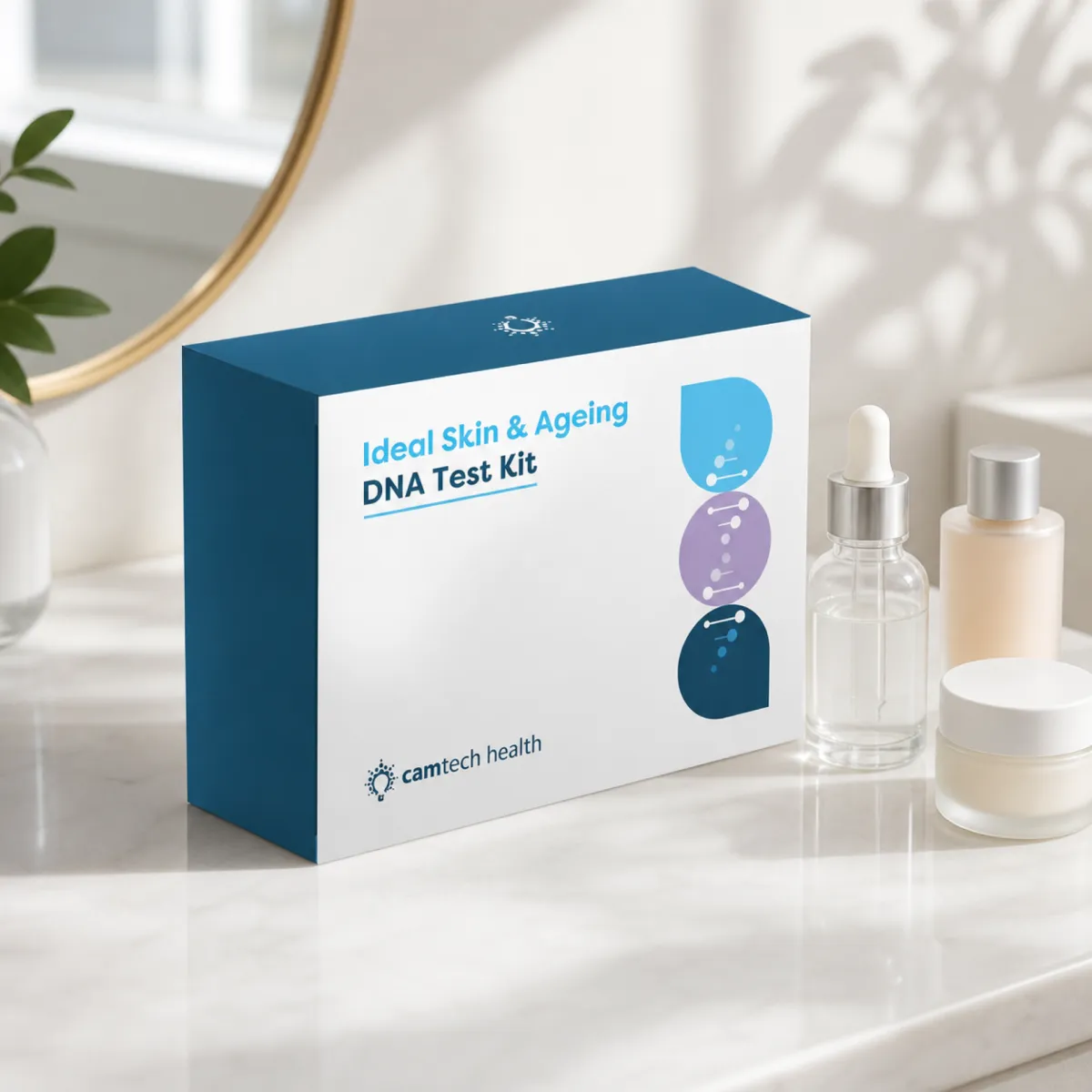
If you are trying to build a skincare routine that suits you, genetic wellness insights can add context, but they should not make your routine more complicated. They may point to tendencies linked to skin type, dermal sensitivity or ageing, while your current skin response, product history, environment and professional advice remain essential.
Camtech Health describes its IDEAL Skin & Ageing DNA Test as a general wellness test that analyses 21 traits, including skin type, dermal sensitivities and overall longevity. The product uses a saliva sample and is not intended to assess disease risk, diagnose, manage or treat a medical condition. That distinction should guide every skincare decision that follows.
Personalised does not mean predetermined

Skin ageing and sensitivity are influenced by many interacting factors. Genetics can contribute, but so can ultraviolet exposure, climate, hormones, medication, sleep, smoking, pollution, current skin conditions and the products used over time. A 2025 systematic review and meta-analysis of skin-ageing genetics found associations between multiple genetic loci and features such as wrinkling, pigmentation and skin colour, while also noting substantial variation between studies and the need for further research.
This is why a genetic result is best treated as a tendency, not a prediction. It can help you ask a better question, such as ‘Should I prioritise barrier support?’ or ‘Am I using enough daily UV protection?’ It cannot prove that retinol, vitamin C, niacinamide, an exfoliating acid or any other ingredient will be effective or suitable for you.
Start with the non-negotiable skincare base
Before matching an active ingredient to any report category, make sure the basic routine is stable. A simple base usually includes:
- a gentle cleanser, or simply rinsing when cleansing is not needed
- a moisturiser that feels comfortable and does not repeatedly sting
- broad-spectrum sun protection and protective habits suited to local guidance, climate and exposure
The World Health Organization explains that ultraviolet A can reach deeper skin layers and contribute to loss of elasticity and premature ageing, while ultraviolet B is a major cause of sunburn. These effects matter regardless of a genetic report. Sun protection is therefore a routine foundation, not an optional response to a ‘high-risk’ result.
A stable base also gives you a cleaner way to judge a new product. If several cleansers, serums and treatments are changed together, it becomes difficult to know what helped or what caused irritation.
Translate a tendency into a cautious ingredient hypothesis
A report category should lead to a hypothesis, not a prescription. Use a four-step translation:
- Name the tendency. For example, a report may discuss dermal sensitivity, pigmentation-related traits or ageing-related wellness traits.
- Define the practical goal. The goal might be better comfort, more consistent UV protection, fewer episodes of irritation or support for the visible signs of photoageing.
- Choose one ingredient category to investigate. Check the product label, formulation, strength and local regulatory status rather than relying on the ingredient name alone.
- Test tolerance before expanding the routine. Follow the product instructions, introduce one change at a time and stop if a reaction is significant or persistent.
This approach leaves room for real-world evidence. Your actual skin response is important. A product that looks suitable on paper may still be too irritating, while a simple, well-tolerated moisturiser may offer more value than a complicated routine.
Match tendencies to ingredient categories, not prescriptions

The table below is an educational starting point. It does not turn a genetic result into treatment advice.
| Report tendency or concern | A sensible routine focus | Ingredient categories to discuss or investigate | Important caveat |
|---|---|---|---|
| Dermal sensitivity or a reactive skin history | Reduce avoidable irritation and support the skin barrier | Fragrance-free moisturisers; humectants such as glycerin or hyaluronic acid; barrier-supporting lipids such as ceramides | ‘Natural’ does not automatically mean gentle. Patch testing and gradual introduction still matter. Persistent redness, burning or rash needs professional assessment. |
| Pigmentation or UV-response tendencies | Consistent broad-spectrum sun protection and minimising irritation | Sunscreen suited to your skin and region; niacinamide, vitamin C or azelaic acid may be options to discuss | Pigmentation has many causes. Irritation can worsen dark marks in some skin tones, so do not layer several strong actives at once. |
| Visible ageing or collagen-related concerns | Protect against cumulative UV exposure and consider one evidence-based active | Retinol or another retinoid may be considered for some people; moisturisers can help manage dryness | The American Academy of Dermatology advises starting cautiously because retinoids can irritate, and notes that they should not be used during pregnancy. A dermatologist can help determine suitability. |
| Texture or exfoliation goals | Use the least intensive approach that meets the goal | Alpha hydroxy acids such as glycolic or lactic acid may suit some routines | The US Food and Drug Administration notes that topical AHAs may increase sun sensitivity during use and for up to a week after stopping. Follow the label and protect skin from excess sun. |
| Oxidative-stress or environmental-exposure concerns | Put UV protection and exposure reduction first | Antioxidant products, including vitamin C, may complement a routine | Antioxidants do not replace sunscreen or protective clothing. Formulation, stability and tolerance affect whether a product is useful. |
The safest choice is not always the most fashionable active. If the barrier is already irritated, the immediate priority may be to simplify rather than add another serum.
Introduce one change at a time
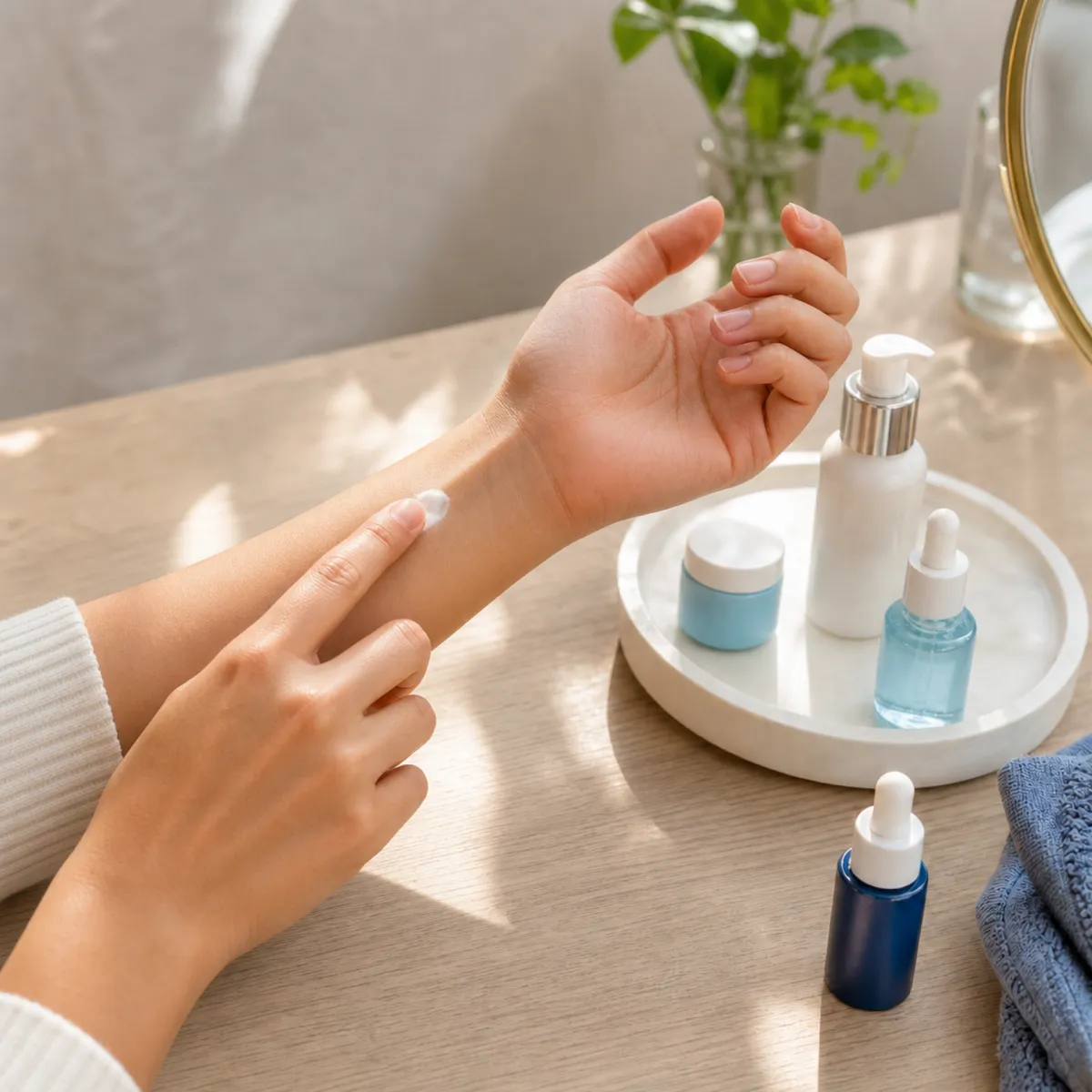
Use a controlled routine experiment:
- Keep your cleanser, moisturiser and sun-protection habits stable.
- Choose one new product with a clear purpose.
- Read the full label, including warnings, directions and region-specific advice.
- Patch test as directed and begin at the lowest frequency the instructions support.
- Track comfort, dryness, stinging, redness, breakouts and any pigment change.
- Stop and seek professional advice for swelling, blistering, a widespread rash, significant pain, eye involvement or a reaction that does not settle.
Do not assume that tingling, peeling or redness proves that a product is ‘working’. Irritation can damage the barrier and make it harder to assess the original concern. If you use prescription skincare, are pregnant or breastfeeding, take medicines that affect the skin, or have eczema, rosacea, acne or another skin condition, ask a qualified professional before adding strong actives.
What a Skin DNA wellness test can and cannot do
A Skin DNA wellness report may help organise information about inherited tendencies and make a consultation more focused. It may encourage you to pay closer attention to prevention, tolerance and consistency. It can also help move the conversation away from copying someone else’s routine.
It cannot:
- diagnose sensitive skin, eczema, rosacea, acne, melasma, allergy or skin cancer
- predict exactly how your skin will age
- prove that a specific ingredient or brand will work
- replace examination of a changing mole, persistent rash or other worrying symptom
- account for every effect of climate, medication, hormones, illness, lifestyle and cumulative exposure
Normal ageing should not be treated as a failure to optimise. The goal is healthier decision-making and a routine you can tolerate, not constant correction of every visible change.
A practical personalised routine
Morning
- Cleanse gently if needed.
- Apply a comfortable moisturiser if your skin benefits from it.
- Use broad-spectrum sun protection and protective clothing according to local guidance and your planned exposure.
Evening
- Remove sunscreen, make-up and daily debris with a gentle cleanser.
- Apply moisturiser.
- If appropriate, use one carefully selected active at the frequency supported by its label and your professional advice.
Regular review
- Is the routine comfortable enough to maintain?
- Has one product caused repeated stinging, redness or peeling?
- Are you changing several variables at once?
- Does the concern need a dermatologist rather than another cosmetic product?
Genetic insight is most useful when it supports this kind of calm review. It may help you prioritise questions, but the routine still needs to be guided by visible skin, tolerance, evidence and professional care when appropriate.
References
- IDEAL Skin & Ageing DNA Test, Camtech Health.
- Genetic determinants of skin ageing: a systematic review and meta-analysis of genome-wide association studies and candidate genes, Journal of Physiological Anthropology, 2025.
- Radiation: The known health effects of ultraviolet radiation, World Health Organization, 2024.
- Retinoid or retinol?, American Academy of Dermatology.
- Guidance for Industry: Labeling for Cosmetics Containing Alpha Hydroxy Acids, US Food and Drug Administration.
Important information
This article is for general educational purposes only and does not replace advice, diagnosis or treatment from a qualified healthcare professional. Genetic wellness insights and skincare products should be interpreted according to their stated purpose, product instructions and applicable local guidance. Seek professional assessment for persistent, changing or worrying skin symptoms.
*Visuals are assisted by artificial intelligence (AI)
Frequently Asked Questions
Can a Skin DNA test tell me the exact ingredients to buy?
No. It may provide context about inherited tendencies, but it cannot prove that a particular ingredient, concentration or product will suit you. Use results alongside your skin history, current symptoms, product tolerance and professional advice.
Do I need an expensive or complicated routine to personalise my skincare?
No. A gentle cleanser, suitable moisturiser and consistent sun protection form a strong base for many people. Personalisation often means removing unnecessary steps and testing one purposeful change at a time.
Should I start retinol if my report mentions ageing-related tendencies?
Not automatically. Retinol and other retinoids can irritate and are not suitable for everyone. Discuss suitability with a dermatologist or qualified professional, especially if you have significant sensitivity, a skin condition, use prescription products, or are pregnant or planning pregnancy.
How quickly should I judge a new product?
Follow the product label and give the routine enough time to assess tolerance without ignoring warning signs. Significant burning, swelling, blistering, widespread rash or persistent irritation is a reason to stop and seek advice, not to ‘push through’.
When should I see a dermatologist instead of adjusting my routine?
Seek professional care for a changing mole, a persistent or painful rash, bleeding, eye involvement, significant acne, suspected rosacea or eczema, pigmentation that is changing unexpectedly, or any symptom that worries you.