Understanding NAD+ and Cellular Ageing: A Simple Guide
By Stuart Chan
If you have come across NAD+ in conversations about longevity, supplements or cellular health, you may wonder what it is and what a NAD test can really tell you.
The short answer is that nicotinamide adenine dinucleotide (NAD) is a coenzyme found in living cells. It helps enzymes carry out chemical reactions involved in energy metabolism and other essential cell processes. NAD+ is one form of NAD, while NADH is its reduced partner. Both take part in the reactions that help cells transfer energy.
NAD is scientifically important, but a single NAD result is not a complete measure of ageing, health or lifespan. It is better understood as one biomarker that may add context when you look at it alongside your health history, lifestyle, supplement use and professional guidance.
What is NAD+?
NAD is a coenzyme: a helper molecule that allows enzymes to perform their work. Your body can make NAD from niacin, also known as vitamin B3, and related compounds from food. The National Institutes of Health Office of Dietary Supplements explains that NAD is needed for genome integrity, gene expression and cellular communication, as well as for many reactions involved in metabolism.
NAD exists in a cycle of related forms. NAD+ is the oxidised form, and NADH is the reduced form. They switch between these states during redox reactions, meaning reactions involving the transfer of electrons. This cycling is one reason NAD is closely connected with how cells use nutrients to support their everyday work.
That description is useful, but it should not be stretched too far. A blood measurement of NAD is a measurement of the amount reported by a particular assay. It is not a direct reading of how well every mitochondrion is working, whether all DNA repair is complete or how quickly a person is ageing. The exact analyte, units, sample type and reference interval should always be read from the current product and laboratory information.
Why cellular ageing is bigger than one molecule
Ageing is not a single switch that turns on at a particular birthday. The World Health Organization describes biological ageing as the accumulation of molecular and cellular damage over time. It also emphasises that changes are not linear or identical for everyone and that health is shaped by genes, physical and social environments, and lifestyle.
NAD sits inside this wider picture. Research reviews describe NAD+ as central to energy metabolism and as a cofactor for enzymes involved in several cellular pathways. These include sirtuins, CD38 and poly(ADP-ribose) polymerases (PARPs). The names are technical, but the practical point is simple: NAD participates in a network of processes rather than acting as a standalone ageing score.
This is why the phrase "higher is better" is too simple. A number may be interesting without being a target, and a change may be meaningful only when considered with the test method, the timing of the sample and what else was happening in your life. NAD testing cannot, on its own, confirm that someone is ageing well or poorly.

What NAD has to do with mitochondria and DNA repair
Mitochondria are structures inside cells that help convert nutrients into usable energy. NAD and NADH help transfer electrons during cellular respiration, so NAD metabolism is relevant to mitochondrial research. That does not make a NAD result a direct score for energy, exercise capacity or mitochondrial health. Those outcomes depend on many biological and everyday factors.
NAD is also relevant to DNA repair. Deoxyribonucleic acid (DNA) is continually exposed to normal metabolic stress and environmental influences. Some DNA-repair-related enzymes, including PARPs, use NAD during their activity. A peer-reviewed review of NAD metabolism and ageing describes these links while also showing how many pathways are involved.
The distinction matters. Knowing that NAD participates in a pathway does not tell you whether your DNA has been repaired, whether a cell is senescent or whether you are protected from disease. A NAD test may measure one biochemical value; it does not replace clinical assessment, genetic counselling or a broader evaluation of symptoms and risk.
Where supplements and lifestyle fit
Interest in NAD has grown alongside supplements such as nicotinamide riboside (NR) and nicotinamide mononucleotide (NMN). These compounds are often described as NAD precursors because the body can use them in pathways that make NAD. Human research is continuing, and results may vary with the person, the product, the dose, the duration and the way the outcome is measured.
If you are considering NR, NMN or another supplement, treat the decision separately from the question of whether to measure NAD. Do not use a test result as proof that a supplement is suitable for you, and do not assume that a change in a biomarker guarantees a health benefit. Speak with a qualified healthcare professional before changing supplements, especially if you are pregnant, take regular medication or have an underlying condition or a history of cancer.
Everyday habits also belong in the wider context. Sleep, physical activity, nutrition, stress, alcohol use, smoking, illness and medication can all be relevant to a person's overall health picture. These factors should not be presented as a guaranteed way to raise NAD or reverse ageing. They are simply part of the information that helps you and your healthcare professional interpret a result sensibly.

What a NAD test can and cannot tell you
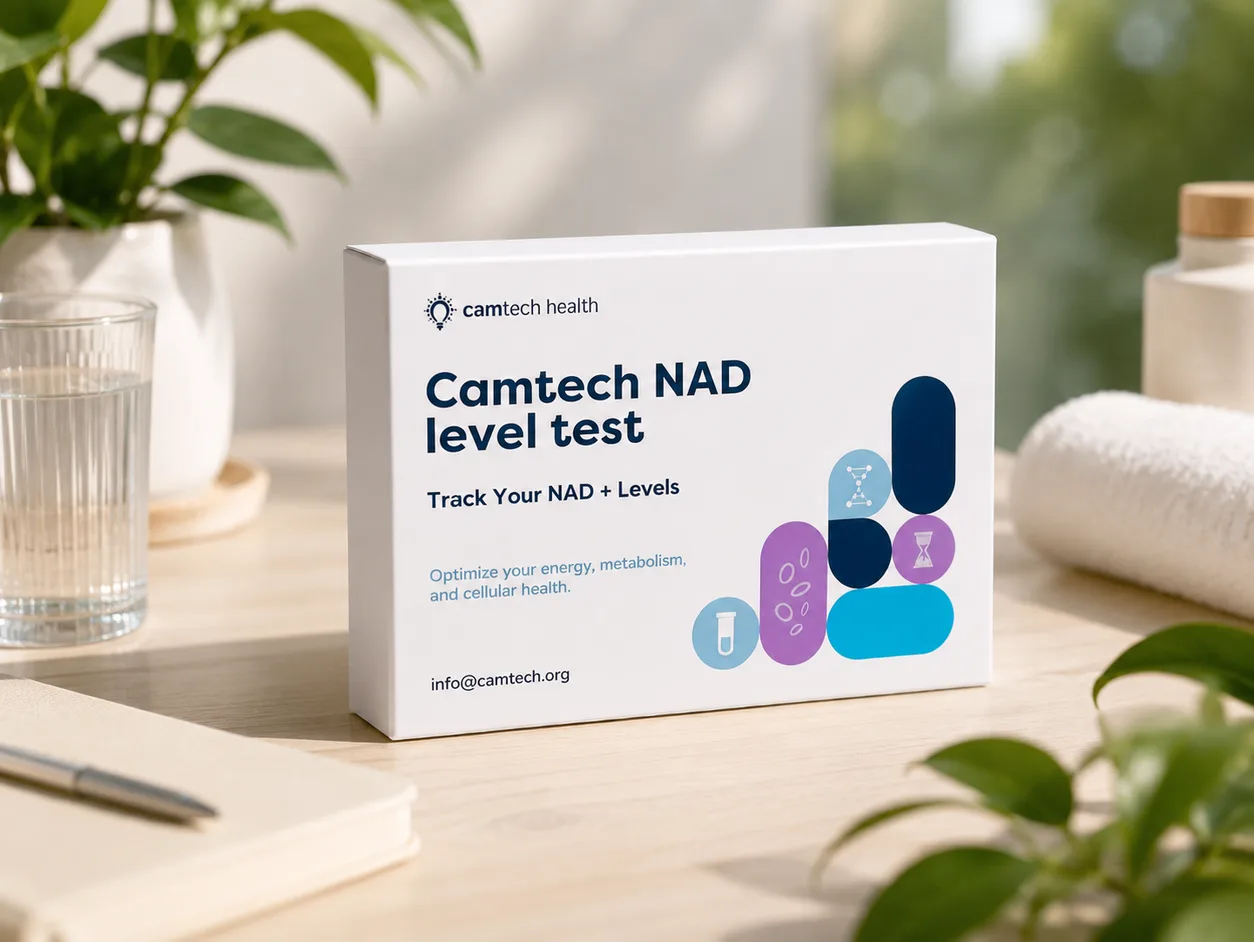
At Camtech Health, our NAD Test is designed around a small blood sample followed by laboratory analysis. The current global product information describes the measurement as total NAD, which includes NAD+ and NADH. Because product versions, report formats and availability can vary by region, check the current Camtech Health test range and the product information that applies to the kit you are considering.
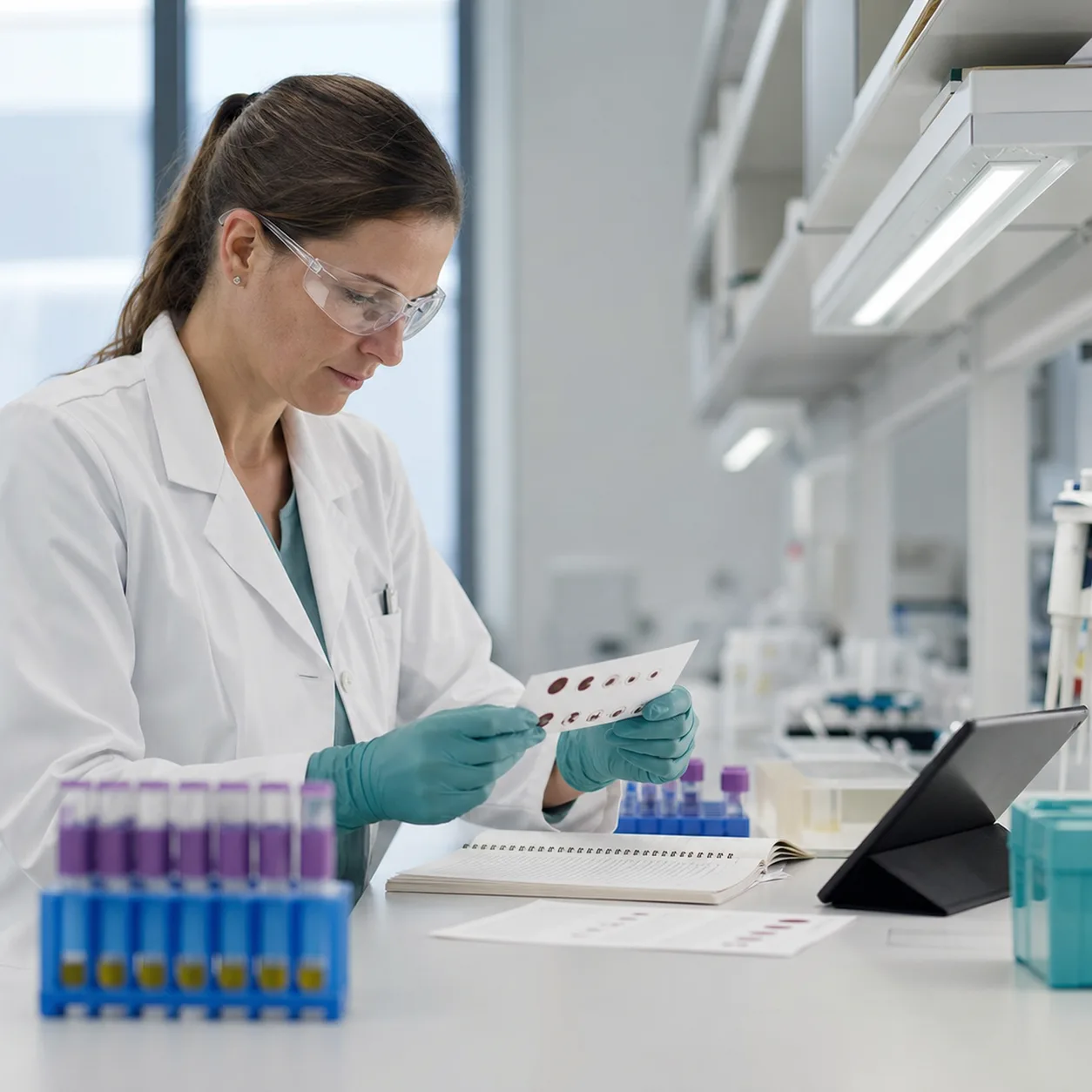
The kit is for sample collection; it does not provide a direct result at home. The current instructions for use (IFU) say that the dried-blood-spot sample is sent for laboratory analysis and that the kit is intended for adults aged 18 and over, with adult supervision required for children. If you have a condition that may affect capillary blood collection, follow the current instructions and ask a healthcare professional whether the method is appropriate for you.
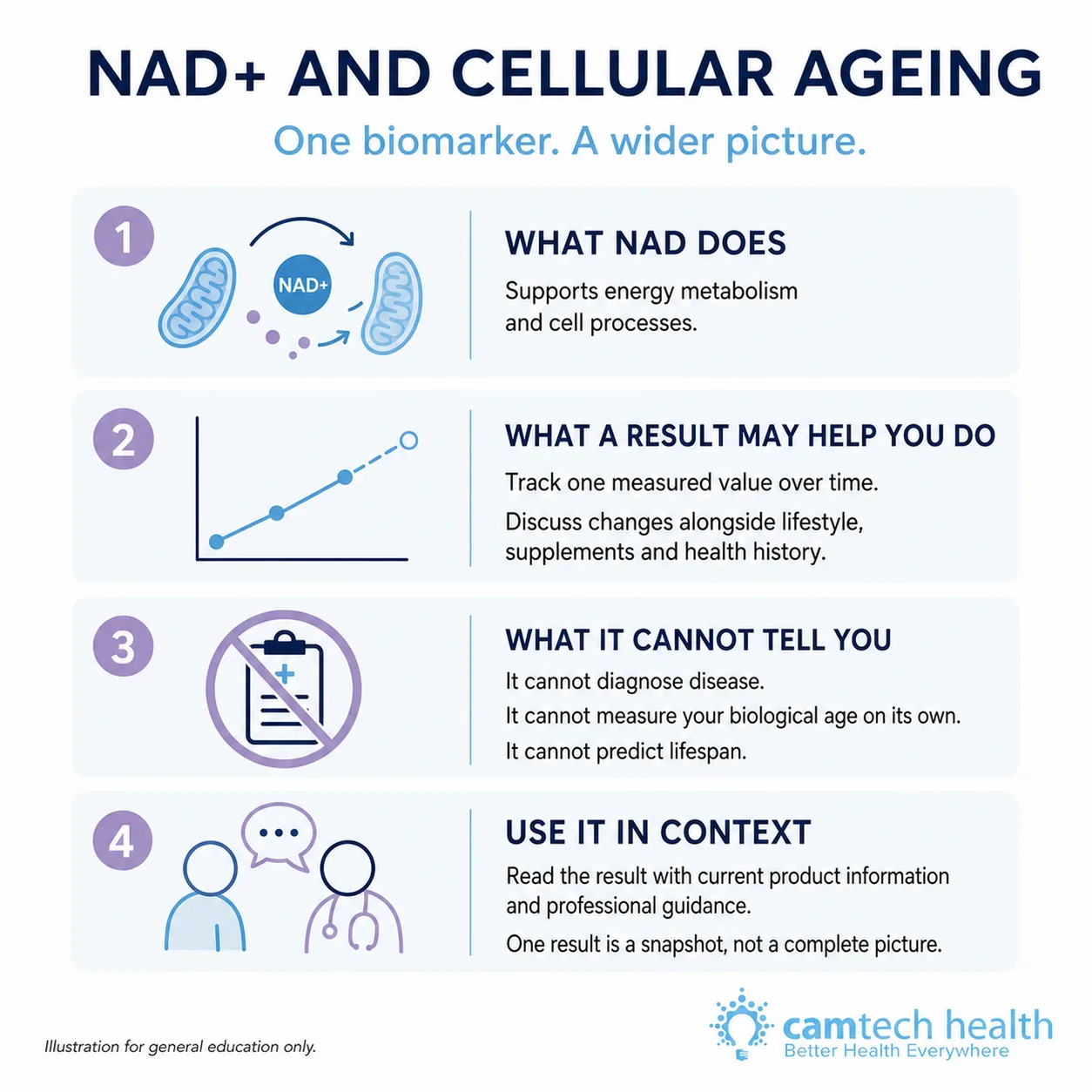
A result may help you track one measured value over time. For example, you may want to compare results around a defined lifestyle or supplement period, or use the information to support a conversation with a healthcare professional. For a trend to be useful, keep notes about the sampling date, the laboratory method, relevant supplements, recent illness and other changes that might affect interpretation.
A result cannot:
- diagnose a disease or explain the cause of symptoms;
- measure your biological age on its own;
- prove that your mitochondria or DNA-repair systems are functioning normally;
- predict how long you will live; or
- show that a supplement is safe, necessary or effective for you.
A practical way to interpret a result
Before testing, decide what question you are trying to answer. "What is my NAD level?" is a measurable question. "Am I ageing well?" is much broader and cannot be answered by one NAD result.
When your report arrives, consider asking:
- What exactly was measured? Check whether the report refers to NAD+, total NAD or another measure, and note the units.
- How should the reference interval be read? A reference interval is not automatically a target for every person. Ask how the laboratory defines and explains it.
- Were the samples collected under comparable conditions? Note the date, recent illness, major routine changes and supplement use so that repeated results are not compared without context.
- What is the next sensible step? If the result raises a concern, take it to a qualified healthcare professional rather than trying to interpret it as a diagnosis.
If you have persistent fatigue, unexplained weight change, new symptoms or a concern about disease, arrange an appropriate medical assessment. A NAD test should not delay care or replace routine screening recommended in your country.
The takeaway
NAD+ is an important coenzyme involved in energy metabolism and a range of cellular processes, including pathways linked with mitochondria and DNA repair. That scientific relevance explains why NAD is being studied in relation to cellular ageing, but it does not turn a single measurement into an ageing score.
Used carefully, NAD testing may help you track one biomarker and ask better questions over time. The most useful interpretation is balanced: read the exact analyte and method, keep the result in context, and involve a qualified healthcare professional when you have symptoms or are considering changes to supplements or care.
Patient frequently asked questions
What is NAD+ in simple terms?
NAD+ is one form of a coenzyme found in cells. It helps enzymes support energy-related reactions and other cell processes.
Is a NAD test a diagnostic test?
No. A NAD test measures a reported biomarker and cannot diagnose disease, explain symptoms or replace medical assessment.
Can NAD+ tell me my biological age?
No. One NAD result cannot determine biological age because ageing is shaped by many biological, environmental and lifestyle factors.
Can I use a test to track NR or NMN?
A test may help you observe a measured value over time, but it cannot prove that a supplement is suitable, safe or effective.
Is the Camtech NAD Test a home test or a laboratory test?
The sample is collected using a small blood-collection kit, then sent for laboratory analysis. The kit itself does not provide a direct result.
Medical Disclaimer
This article is for general educational information only. It does not diagnose, prevent, treat or cure disease, determine biological age or replace medical assessment. Test availability, intended use, analyte and report interpretation can vary by region and product version; follow current instructions and speak with a qualified healthcare professional before changing supplements, medication, diet or care. *Visuals are assisted by artificial intelligence (AI)
References
- World Health Organization: Ageing and health
- National Institutes of Health Office of Dietary Supplements: Niacin fact sheet for health professionals
- Covarrubias and colleagues: NAD+ metabolism and its roles in cellular processes during ageing
- Verdin: NAD+ in aging, metabolism, and neurodegeneration
- Camtech Health: Current tests