
Haze, Dengue and Flu Season: Choosing the Right Home Test
By Stuart Chan

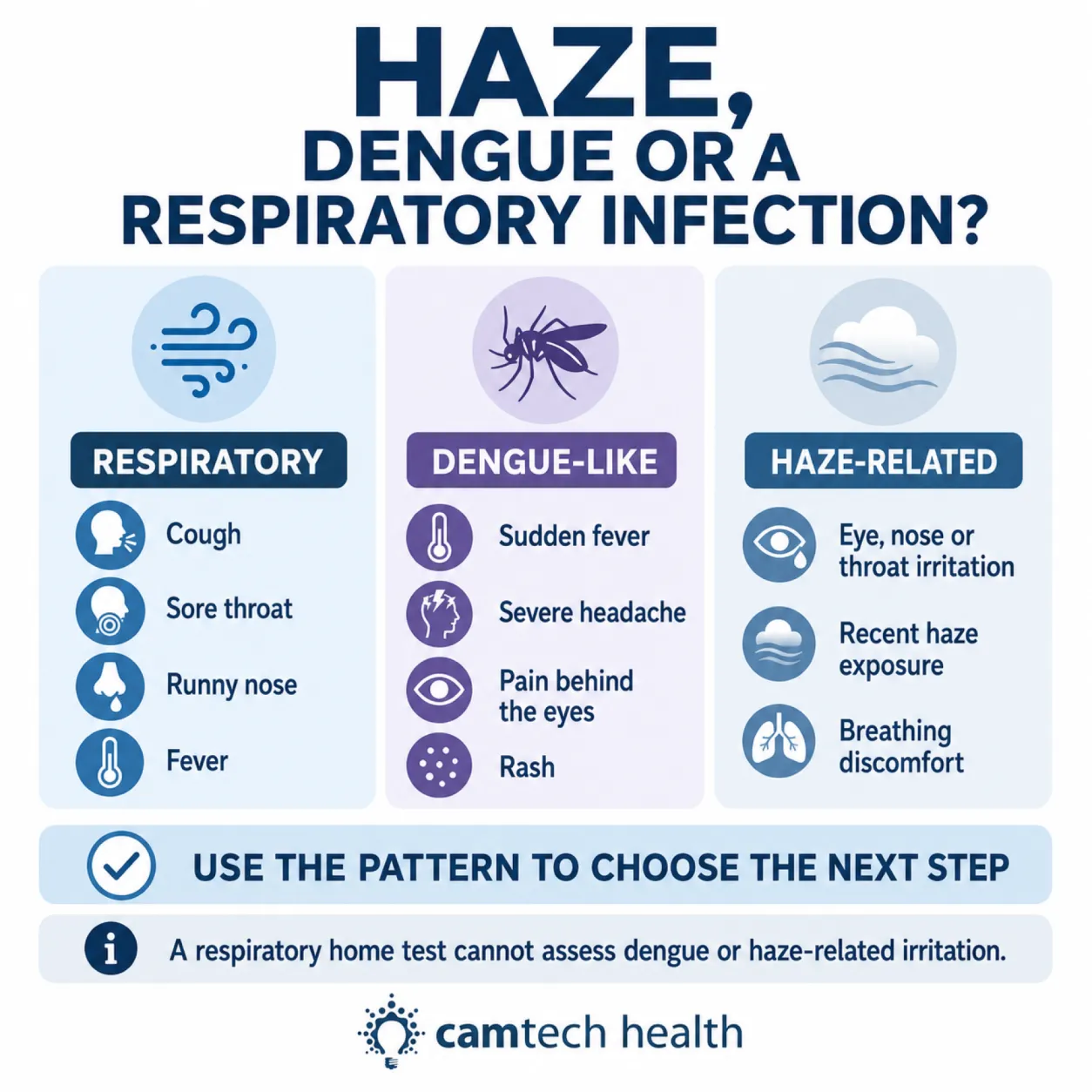
If you develop a sore throat, fever, cough or body aches in Singapore, the next step is not always obvious. Haze can irritate your airways, while dengue and respiratory infections, including influenza and coronavirus disease 2019 (COVID-19), can produce overlapping symptoms.
This guide helps you use the pattern, timing and severity of your symptoms to choose a sensible next step. You do not need to test for everything; consider recent exposure, your personal health risks and whether your symptoms are improving or worsening.
At Camtech Health, our COVID-19 and Flu A/B Test Kit is designed to check for COVID-19, Influenza A and Influenza B from a nasal swab specimen. It cannot check for dengue or show whether haze is causing irritation. Follow the current instructions supplied with the kit, and treat the result as one part of a health decision rather than a diagnosis.
If symptoms are severe, persistent, worsening or unusual, a doctor’s assessment is more appropriate than relying only on home testing. Singapore residents can also refer to Ministry of Health guidance on cold and flu symptoms, Communicable Diseases Agency (CDA) guidance on dengue and HealthHub guidance on haze.
Key points
- Respiratory symptoms such as cough, sore throat, runny nose, fever and body aches may be suitable for COVID-19 and flu home testing.
- Dengue-like symptoms such as sudden fever, severe headache, pain behind the eyes, rash, vomiting, unusual bleeding or easy bruising should be assessed by a doctor.
- Haze-related irritation is considered alongside air-quality information, exposure history and breathing symptoms, not an infectious-disease home test.
- A negative home test does not always rule out infection. Follow the kit instructions and seek medical advice if symptoms persist or worsen.
Why symptoms can be hard to interpret
Fever, tiredness, headache and body aches can occur with different infections. Cough and sore throat may suggest a respiratory illness, but they can also be worsened by haze, allergies or airway irritation. Dengue can begin with a fever and general aches, so the overall pattern and how the illness develops matter.
Haze exposure can explain irritation, but it should not be used to dismiss a sudden fever, worsening breathlessness or other symptoms that need medical attention. Instead of testing at random, ask what question you are trying to answer: could this be a respiratory infection, could dengue be a concern, or could air quality be aggravating an existing breathing problem?
When a respiratory home test may help
A respiratory home test may be relevant when symptoms suggest COVID-19 or influenza. These may include cough, sore throat, runny nose, fever, chills, headache, tiredness or body aches.
At Camtech Health, our COVID-19 and Flu A/B Test Kit is designed to check for COVID-19, Influenza A and Influenza B from a nasal swab specimen. It is intended to support home screening in the relevant Singapore market. It does not assess dengue, haze-related irritation or every possible cause of respiratory symptoms.
When you use an antigen rapid test (ART), follow the instructions for use carefully. The Health Sciences Authority (HSA) explains that results can be affected by factors such as viral load, sample collection and whether the test procedure is followed correctly. A negative result does not necessarily rule out infection, particularly when symptoms continue. Follow the kit instructions about repeat testing when applicable and seek medical advice if you remain unwell.
Consider a respiratory home test when you have:
- Cough, sore throat or a runny nose.
- Fever or chills with respiratory symptoms.
- Body aches with recent contact with someone who is unwell.
- A need to check for COVID-19 and flu before deciding on next steps.
Seek medical care if symptoms worsen, breathing becomes difficult, fever remains high or you are pregnant, an older adult, immunocompromised or living with a long-term condition such as asthma, heart disease, lung disease, diabetes or kidney disease.
When symptoms may point towards dengue
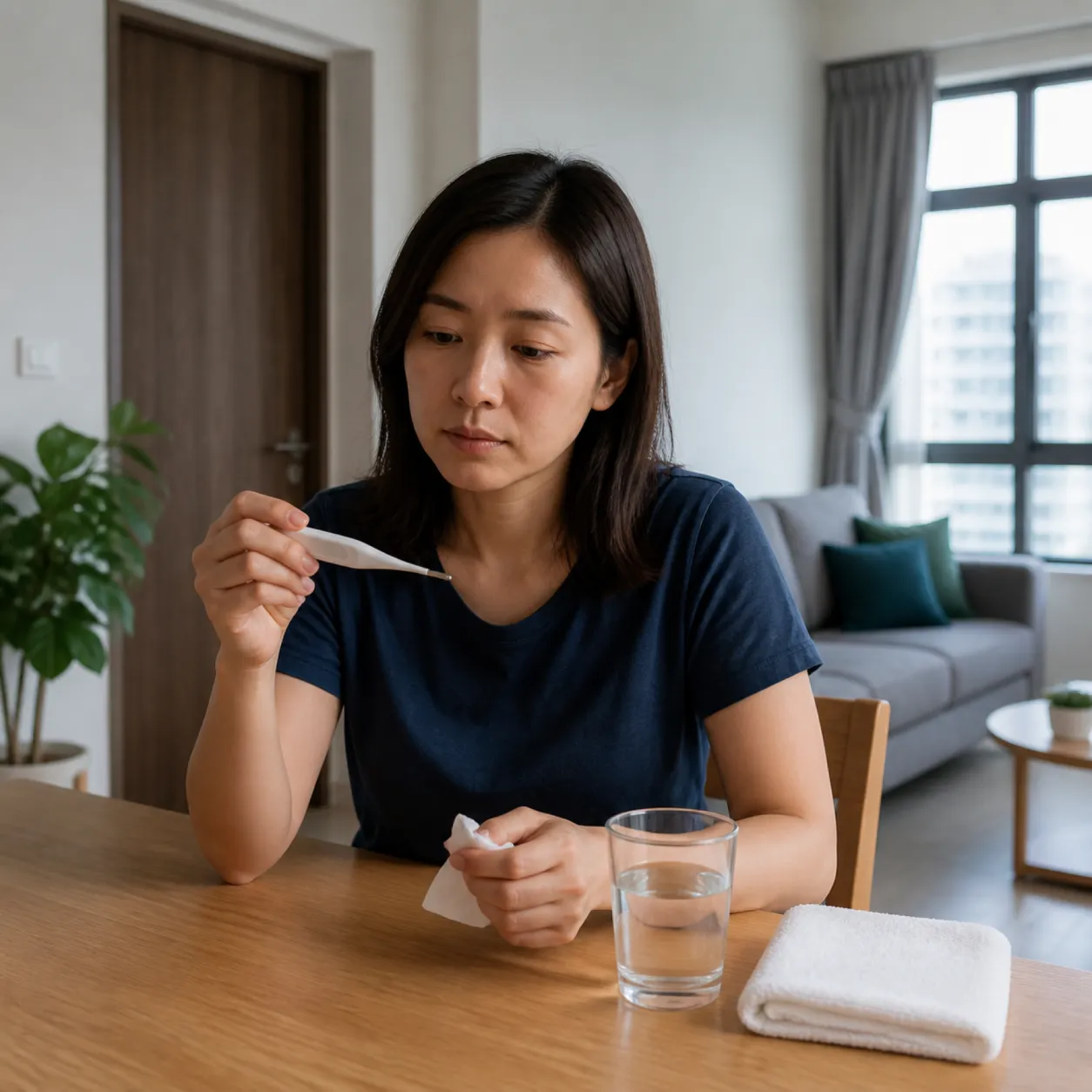
Dengue should be approached differently from a flu-like respiratory illness. The Communicable Diseases Agency (CDA) describes dengue as an acute febrile illness that may include headache, muscle or joint pain, rash, pain behind the eyes, nausea or vomiting, and bleeding. A doctor can decide whether dengue testing or further evaluation is appropriate; a respiratory home test cannot answer that question.
If you have sudden fever with severe headache, pain behind the eyes, rash, persistent vomiting, unusual bleeding or easy bruising, do not rely on a flu or COVID-19 test to explain your illness. Arrange medical assessment, especially if symptoms are worsening or you have difficulty keeping fluids down.

You can also check whether your home, workplace or school is near an active dengue cluster using the National Environment Agency (NEA) dengue cluster page. This does not diagnose dengue, but it can provide useful exposure context when you discuss symptoms with a doctor.
Speak with a doctor early if you have:
- Sudden fever lasting more than a day or two.
- Severe headache or pain behind the eyes.
- Rash, nausea, vomiting or significant body aches.
- Bleeding from the nose or gums, black stools or unusual bruising.
- Drowsiness, severe abdominal pain or signs of dehydration.
When symptoms may be haze-related
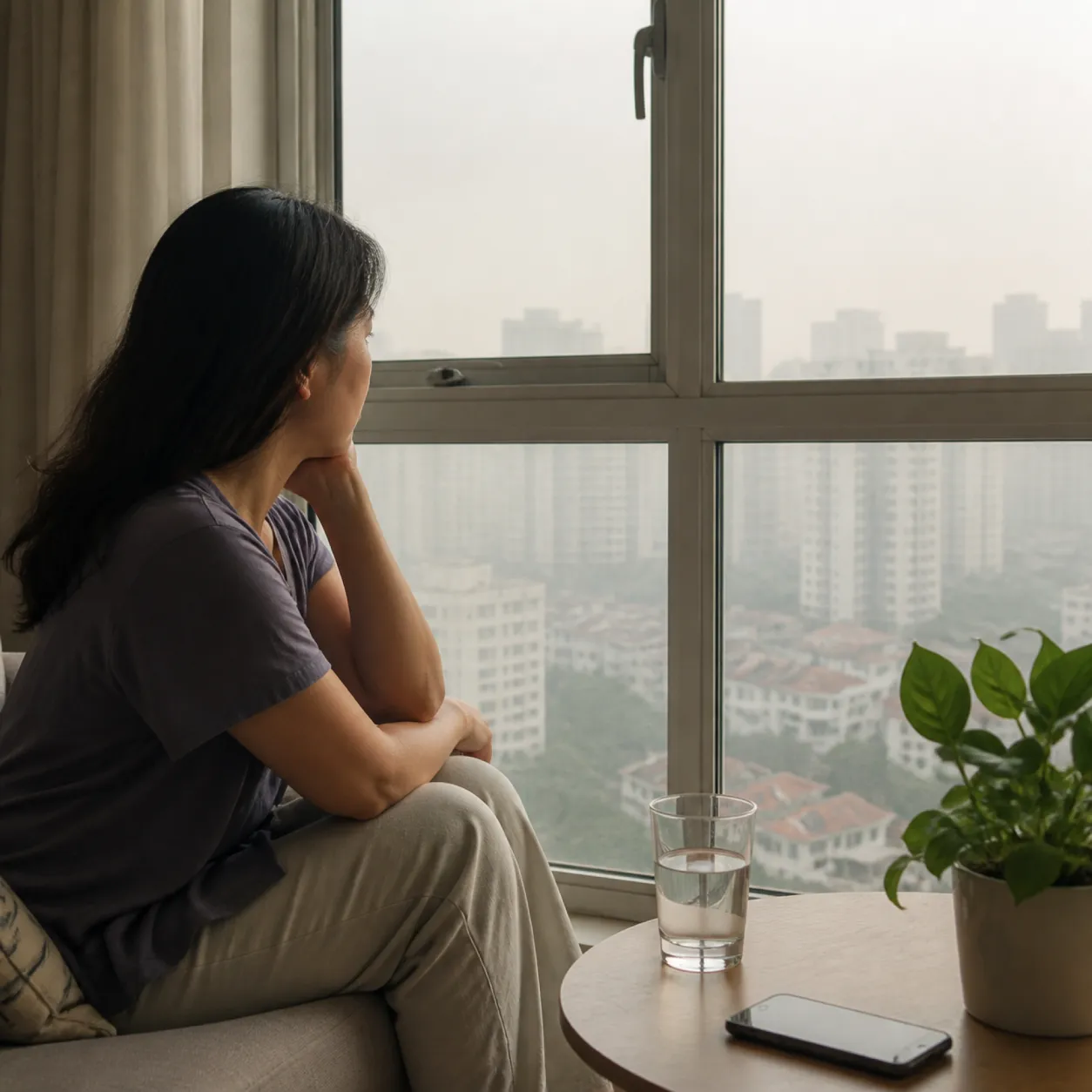
Haze particles may irritate the eyes, nose and throat. HealthHub notes that haze can also affect the heart and lungs, particularly for people with chronic heart or lung conditions such as asthma, chronic obstructive pulmonary disease or heart failure.
If symptoms appear during hazy conditions and mainly involve eye irritation, throat irritation, cough or breathing discomfort, check the official haze information site for air-quality updates. A respiratory infection may still be possible, especially if you also have fever, body aches or close contact with someone who is unwell.
Consider haze exposure when you have:
- Eye, nose or throat irritation during hazy conditions.
- Cough or breathing discomfort after outdoor exposure.
- Existing asthma, chronic lung disease or heart disease.
- Symptoms that improve when you reduce outdoor exposure.
If breathing becomes difficult, symptoms persist or your usual asthma or lung symptoms worsen, seek medical attention promptly. Follow the advice of your doctor and check current air-quality information rather than assuming that every symptom is caused by haze.
A practical guide to choosing the next step
Choosing a home test should start with the question you are trying to answer. For respiratory symptoms, the question may be whether COVID-19 or flu is present. For dengue-like symptoms, the question is whether you need clinical assessment and possible blood testing. For haze irritation, the question is whether air quality and exposure may be contributing to your symptoms.
If you have cough, sore throat, runny nose and fever
A COVID-19 and Flu A/B home test may be useful as an initial screening step. Rest, reduce close contact with others, monitor your temperature and consult a doctor if symptoms worsen or do not improve.
If you have sudden fever with headache, rash or pain behind the eyes
Consider dengue as a possible concern, especially if you have been near an active dengue cluster. Seek medical assessment rather than relying on a respiratory home test.
If you have eye, nose or throat irritation during hazy conditions
Check haze readings, reduce prolonged outdoor exposure and monitor symptoms. If you have asthma, chronic lung disease or heart disease, follow your doctor’s advice and seek care if breathing symptoms worsen.
If you are unsure which pattern fits
It is reasonable to monitor symptoms and use a respiratory home test when respiratory symptoms are present. However, medical assessment is more appropriate if symptoms are severe, persistent, worsening or suggestive of dengue.
When to seek medical care urgently
Seek prompt medical attention if you have difficulty breathing, chest pain, persistent high fever, severe abdominal pain, repeated vomiting, unusual bleeding, drowsiness, confusion, dehydration or symptoms that worsen after initially improving.
Home testing can support health monitoring, but it should not delay clinical care when symptoms are concerning. For more patient education resources, you can visit the Camtech Health blog or speak with a qualified healthcare professional in Singapore.
References
- Camtech Health: COVID-19 and Flu A/B Test Kit
- Ministry of Health Singapore: Cold and Flu
- Communicable Diseases Agency: Dengue Fever
- National Environment Agency: Dengue Clusters
- HealthHub Singapore: How to Protect Yourself Against the Haze
- Health Sciences Authority: Advisory on factors that may affect accuracy of antigen rapid test (ART) kits
- Haze portal
Medical disclaimer
This article is for general education only and does not replace consultation with a qualified doctor or healthcare professional. Home tests may support health screening decisions in selected situations, but they should not be used as the only basis for diagnosis, treatment or delaying medical care. If you have severe, persistent or worsening symptoms, or if you are concerned about dengue, respiratory infection or haze-related breathing symptoms, please consult a doctor in Singapore.
Visuals are assisted by artificial intelligence (AI).
Patient frequently asked questions
Can a home test tell me whether my symptoms are from haze, dengue or flu?
Not fully. A respiratory home test may help check for COVID-19 or Influenza A/B if you have respiratory symptoms. It does not assess haze-related irritation or dengue, so dengue-like symptoms should be assessed by a doctor.
Should I take a flu test if I have fever and body aches?
A combined COVID-19 and Flu A/B home test may be useful if you also have respiratory symptoms such as cough, sore throat or a runny nose. Seek medical assessment for rash, pain behind the eyes, unusual bleeding, persistent vomiting or severe abdominal pain.
Can haze cause cough or sore throat?
Yes. Haze particles may irritate the eyes, nose and throat, and can affect the heart and lungs, particularly in people with chronic heart or lung conditions. Check air quality, reduce exposure and seek care if symptoms persist or breathing becomes difficult.
When should I see a doctor instead of relying on a home test?
See a doctor if symptoms are severe, worsening or persistent, or if you have difficulty breathing, chest pain, high fever, persistent vomiting, unusual bleeding, severe abdominal pain, confusion or dehydration. Seek advice sooner if you are pregnant, an older adult or have a long-term medical condition.