
HPV Can Be Silent: Symptoms, Genital Warts and When to Get Checked
By Stuart Chan
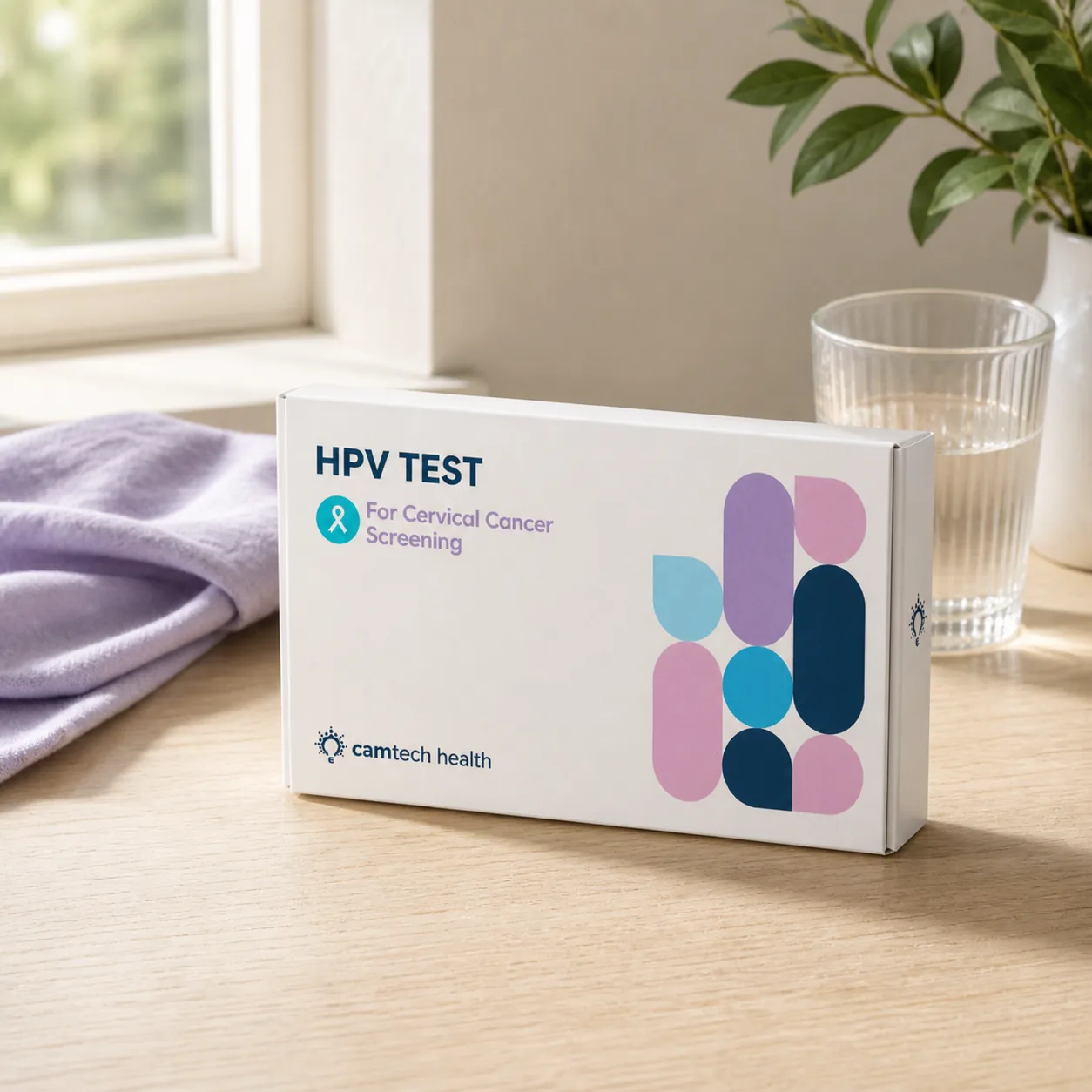
If you are here because a screening question or a new change has left you unsure what to do, you are not alone. Human papillomavirus (HPV) is common, and many people never notice that they have it. Others may notice genital warts or another change that needs an examination. These experiences can be related to HPV, but they are not interchangeable, and they do not all call for the same kind of test.
If you are wondering, “Is this something I should get checked?”, this guide is here to help. It explains what “silent” HPV means, what genital warts may look or feel like, which symptoms need a clinical check, and how cervical screening fits into Singapore’s care pathway. You do not need to diagnose a lump, wart or infection before asking for help.
Why HPV can be silent
Most HPV infections do not cause signs or symptoms. Some infections clear naturally, while persistent infection with certain high-risk types can cause changes in cervical cells over time. High-risk HPV infection of the cervix does not usually cause symptoms, which is why screening matters even when you feel completely well. HealthHub’s explanation of HPV and immunisation separates symptom-free high-risk infection from the visible genital warts that some low-risk HPV types can cause.
The HPV types most often linked with genital warts are generally different from the types most strongly linked with cervical cancer. A genital wart is not a sign that someone has cancer, and having no wart does not mean that high-risk HPV is absent. A positive high-risk HPV screening result is a risk marker that may require follow-up; it is not a diagnosis of cervical cancer.
A new result or visible change can bring worry, especially when you cannot tell when HPV was acquired. A single test or symptom usually cannot answer that question. HPV can remain unnoticed and can be passed on without someone knowing, so try to approach the next step with calm, factual advice rather than blame or assumptions about a partner.
What genital warts can look or feel like
Genital warts may appear as a small bump or a group of bumps in the genital or anal area. They can be raised or flat, small or larger, or have a cauliflower-like surface. They may stay the same, disappear or increase in size or number. Some are uncomfortable or itchy, while others are not noticeable at all. The Centers for Disease Control and Prevention’s information on genital HPV describes these patterns and notes that a healthcare provider can usually assess a wart by looking at it.
A picture, search result or home HPV kit cannot confirm that a new bump is a genital wart. Several skin conditions and infections can look similar, and an atypical, pigmented, firm, fixed, bleeding or ulcerated lesion needs particular attention. The CDC’s clinical guidance on anogenital warts says that HPV testing is not recommended to diagnose anogenital warts because the result is not confirmatory and does not guide wart management.
If you have spotted a bump or change, resist the urge to diagnose it from a photo or treat it yourself. Do not apply a household wart-removal product to genital skin or try to cut, burn or tie off a lesion. Arrange an assessment with a doctor or sexual-health service instead. In Singapore, a general practitioner (GP), polyclinic or gynaecology clinic can advise on the appropriate examination and any tests you may need.

Symptoms that should not wait for a screening test
If you are worried about a symptom, it is reasonable to ask for advice even when you are unsure whether it is related to HPV. Symptoms can have many causes, including infections, hormonal changes, irritation and benign conditions, but a screening result is not a substitute for an assessment.
Consider arranging a medical assessment if you notice:
- bleeding between periods, after sex or after menopause;
- a persistent change in the amount, colour or smell of vaginal discharge;
- pelvic pain, pain during sex or pain that is new and unexplained;
- a new genital or anal lump, growth, wart-like change, sore or ulcer; or
- a lesion that bleeds, becomes painful, grows, changes colour or does not settle.
HealthHub lists abnormal vaginal bleeding and changes in vaginal discharge among symptoms that need attention, while the CDC advises speaking with a healthcare provider about warts, unusual growths, lumps or sores. If the bleeding is heavy, pain is severe or rapidly worsening, you feel faint, or you are acutely unwell, use Singapore’s urgent-care pathway rather than waiting for a routine appointment.
At an appointment, you can simply describe when the change started, whether it is growing or recurring, and any bleeding or pain. Mention any previous HPV or Papanicolaou (Pap) test if you know it. You do not need to identify the lesion yourself; a clinician can decide whether you need an examination, a swab, a sexually transmitted infection (STI) test, cervical screening, treatment or referral.
Screening is for people who feel well; symptoms need assessment
Cervical screening is intended to find high-risk HPV or cervical-cell changes before symptoms develop. In Singapore, HealthHub’s screening journey generally describes a Pap test every three years for women aged 25 to 29 who have ever had sex, and an HPV test every five years for women aged 30 and above who have ever had sex. Your age, previous results, pregnancy status, immune system, medical history and local guidance may change what is suitable for you.
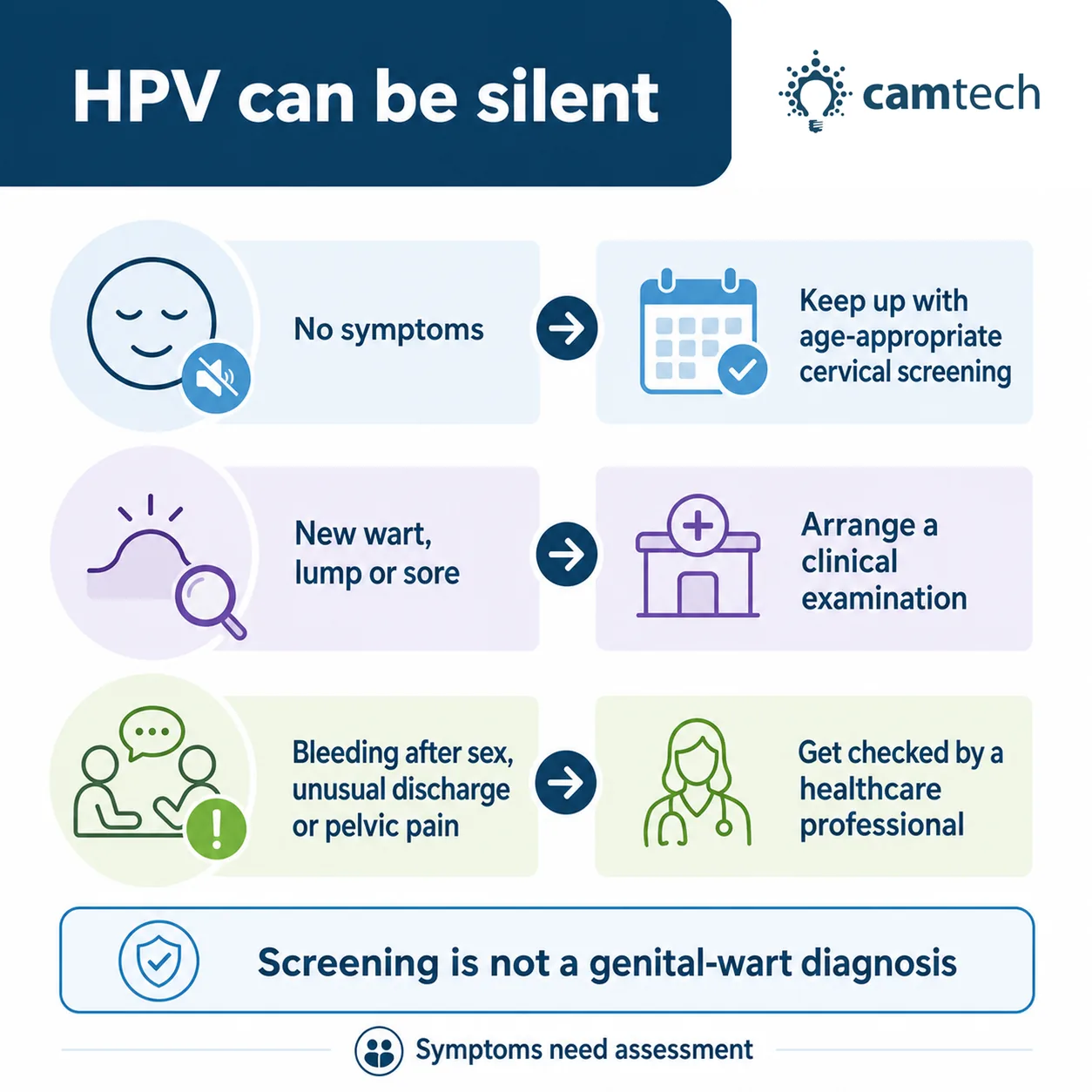
If you have symptoms, a previous abnormal result, a history of cervical treatment or simply feel unsure about the right route, speak with a qualified healthcare professional first. A negative screening result does not explain a new symptom, and an at-home screening test does not examine the cervix or diagnose a visible wart. Screening and symptom assessment work together; one cannot replace the other.
At Camtech Health, our current at-home HPV test information explains how our test is intended to be used, what our current test panel covers and how your sample moves to the laboratory. Our test is not a test for “HPV status” throughout the body, a test for mouth or throat HPV, a genital-wart diagnosis or a replacement for clinical examination. Read our Instructions for Use (IFU) and follow the current product and healthcare-provider advice.
The World Health Organization (WHO) recognises HPV self-sampling as an additional option where HPV testing is available as part of a national cervical-screening programme. The WHO guidance on HPV self-sampling also makes the follow-up link important: a screening pathway must connect a positive result to appropriate clinical assessment. Convenience should make screening easier to complete, not encourage anyone with symptoms to delay a check.

A simple “when should I get checked?” pathway
- You feel well and are due for screening. Check the current Singapore age-based recommendation and book an appropriate Pap or HPV screening route. Ask a provider whether self-collection is suitable for you.
- You notice a wart-like bump, growth, sore or lump. Arrange a clinical examination. Do not use a home screening result to label the change or choose treatment.
- You have abnormal bleeding, an unusual discharge, pelvic pain or pain during sex. Contact a GP, polyclinic doctor or gynaecologist for assessment, even if your last screening result was normal.
- Your report says positive, unclear, invalid or inadequate. Follow the provider’s instructions and ask what applies to your result. A positive high-risk HPV result may need follow-up, but it does not mean that cancer is present. An invalid or inadequate sample is not the same as a negative result.
- You are worried, pregnant or unsure what applies to you. Ask for individual advice before collecting a sample or using a result to make a medical decision.
You do not have to solve the whole question before seeking help. Start with: “What has changed, and which form of assessment can answer that question?” That small distinction can protect you from both false reassurance and unnecessary fear.

What to remember
- HPV can be present without symptoms, so feeling well does not remove the value of age-appropriate cervical screening.
- Genital warts are usually associated with different HPV types from those most associated with cervical cancer; a wart is not a cancer diagnosis.
- HPV testing is not recommended as a diagnostic test for anogenital warts.
- Abnormal bleeding, persistent discharge changes, pelvic pain or a new genital or anal growth deserve clinical advice.
- An HPV screening test is one part of a screening pathway. It does not examine every body site, diagnose cancer or replace a symptom-led examination.
Frequently asked questions
Can HPV be present without symptoms?
Yes. If you feel completely well, you may still have HPV because many infections cause no noticeable signs. That is why staying up to date with the screening route that applies to you matters.
Are genital warts caused by the same HPV types as cervical cancer?
Usually not. Wart-causing types are generally different from the high-risk types most associated with cervical cancer. If you notice a wart-like change, arrange a proper clinical assessment rather than trying to judge it yourself.
Should I use an HPV test to diagnose a genital wart?
No. HPV testing is not recommended for diagnosing anogenital warts. If you have noticed a lesion, a healthcare provider can examine it and decide whether another test or treatment is needed.
When should I get checked for possible HPV symptoms?
If you notice a new or changing genital lump, wart-like growth, sore, unusual bleeding, persistent discharge change, pelvic pain or pain during sex, arrange an assessment. Seek urgent help if symptoms are severe.
Can I use an at-home HPV test if I have symptoms?
If you have symptoms, do not rely on an at-home screening result to assess them. Ask a qualified healthcare professional what you need, because screening cannot replace an examination or symptom-led tests.
Medical disclaimer
This article is for general education and is not medical advice. It cannot diagnose HPV, genital warts, cervical cancer or any other condition, and it cannot replace an examination, cervical screening, laboratory testing or treatment by a qualified healthcare professional. Seek urgent care for heavy bleeding, severe or rapidly worsening pain, fainting or acute illness. At Camtech Health, our Instructions for Use explain how to use the kit. Follow them alongside current Singapore guidance and your clinician’s advice. *Visuals are assisted by artificial intelligence (AI)
References
- HealthHub: Preventing HPV infection - HPV vaccination
- HealthHub: Learn more about recommended screening tests by age
- Centers for Disease Control and Prevention: About genital HPV infection
- Centers for Disease Control and Prevention: Human papillomavirus infection - anogenital warts
- World Health Organization: HPV self-sampling as part of cervical cancer screening
- Camtech Health: At-home HPV test kit for Singapore