
After an HPV Result: Follow-Up Questions for Singapore
By Stuart Chan
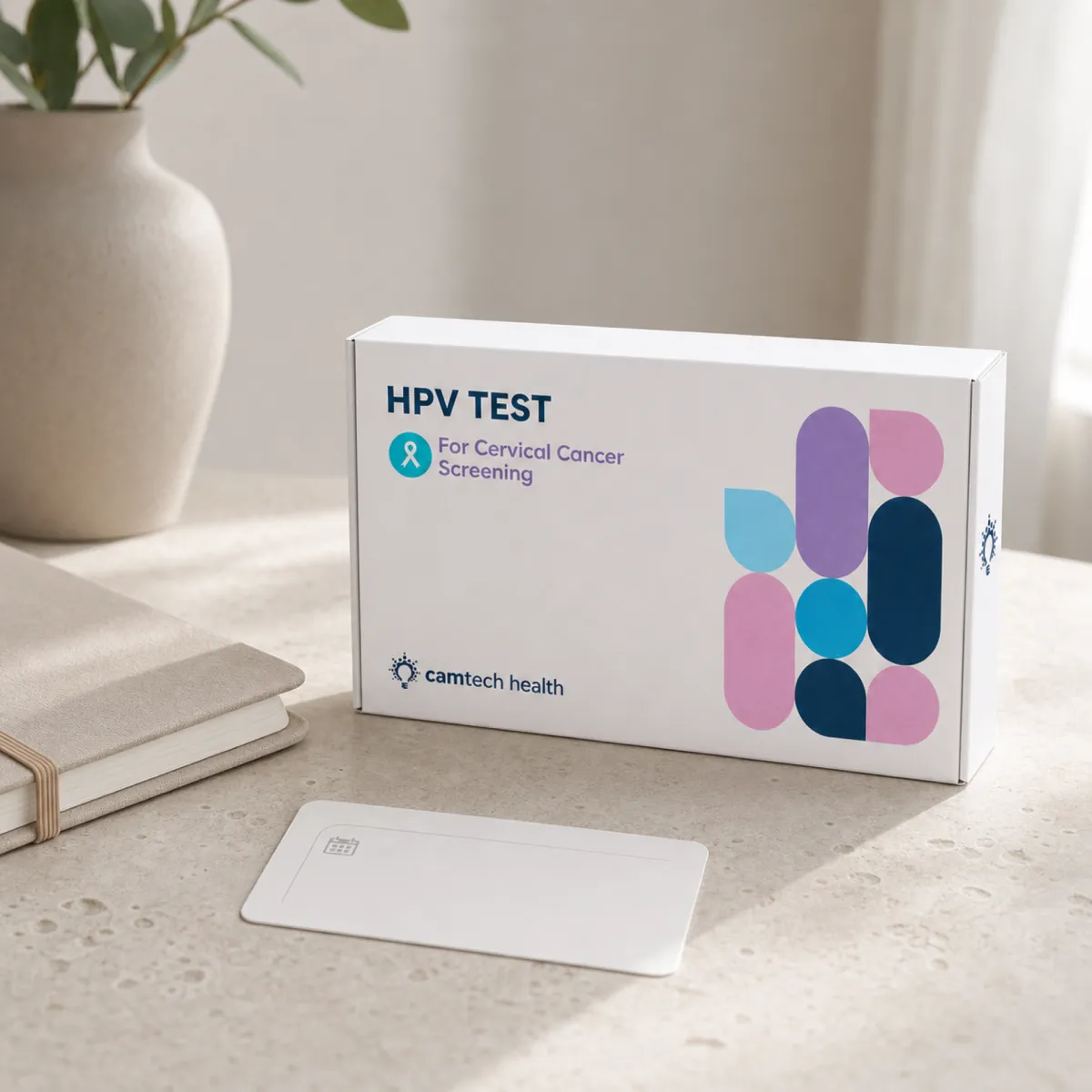
If you receive an HPV result, you may feel relief, uncertainty or worry. The most useful next step is to understand exactly what the laboratory found and what follow-up your result calls for. A positive high-risk human papillomavirus (HPV) result is not a diagnosis of cervical cancer. It means that a type of HPV associated with a higher risk of cervical cell changes was detected, so follow-up matters.
If you used the Camtech Health At-Home HPV Test Kit, keep your report available and follow the instructions provided with it. This guide helps you prepare for a discussion with a doctor, but your own report and clinical history should guide the plan.
Understanding what your HPV result means

HPV is common, and many infections are controlled by the immune system without causing symptoms. The World Health Organization explains that persistent infection with high-risk HPV, rather than a single result by itself, is what can lead to cervical cell changes over time.
Your report may say that no high-risk HPV was detected, that a specific higher-risk type was detected, or that another high-risk type was detected. It may also state whether the sample was adequate or whether another test is needed. Do not compare one line of your report with another person’s result. The recommended follow-up can vary according to the HPV type, cytology or Pap findings, previous screening history, age, symptoms, pregnancy status and immune health.
The HealthHub screening journey emphasises that a high-risk HPV result does not mean cervical cancer, while still encouraging timely assessment. Both parts of that message matter: there is no need to assume the worst, and there is good reason not to ignore the result.
Questions to ask at your follow-up appointment

Bring the full report, your identification details, a list of medicines and any previous Pap or HPV results you can access. You may want to write down these questions:
- Which HPV type or group was detected, and what does that mean for me?
- Was my sample adequate, and do any parts of the report need clarification?
- Do I need a Pap test, repeat HPV test, colposcopy or another assessment?
- How soon should the next step happen?
- Does my previous screening history change the recommendation?
- Do pregnancy, menopause, immune conditions or current medicines affect the plan?
- Which symptoms should prompt me to seek care sooner?
- Where can I arrange the follow-up, and what should I bring?
Ask the clinician to explain the plan in plain language and to confirm the timing in writing if possible. Screening is most effective when results are interpreted with proper follow-through. Singapore’s 2026 Screening Test Review Committee report similarly highlights personalised explanation and follow-up in primary care.
What may happen next in Singapore
There is no single next step for every HPV result. Depending on the report and your history, a clinician may recommend one or more of the following:
- Return to routine screening. This may apply when no high-risk HPV is detected and there are no other concerns. Follow the interval stated by your healthcare provider.
- Repeat testing after a defined interval. Some results are monitored to see whether the infection clears or persists.
- Pap or cytology testing. This looks for changes in cervical cells and may help determine whether closer assessment is needed.
- Colposcopy. A gynaecologist examines the cervix with a magnifying instrument. A small tissue sample may be taken when necessary.
- Individualised specialist review. This may be recommended when the result, symptoms, medical history or previous tests need closer assessment.
The Singapore Cancer Society’s cervical screening guidance notes that people with a positive result may be asked to repeat HPV or Pap testing or see a doctor for further tests. Use the plan attached to your own result rather than choosing an interval yourself.
If your test was taken outside a national screening programme or through self-sampling, tell the clinician exactly which test was used and provide the complete laboratory report. A self-collected HPV sample screens for the virus; it does not examine the cervix or diagnose cervical cancer.
When to seek medical advice sooner
Screening is designed for people without symptoms. Do not wait for a routine screening interval if you have unusual vaginal bleeding, bleeding after sex, persistent unusual discharge, pelvic pain or another symptom that concerns you. These symptoms can have many causes, but they deserve medical assessment.
Seek urgent medical help for severe pain, heavy bleeding, fainting or other symptoms that feel serious or rapidly worsen. If you are pregnant, immunocompromised, living with human immunodeficiency virus (HIV), or have previously been treated for cervical cell changes, ask whether you need a different follow-up pathway.
Looking after yourself while you wait

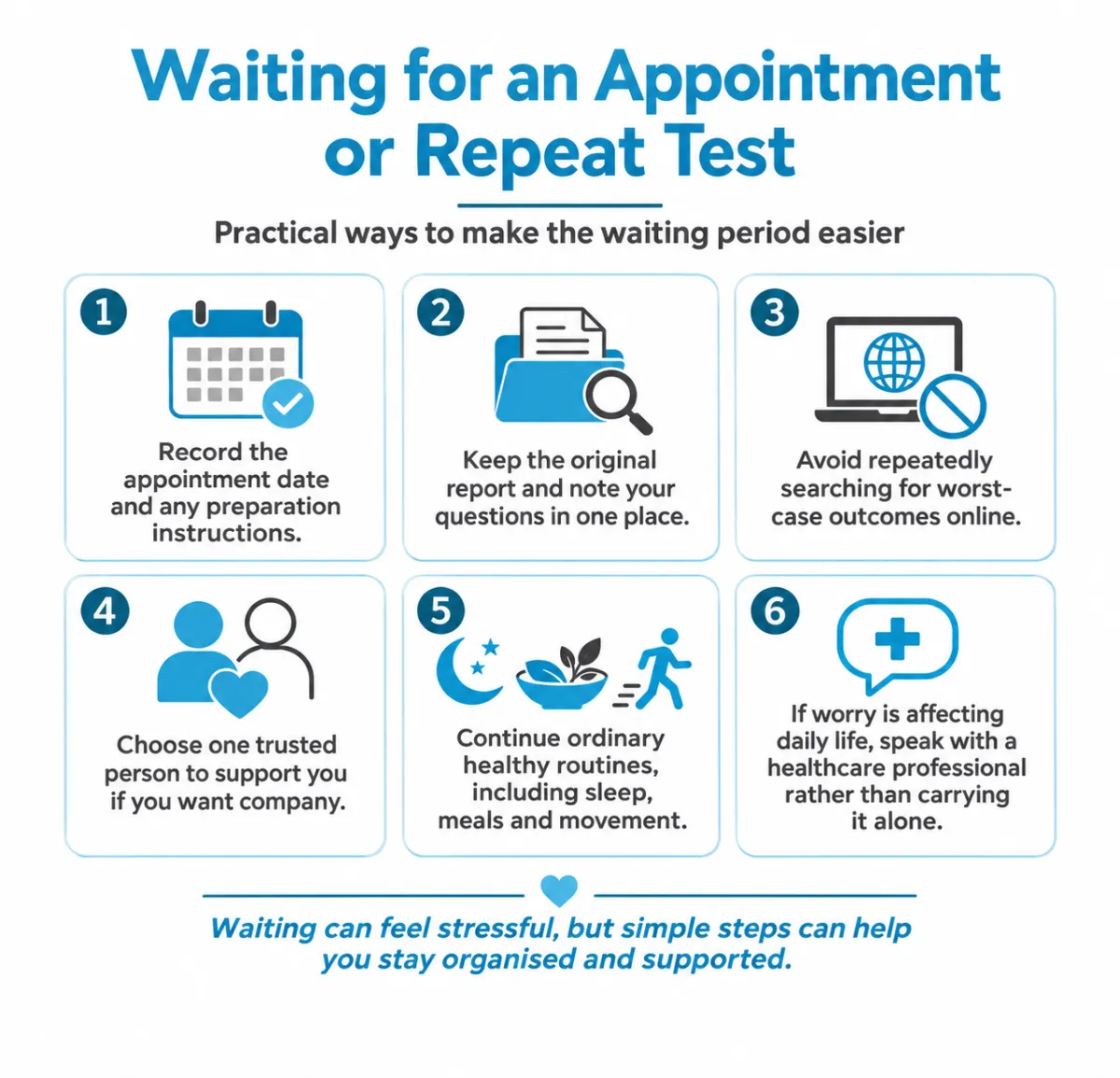
Waiting for an appointment or repeat test can feel stressful. A few practical steps can make the period easier:
- Record the appointment date and any preparation instructions.
- Keep the original report and note your questions in one place.
- Avoid repeatedly searching for worst-case outcomes online.
- Choose one trusted person to support you if you want company.
- Continue ordinary healthy routines, including sleep, meals and movement.
- If worry is affecting daily life, speak with a healthcare professional rather than carrying it alone.
An HPV result is information for the next decision, not a judgement about you or your relationships. HPV can remain undetected for a long time, so a result cannot reliably show when the infection was acquired or from whom. Focus the follow-up conversation on your health, the meaning of the report and the next appropriate assessment.
A simple plan before you leave the appointment
Before the consultation ends, make sure you can answer four questions: What did my result show? What happens next? When should it happen? Who should I contact if I have symptoms or cannot arrange the follow-up? If any answer is unclear, ask again. A clear plan is the most useful outcome of the visit.
References
- Ministry of Health Singapore. Screening Test Review Committee Report 2026, Volume 1. https://www.moh.gov.sg/others/resources-and-statistics/strc-2026-volume-1/
- HealthHub Singapore. Learn More About Recommended Screening Tests by Age. https://www.healthhub.sg/programmes/healthiersg-screening/screening-journey
- Singapore Cancer Society. Cervical Cancer Screening & HPV Test Singapore. https://singaporecancersociety.org.sg/screening-for-cervical-cancer/
- World Health Organization. Human papillomavirus and cancer. https://www.who.int/news-room/fact-sheets/detail/human-papilloma-virus-and-cancer
Important information
This article provides general educational information and does not replace personalised advice, diagnosis or treatment from a qualified healthcare professional. Follow the instructions on your own laboratory report and seek medical assessment for symptoms, unexpected findings or concerns about your follow-up plan. Seek urgent care for severe pain, heavy bleeding, fainting or rapidly worsening symptoms.
Visuals are assisted by artificial intelligence (AI)
Frequently Asked Questions
Does a positive HPV result mean I have cervical cancer?
No. It means that HPV associated with a higher risk of cervical cell changes was detected. Further testing or monitoring may be needed to assess your cervical health.
Can I wait until my next routine screening?
Follow the timing stated in your report or given by your clinician. Some results need repeat testing or assessment sooner than a routine screening interval.
Will I definitely need a colposcopy?
Not necessarily. The next step depends on the HPV type, any cytology findings, your previous results and other clinical factors. A clinician should interpret the full report.
Should my partner be tested or treated?
There is no routine treatment for an HPV infection without associated disease. Ask a clinician about vaccination, symptoms or other sexual-health concerns relevant to you and your partner.