
Are DNA Food Intolerance Tests Accurate?
By Stuart Chan
If you have been dealing with bloating, abdominal pain, diarrhoea, headaches or tiredness after eating, you may be hoping for a quick, definite answer. Some home tests claim that a saliva sample and a DNA (deoxyribonucleic acid) report can identify the foods your body cannot tolerate.
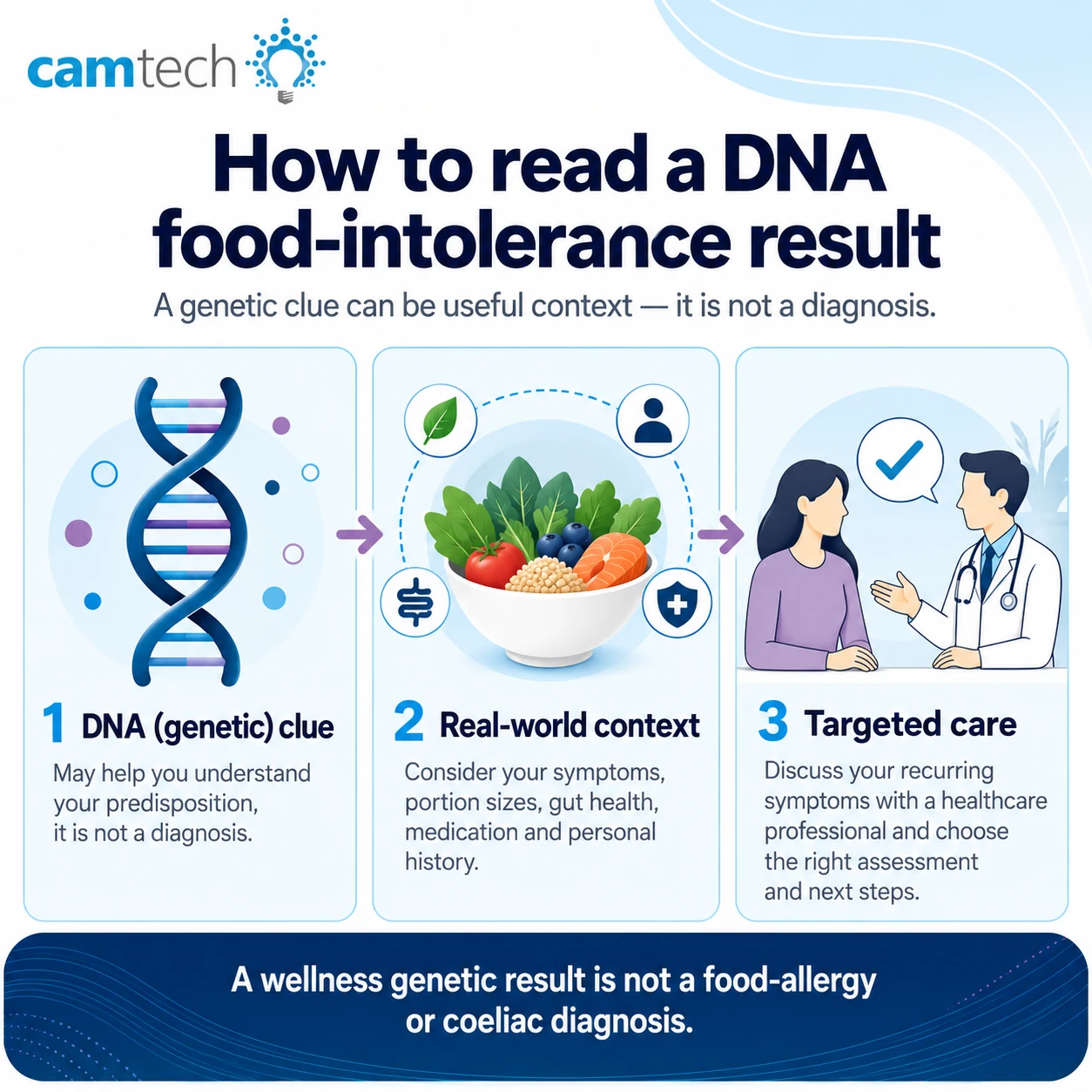
The short answer is that a DNA test can measure particular genetic variants accurately, but that does not mean it can diagnose the cause of your current symptoms. Genes can contribute to how someone digests or responds to a food, yet symptoms are also shaped by portion, age, gut health, other conditions, medicines and everyday context. A genetic result is background information, not a verdict about what you should eat.
What does "accurate" mean in a DNA food test?
When you ask whether a DNA food test is "accurate", you are usually asking three different questions:
- Analytical accuracy: did the laboratory read the genetic variant correctly?
- Clinical validity: is that variant genuinely associated with the trait being discussed?
- Clinical usefulness: does the result help a healthcare professional explain your symptoms or choose appropriate care?
A test may perform well on the first question while offering limited help with the third. Direct-to-consumer genetic testing is usually designed to provide information about traits, wellness or likelihoods. The National Library of Medicine's explanation of direct-to-consumer genetic testing notes that provider-led testing is generally needed before a result can be used to diagnose a medical condition or make healthcare decisions.
Food intolerance is not one single condition. Lactose intolerance, reactions to food chemicals, coeliac disease and symptoms linked with irritable bowel syndrome (IBS) involve different mechanisms. A useful clinical conversation asks what happened, how quickly it happened, how much was eaten and whether the pattern repeats; one multi-food genetic score cannot replace that history.
Food intolerance and food allergy are not the same
Food intolerance usually describes difficulty digesting or otherwise handling a food or ingredient. If you are experiencing it, symptoms may appear hours after eating and can include bloating, abdominal pain, gas, diarrhoea, constipation or nausea. A food allergy involves an immune response and may cause itching, wheezing, swelling or other symptoms that can become serious.
This distinction matters if you are trying to decide whether a food is safe. A genetic wellness report is not an emergency safety test and cannot clear a food after you have had swelling of the lips, mouth, throat or tongue, difficulty breathing, fainting or a rapidly spreading itchy rash. These can be signs of a serious allergic reaction, so follow local emergency guidance immediately rather than waiting for a DNA report.
The National Health Service (NHS) guide to food intolerance explains that some home tests marketed for food intolerance are not recommended because evidence for accurate results is limited and broad avoidant diets can be harmful. The European Academy of Allergy and Clinical Immunology (EAACI) guidance on food-allergy diagnosis likewise starts with an allergy-focused history and targeted testing when an immediate food allergy is suspected.

What can DNA testing tell you about food-related traits?
DNA may be relevant in a few narrow situations, but if you receive an insight, it still needs to be interpreted alongside your symptoms and wider context.
Lactose digestion
The ability to keep producing lactase, the enzyme that digests lactose, is partly influenced by inherited variants in a regulatory region near the LCT gene and within the MCM6 gene. The MedlinePlus Genetics overview of lactose intolerance describes this relationship.
If you are wondering whether lactose explains your symptoms, a DNA report is not a complete diagnosis. Symptoms can also follow secondary lactose malabsorption after an illness or injury affecting the small intestine, and people differ in how much lactose they can tolerate. A healthcare professional may use your history, a supported dietary trial or a hydrogen breath test when appropriate. The NHS lists a breath test as one possible investigation for lactose intolerance.
Coeliac disease risk markers
If gluten is worrying you, remember that coeliac disease is an autoimmune condition, not simply a preference or sensitivity. Genetic testing for the human leukocyte antigen (HLA) groups DQ2 and DQ8 can be useful in some situations. If neither is present, coeliac disease is very unlikely; having one or both does not mean that the disease is present.
The National Institute of Diabetes and Digestive and Kidney Diseases (NIDDK) diagnosis guidance explains that doctors typically use blood tests and, when needed, a small-intestine biopsy. It also cautions against starting a gluten-free diet before diagnostic testing because doing so can affect the results. Do not use a genetic result as a reason to stop eating gluten before speaking with a healthcare professional.
Complex nutrition and wellness traits
For many nutrition-related traits, the relationship between DNA and real-world symptoms is complicated. A report may estimate that someone is more or less likely to have a characteristic, but it may not account for every relevant variant or for non-genetic influences. The MedlinePlus explanation of direct-to-consumer genetic-test results specifically notes that lifestyle results can be difficult to interpret for complex traits such as nutrition, weight and sleep.
What a DNA food intolerance test cannot reliably tell you
If you are looking for a clear answer, a DNA result should not be treated as dependable evidence for any of these questions:
- Which foods are causing your symptoms today?
- How much of a food you can eat before symptoms begin?
- Whether a food is safe if you have had a rapid allergic reaction.
- Whether symptoms are caused by lactose, gluten, another ingredient or a different condition altogether.
- Whether removing a long list of foods will improve your health.
- Whether a result is diagnostic, clinically confirmed or suitable for changing medication or treatment.
Be particularly cautious with products that use "food sensitivity" as a catch-all phrase. Some online panels measure immunoglobulin G (IgG), an antibody, rather than DNA. The American Academy of Allergy, Asthma & Immunology explanation of IgG food-panel testing says there is no single test that identifies every food sensitivity and that the evidence does not support using IgG panels to diagnose food allergy or food intolerance. The Australasian Society of Clinical Immunology and Allergy position paper also describes food IgG testing as inaccurate for this purpose.

What is a more useful way to investigate symptoms?
The right pathway depends on the reaction, the person and the suspected condition. If you are unsure where to start, consider:
- Keep a short food-and-symptom diary. Record the food, portion, timing, preparation, symptoms and other relevant changes. It gives you something useful to take to an appointment without assuming that every symptom has one dietary cause.
- Discuss recurring symptoms with a healthcare professional. Bring your diary if you have one. A clinician can take a history, examine you and consider other explanations, including coeliac disease, lactose malabsorption, IBS, infection, medicines or another gastrointestinal condition.
- Use a targeted test when there is a clear question. Depending on your history, this might include a breath test for lactose intolerance, blood tests for suspected coeliac disease or specific allergy tests chosen for a suspected food. Allergy tests are not screening panels for every food.
- Make dietary changes carefully. A dietitian can help plan an elimination and reintroduction approach while protecting nutritional balance. Avoiding dairy, wheat or multiple food groups without guidance can make meals unnecessarily restrictive and may make later assessment harder.
- Treat urgent reactions as urgent. Sudden swelling, breathing difficulty, throat tightness, fainting or severe dizziness needs emergency help. A DNA report is not a substitute for immediate care.
Where a wellness DNA test may fit
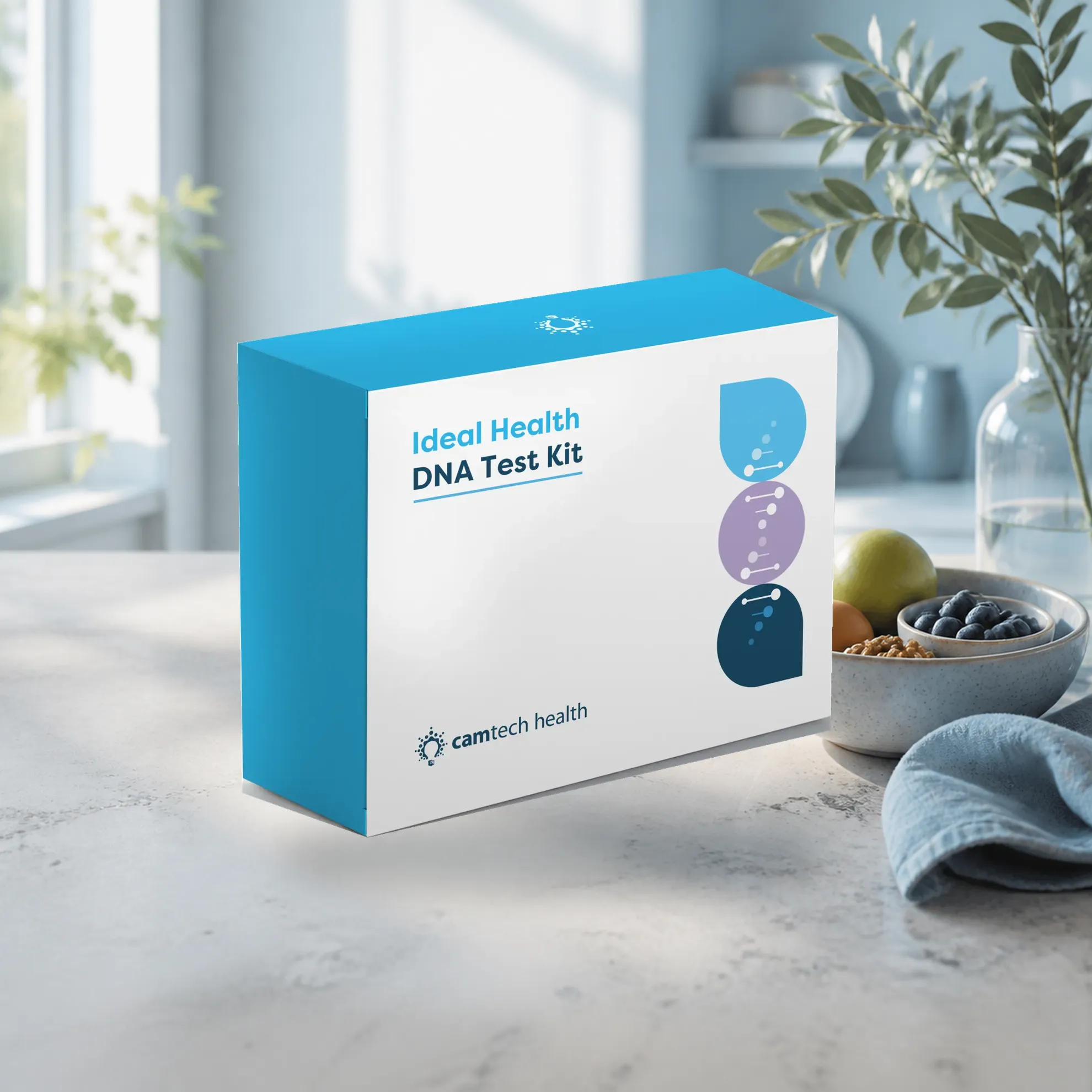
Some people use genetic testing to explore broader wellness questions rather than to diagnose a food problem. At Camtech Health, our IDEAL Health DNA Test information explains that our report covers genetic traits related to areas such as nutrition, fitness, skin and ageing. We state that our test is for general wellness and lifestyle insight and cannot be used to detect, diagnose, manage or treat a disease or medical condition.
At Camtech Health, our wellness report should not be presented as a food intolerance test, food allergy test or coeliac test. If a wellness report mentions nutrition or a possible food-related trait, use it as a prompt for questions rather than as a reason to remove foods. The MedlinePlus guidance on direct-to-consumer testing limitations recommends understanding what a test can and cannot tell you and discussing results with a healthcare professional before making major health or diet decisions.

The bottom line
Are DNA food intolerance tests accurate? They may accurately read selected genetic variants, and some variants can provide useful context for specific traits. But most consumer DNA reports cannot diagnose the cause of your current symptoms, identify every food that affects you or prove that a food is safe. Accuracy is not the same as clinical usefulness.
If symptoms keep returning, take the pattern to a qualified healthcare professional or dietitian and choose an assessment that matches your question. If you develop symptoms of a serious allergic reaction, seek local emergency help immediately.
References
- NHS: Food intolerance
- MedlinePlus Genetics: What is direct-to-consumer genetic testing?
- MedlinePlus Genetics: What do the results of direct-to-consumer genetic testing mean?
- MedlinePlus Genetics: Lactose intolerance
- NIDDK: Diagnosis of Celiac Disease
- AAAAI: The myth of IgG food panel testing
- ASCIA: Evidence-based versus non evidence-based allergy tests and treatments
- Camtech Health: IDEAL Health DNA Test
Medical disclaimer
This article is for general educational purposes only and does not diagnose food intolerance, food allergy, coeliac disease or any other condition. Seek advice from a qualified healthcare professional before changing a child's diet, avoiding gluten, or reintroducing a food after a reaction. Product intended use and availability vary by country.
*Visuals are assisted by artificial intelligence (AI)
Frequently asked questions
Can a DNA test diagnose a food intolerance?
Usually not. It may identify a genetic tendency linked to one trait, but it does not confirm that a food is causing your current symptoms.
Can DNA testing show lactose intolerance?
It may provide information about inherited lactase persistence, but symptoms and other causes of lactose malabsorption still need appropriate clinical assessment.
Does a positive DQ2 or DQ8 result mean I have coeliac disease?
No. These human leukocyte antigen (HLA) variants are common and do not diagnose coeliac disease. A negative result can be more useful for making coeliac disease very unlikely, but speak with a healthcare professional before changing your diet.
Are food-sensitivity IgG panels reliable?
Major allergy organisations do not recommend immunoglobulin G (IgG) food panels to diagnose food allergy or food intolerance because the results are not clinically reliable for that purpose.
What should I do if food causes swelling or trouble breathing?
Seek local emergency help immediately. Sudden swelling, breathing difficulty, throat tightness, fainting or severe dizziness can signal a serious allergic reaction.