Beyond the Flu: Rapid Testing for Everyday Health
By Stuart Chan
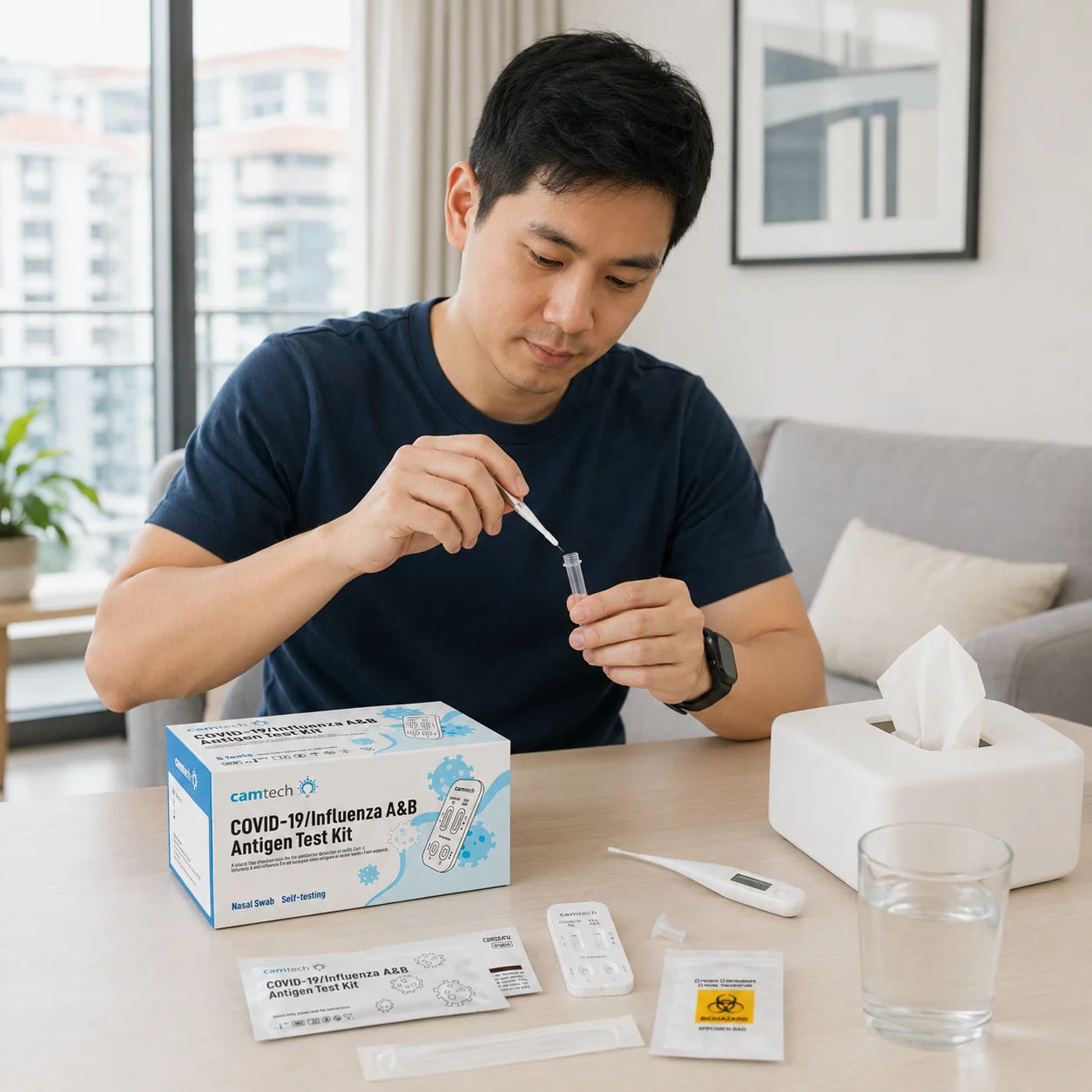
Respiratory symptoms can disrupt daily life quickly. A sore throat before work, body aches before a family gathering, or fever before a school day can leave many people wondering whether it is a cold, flu, COVID-19, or something else.
In Singapore, where people often move between home, office, school, public transport and shared indoor spaces, practical health decisions matter. Testing is not only about reacting when symptoms appear. It can also form part of a more structured approach to health maintenance, alongside nutrition, exercise, recovery, sleep and personalised health insights.
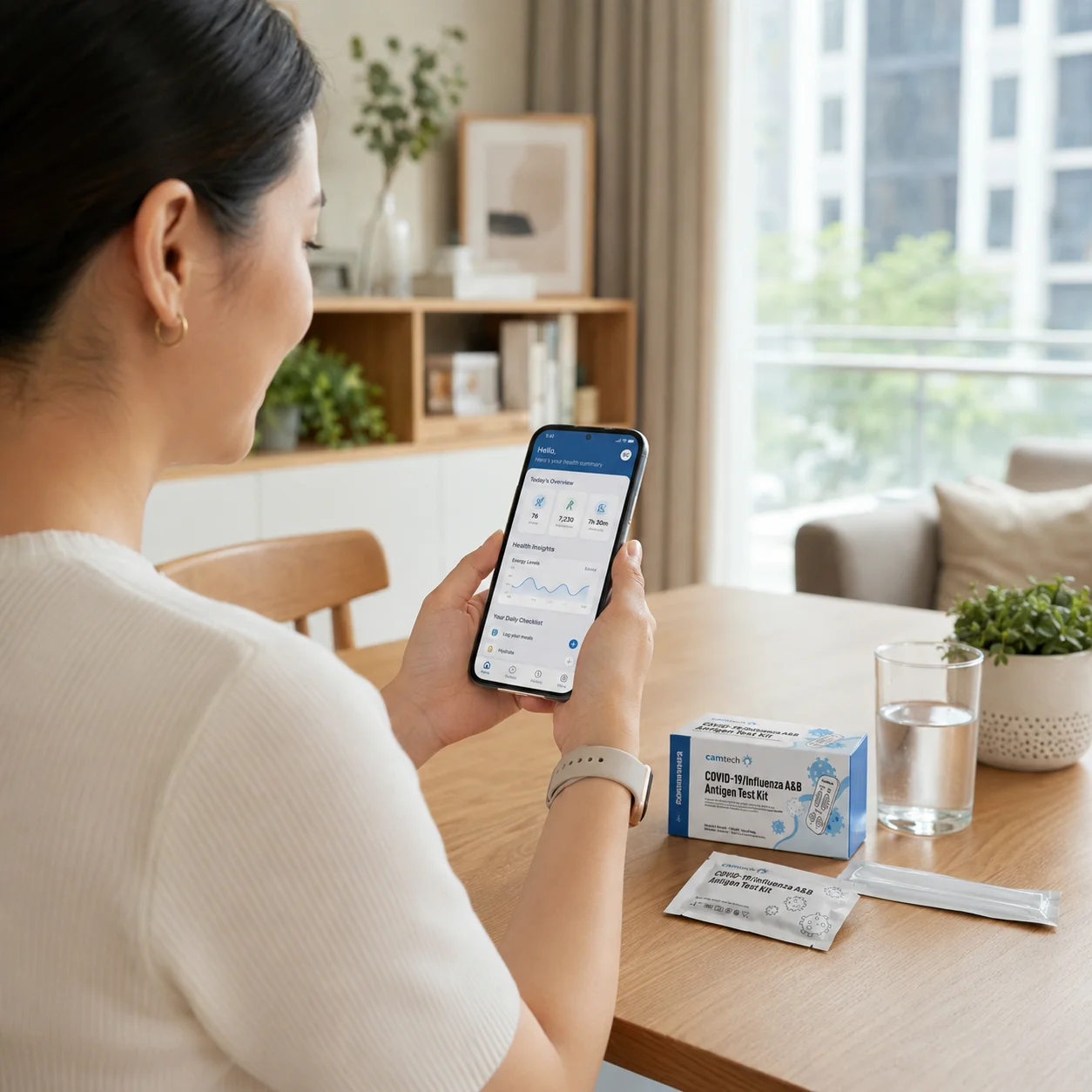
The Camtech Health COVID-19 & Flu A/B Test Kit is designed for at-home use and checks for COVID-19, Influenza A and Influenza B using one nasal swab specimen, with results available in 15 minutes. (Camtech Health)
Why Respiratory Testing Still Matters
Cold, flu and COVID-19 symptoms can overlap. MOH notes that colds may cause symptoms such as blocked or runny nose, sneezing, sore throat and cough, while influenza may cause fever, headaches, body aches, tiredness, sore throat, cough, loss of appetite and nausea. (Ministry of Health)
COVID-19 can also present with respiratory symptoms, and some infected people may have mild symptoms or no symptoms. (Ministry of Health) This is why symptom-based guessing is not always reliable.
A rapid test can help you make more informed next steps, such as whether to rest at home, reduce close contact with others, monitor symptoms, or speak with a healthcare professional. It should not replace medical advice, especially if symptoms are severe, persistent, or involve higher-risk individuals.
From “Emergency Drawer” to Everyday Health Planning
Many households keep rapid test kits only for urgent situations. That is useful, but a better approach is to treat respiratory testing as part of a practical home health routine.
For example, a family may keep a COVID and Flu A/B test kit at home for situations such as:
- When someone develops fever, cough, sore throat or body aches
- Before visiting elderly relatives or people with chronic medical conditions
- When deciding whether to return to work, school or social activities
- When symptoms appear after travel or close contact in crowded settings
- When monitoring a household where several people fall sick around the same time
This does not mean testing unnecessarily every day. It means having the right tool available when symptoms or exposure make testing relevant.
How the COVID-19 & Flu A/B Test Fits Into a Personalised Health Journey
A respiratory rapid test gives information about an immediate concern. DNA-based health tests offer longer-term insights into areas such as fitness, nutrition, ageing and personal traits.
These two types of testing serve different purposes.
The COVID-19 & Flu A/B Test Kit supports short-term decision-making when respiratory symptoms appear. The IDEAL Fitness & Nutrition DNA Test analyses 35 traits related to metabolism, body type, vitamin absorption and nutrient intake, with insights covering areas such as lean body mass potential, endurance potential, weight loss difficulty and metabolism. (Camtech Health)
For those who want a wider overview, the IDEAL Health DNA Test analyses 56 traits related to skin, fitness, nutrition and ageing, along with genetic risk scores and ethnicity-based insights. (Camtech Health)
Together, these tools can support two levels of health awareness:
Immediate awareness: What might be causing today’s respiratory symptoms?
Longer-term awareness: How can lifestyle, nutrition, exercise and recovery habits be adjusted based on personal traits?
A Practical Example: From Sick-Day Decisions to Long-Term Habits
Imagine you wake up with a sore throat, mild fever and body aches. In the past, you might have assumed it was “just flu” and continued your day. With a COVID and Flu A/B rapid test at home, you can gather information before deciding what to do next.
If the result is positive, you can reduce close contact, rest, monitor symptoms and seek medical advice where appropriate. If symptoms worsen or you are in a higher-risk group, MOH advises seeing a GP in situations such as fever of 38°C or higher, breathing difficulty, pregnancy, age 65 and above with multiple long-term medical conditions, or long-term conditions such as asthma, lung disease, heart disease, diabetes or kidney disease. (Ministry of Health)

After recovery, the longer-term question becomes: how do you support your body more consistently?
That may involve reviewing sleep, hydration, diet, exercise load and recovery time. For people who want more personalised lifestyle insights, DNA tests related to fitness, nutrition and ageing may help guide discussions and choices around training, diet and health maintenance.
What Rapid Testing Can and Cannot Tell You
A rapid test can provide useful information when used correctly, but it has limits.
It can help detect specific respiratory infections covered by the test. The Camtech Health COVID-19 & Flu A/B Test Kit is intended to check for COVID-19, Influenza A and Influenza B with one nasal swab specimen. (Camtech Health)
It cannot assess every cause of cough, sore throat, fever, fatigue or body aches. Other respiratory viruses, bacterial infections, allergies and non-infectious conditions may also cause symptoms.
This is why the test result should be interpreted together with symptoms, exposure history and medical advice. HSA also notes that COVID-19 diagnostic tests registered in Singapore are listed on the Singapore Medical Device Register, and diagnostic test requirements depend on methodology and intended purpose. (HSA)
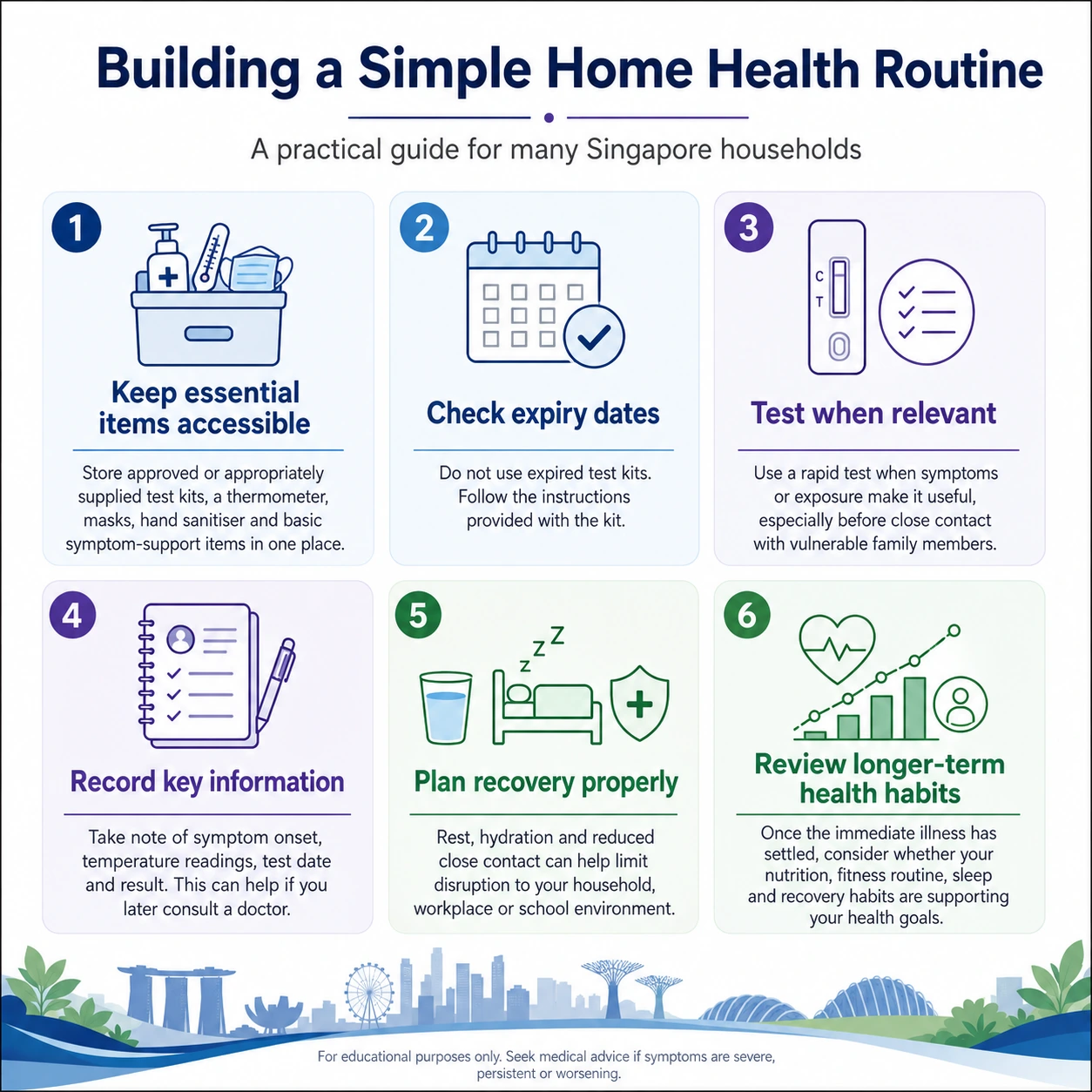
Building a Simple Home Health Routine
For many Singapore households, a practical routine can include:
Keep essential items accessible
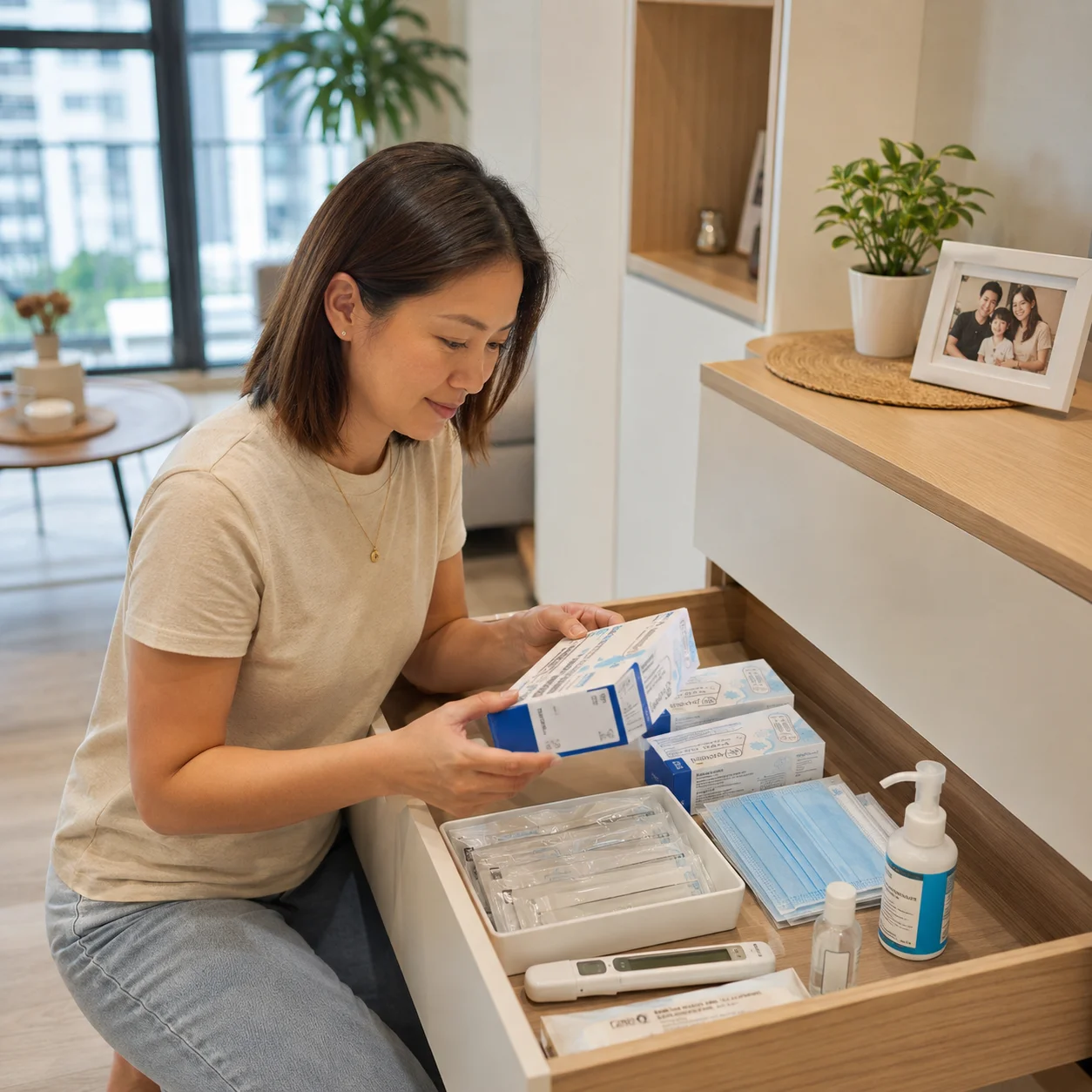
Store approved or appropriately supplied test kits, a thermometer, masks, hand sanitiser and basic symptom-support items in one place.
Check expiry dates
Do not use expired test kits. Follow the instructions provided with the kit.
Test when relevant
Use a rapid test when symptoms or exposure make it useful, especially before close contact with vulnerable family members.
Record key information
Take note of symptom onset, temperature readings, test date and result. This can help if you later consult a doctor.
Plan recovery properly
Rest, hydration and reduced close contact can help limit disruption to your household, workplace or school environment.
Review longer-term health habits
Once the immediate illness has settled, consider whether your nutrition, fitness routine, sleep and recovery habits are supporting your health goals.
Why This Matters for Families, Working Adults and Caregivers
For families, at-home respiratory testing can help reduce uncertainty when children, parents or caregivers develop symptoms. For working adults, it supports more responsible decisions about office attendance, meetings and travel. For caregivers of elderly relatives, it can provide an extra layer of information before close contact.
It is not about living in fear of every cough. It is about making measured, practical decisions with better information.
A health routine does not need to be complicated. It can start with three questions:
- What is happening now?
- What immediate action is reasonable?
- What long-term habits should I improve after this?
Rapid testing helps answer the first two questions. Personalised DNA insights can support the third.
Connecting Respiratory Health With Personalised Prevention
Respiratory testing is most useful when it sits within a broader pattern of responsible health habits. That includes staying home when unwell, seeking medical advice when symptoms are concerning, maintaining appropriate vaccinations, eating well, exercising safely, sleeping adequately and understanding your own health profile.
The Camtech Health COVID-19 & Flu A/B Test Kit can support immediate respiratory decisions at home. For longer-term lifestyle planning, Camtech Health’s IDEAL Fitness & Nutrition DNA Test and IDEAL Health DNA Test may help users understand selected traits linked to fitness, nutrition, skin and ageing. (Camtech Health)
Used appropriately, these tools can help people move from reactive health decisions to more informed, structured health maintenance.
Singapore Medical Disclaimer
This article is for general educational information only and is not a substitute for medical advice, diagnosis or treatment. Rapid test results should be interpreted according to the product instructions and in the context of symptoms, exposure history and clinical judgement. Please consult a doctor or qualified healthcare professional if symptoms are severe, persistent, worsening, or if you are pregnant, elderly, immunocompromised, caring for young children, or living with chronic medical conditions. DNA-based lifestyle tests are not intended to diagnose, treat, cure or prevent any disease or medical condition.
References
- Ministry of Health Singapore. Cold and Flu. (Ministry of Health)
- Health Sciences Authority Singapore. COVID-19 self-test kits authorised for use in Singapore. (HSA)
- Camtech Health. COVID-19 & Flu A/B Test Kit, IDEAL Fitness & Nutrition DNA Test, IDEAL Health DNA Test. (Camtech Health)
Patient FAQ
1. When should I use a COVID and Flu A/B rapid test?
You may consider using it when you have symptoms such as fever, sore throat, cough, runny nose, body aches or fatigue, especially if you recently had close contact with others or plan to meet elderly relatives or higher-risk individuals. Follow the kit instructions carefully and seek medical advice if symptoms are severe, persistent or worsening.
2. Can one test tell me whether I have COVID-19, Influenza A or Influenza B?
The Camtech Health COVID-19 & Flu A/B Test Kit is designed to check for COVID-19, Influenza A and Influenza B using one nasal swab specimen. Results should be interpreted according to the instructions provided with the kit and alongside your symptoms.
3. Does a negative result mean I am definitely not infectious?
A negative result does not rule out every cause of respiratory symptoms. It also does not replace medical advice. If you still feel unwell, continue to monitor your symptoms, avoid close contact where reasonable, and consult a healthcare professional if needed.
4. How do DNA tests fit into this health routine?
Rapid respiratory tests support immediate decisions when you feel unwell. DNA-based lifestyle tests are different. They may provide longer-term insights into selected traits linked to fitness, nutrition, ageing and personal health maintenance. They are not used to diagnose or treat respiratory infections.