
Colorectal Cancer Symptoms and Bowel Changes
By Stuart Chan

Changes in bowel habits can be worrying, especially when you are unsure what is causing them. Constipation, diarrhoea, blood in the stool and ongoing discomfort can have many causes, while early colorectal cancer may cause no obvious symptoms. This guide explains what to notice, when to speak with a doctor and how our Colosafe Test fits into routine screening for people without symptoms.
What colorectal cancer symptoms can look like
Colorectal cancer affects the colon and rectum. It may not cause noticeable symptoms in its early stages. When symptoms do appear, they can resemble other digestive problems. A symptom list can help you know what to discuss, but it cannot tell you the cause.
The HealthHub guide to colorectal cancer symptoms and screening explains that early colorectal cancer may cause no symptoms. It lists changes in bowel habits, blood in the stool and persistent abdominal discomfort among possible signs.
Symptoms worth discussing with a doctor
Arrange a medical appointment if you notice a persistent or unexplained change such as:
- Blood in your stool
- A lasting change in bowel habits, including diarrhoea or constipation
- Ongoing abdominal discomfort, such as cramps, gas or pain
- Unexplained weight loss
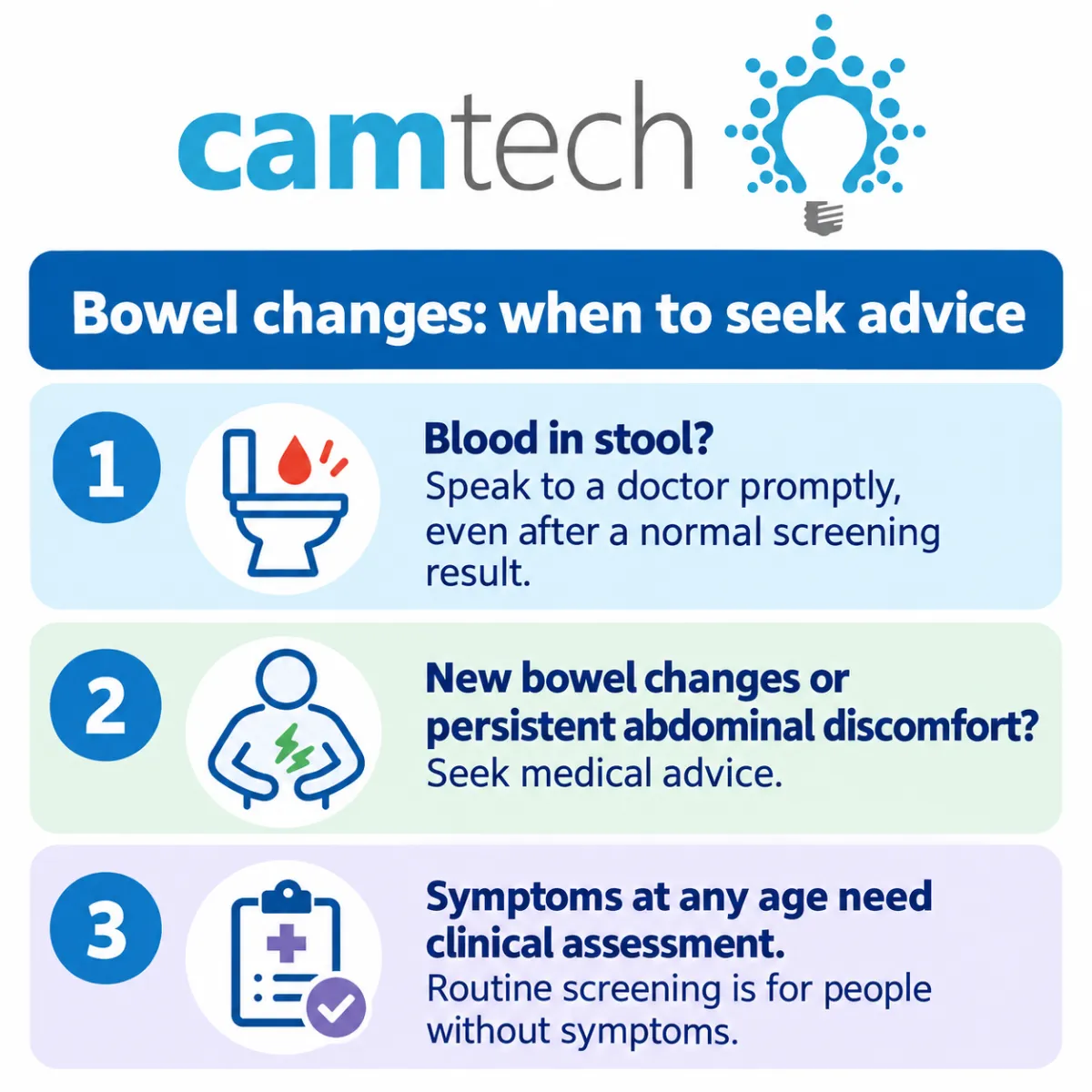
Note when a change began and how often it happens. If you notice blood in your stool or symptoms that persist or worsen, contact a healthcare professional promptly.

When to seek medical advice
Contact a healthcare professional promptly if you notice blood in your stool, persistent bowel changes, ongoing abdominal discomfort or unexplained weight loss. The Ministry of Health’s guidance on colorectal cancer screening says people with these symptoms should seek medical attention regardless of age.
A normal faecal immunochemical test (FIT) result does not remove the need to get new or persistent symptoms checked. HealthHub advises medical review for blood in the stool or changes in bowel habits, even after a normal FIT result.
Routine screening for people without symptoms
For average-risk adults without symptoms, Singapore’s colorectal cancer screening guidance recommends starting at age 50. An annual FIT is one recommended option. If you have a family history of colorectal cancer or a personal history of polyps, talk with your doctor about whether to start earlier or use a different approach.
Age-based recommendations are for routine screening. Your age, family history and medical history can affect which screening approach is right for you, so discuss your options with your doctor.
Prepare for an appointment
Before your appointment, note what changed, when it started, how often it happens and whether anything else changed in your diet, medication or routine. Having these details ready can make it easier to describe your concern and discuss next steps.

Where our Colosafe Test fits
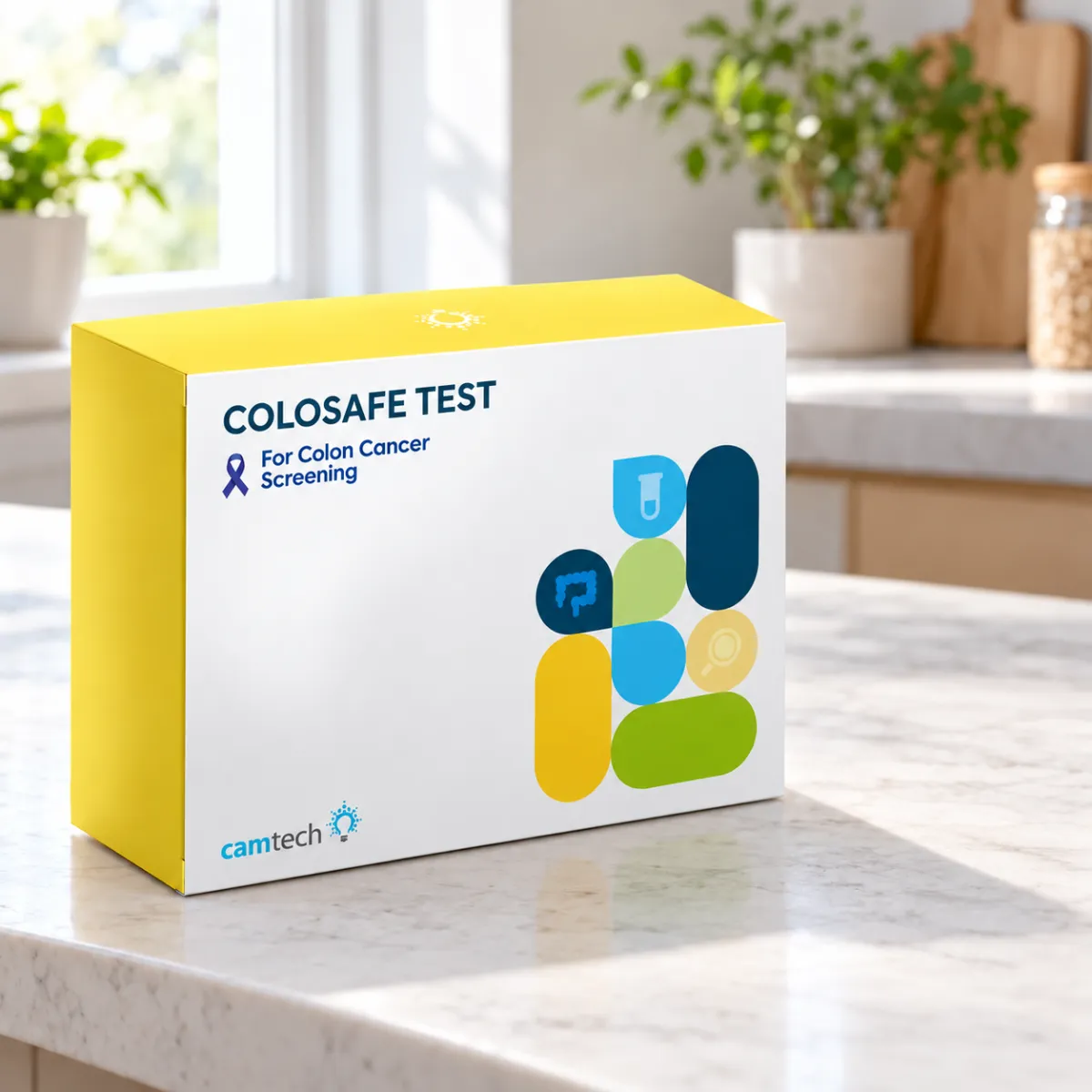
At Camtech Health, our Colosafe Test is an at-home stool DNA screening option in Singapore. You collect a stool sample at home, and the test looks for methylated SDC2. If you are considering routine screening and prefer home sample collection, explore Colosafe to learn how it works and what to expect.
Colosafe is intended for routine screening, not for assessing current symptoms or confirming a diagnosis. A positive result needs follow-up with a healthcare professional. If you have symptoms, seek medical advice even after a negative result. Our health test glossary explains common screening terms.
Explore Colosafe
If you are symptom-free and considering colorectal screening, explore our Colosafe Test for product details and information about home sample collection.
References
- HealthHub Singapore. “Colorectal Cancer: Understand the Risk Factors, Symptoms and Different Screening Methods.”
- Ministry of Health Singapore. “Local data considered in recommending starting age for colorectal cancer screening.” 17 September 2026.
- Camtech Health. “Colosafe Test.”
- Camtech Health. “Health Test Glossary.”
Medical disclaimer
This article is for general information and is not a substitute for personalised medical advice.
Visuals are assisted by artificial intelligence (AI)
Colorectal cancer symptoms and screening: common questions
Can colorectal cancer cause no symptoms in its early stages?
Yes. Early colorectal cancer may not cause noticeable symptoms. Routine screening is recommended for some people without symptoms, based on age and risk.
Does blood in the stool always mean cancer?
No. Blood in the stool can have several causes, but arrange a prompt medical review rather than assuming it is harmless.
Should I seek advice if I am under 50?
Yes. The age-50 recommendation applies to average-risk people without symptoms. Speak with a doctor about concerning changes at any age.
Can I use Colosafe to check symptoms?
Colosafe is for routine screening; it cannot explain the cause of a symptom. If you notice blood in your stool or a persistent change, contact a healthcare professional.
Can I ignore a bowel change after a normal FIT result?
No. A normal FIT result does not remove the need to have new or persistent symptoms checked. Speak with a healthcare professional about ongoing bowel changes or blood in the stool.