
Consent, Privacy and Peace of Mind in At-Home DNA Testing
By Stuart Chan
A paternity DNA (deoxyribonucleic acid) test can feel like a big step. You may be looking for clarity about a biological relationship while also asking who needs to consent, how genetic data is handled and whether an at-home result can be used for an official purpose.
In Singapore, it helps to understand what an at-home DNA kit can and cannot do before you collect or submit a sample. HealthHub’s guidance on direct-to-consumer genetic tests advises you to consider privacy, interpretation and data sharing carefully before proceeding.
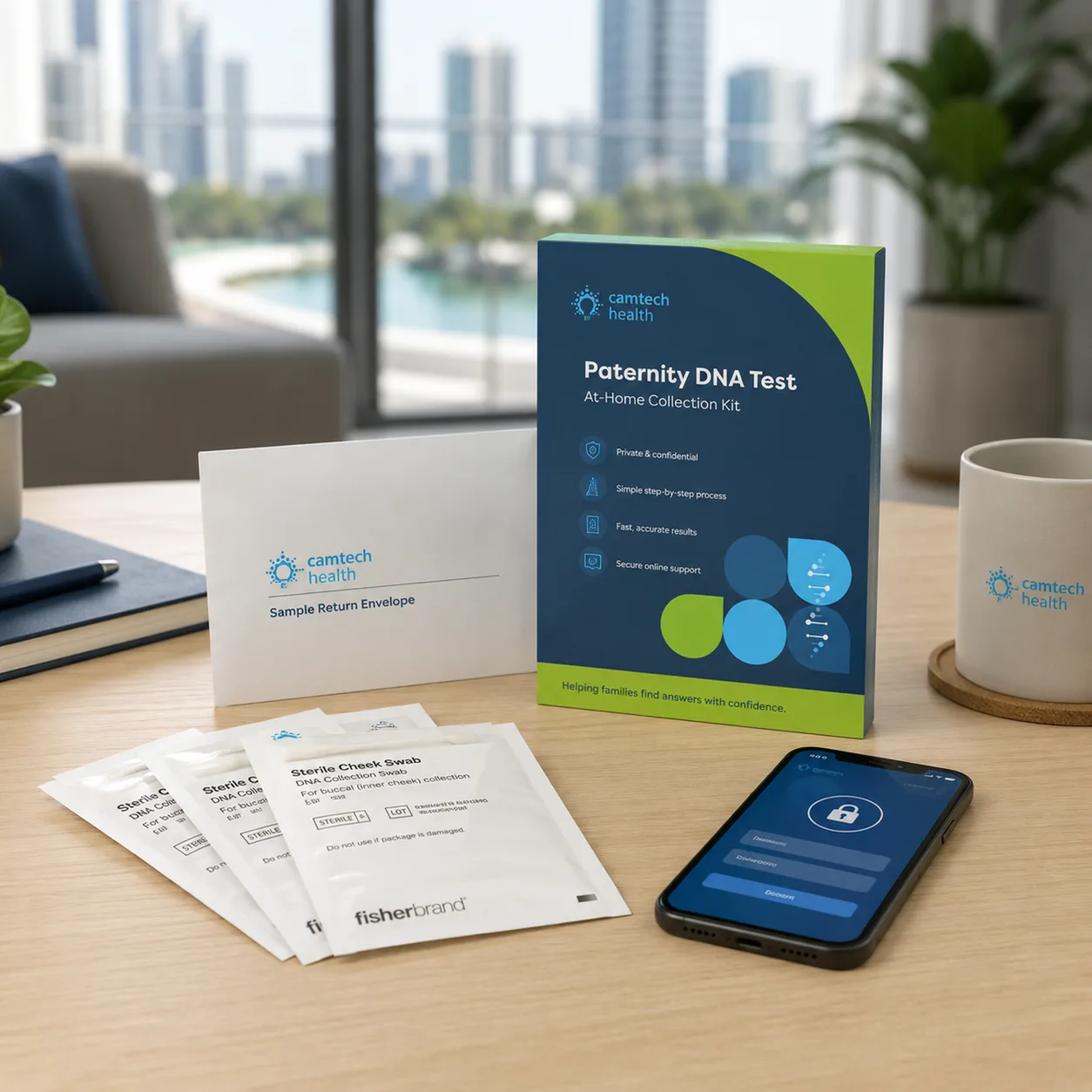
The Camtech Health Paternity Test is an at-home collection kit for personal and informational use only. In this guide, we explain what to check before you submit a sample, including consent, privacy and when to seek professional advice.
What is a paternity DNA test?
A paternity DNA test compares genetic markers from a child and an alleged father to assess whether the tested profiles support or exclude a biological relationship. At-home kits commonly use cheek swabs, also called buccal swabs, to collect cells from inside the cheek.
Relationship testing is different from a medical diagnostic test. It is not intended to diagnose a health condition, guide treatment or replace advice from a doctor, counsellor or legal professional. HealthHub notes that direct-to-consumer relationship and paternity tests may not always be reliable, so interpret any result cautiously and seek professional advice when needed.
Why consent matters before DNA sample collection
Consent matters because a DNA sample is personal information about the person being tested and may reveal information relevant to biological relatives. Before collecting a sample, make sure each participant understands why the test is being done, what will be collected, how it will be handled and who may receive the report.
Consent from adults
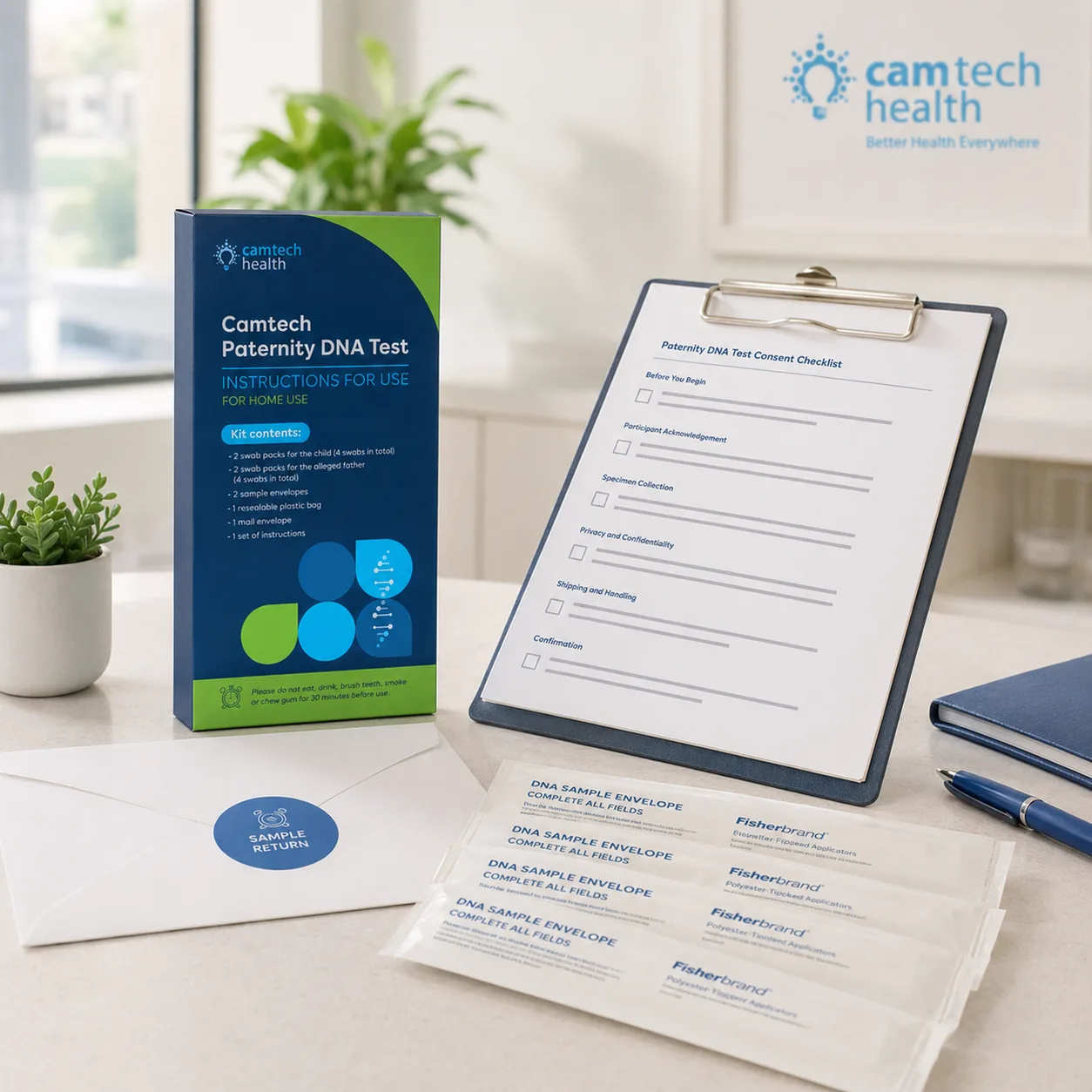
Each adult should understand the test’s purpose, what sample is collected, where it will be processed, how the result will be delivered and whether information may be shared with a laboratory, service provider or other third party.
Consent for a child’s sample
If a child’s sample is involved, take extra care with the decision. A parent or legal guardian should consider the child’s interests, family circumstances and any possible legal implications, and follow the provider’s current consent requirements. Do not collect another person’s DNA sample secretly.
Emotional and family considerations
Paternity testing can affect family relationships. If there is conflict, separation, a custody or maintenance question, or uncertainty about how a result may be used, consider speaking with a counsellor, doctor or legal professional before testing.
Privacy and genetic data protection in Singapore
Genetic data is sensitive because it is unique to a person and may be relevant to family members. The Personal Data Protection Act 2012 (PDPA) sets out Singapore’s framework for the collection, use, disclosure, protection, access, correction, retention and transfer of personal data.
The Personal Data Protection Commission (PDPC)’s Advisory Guidelines for the Healthcare Sector explain that organisations should make reasonable security arrangements to protect personal data and should not retain personal data longer than necessary for the purpose for which it was collected, unless retention is required for legal or business purposes.
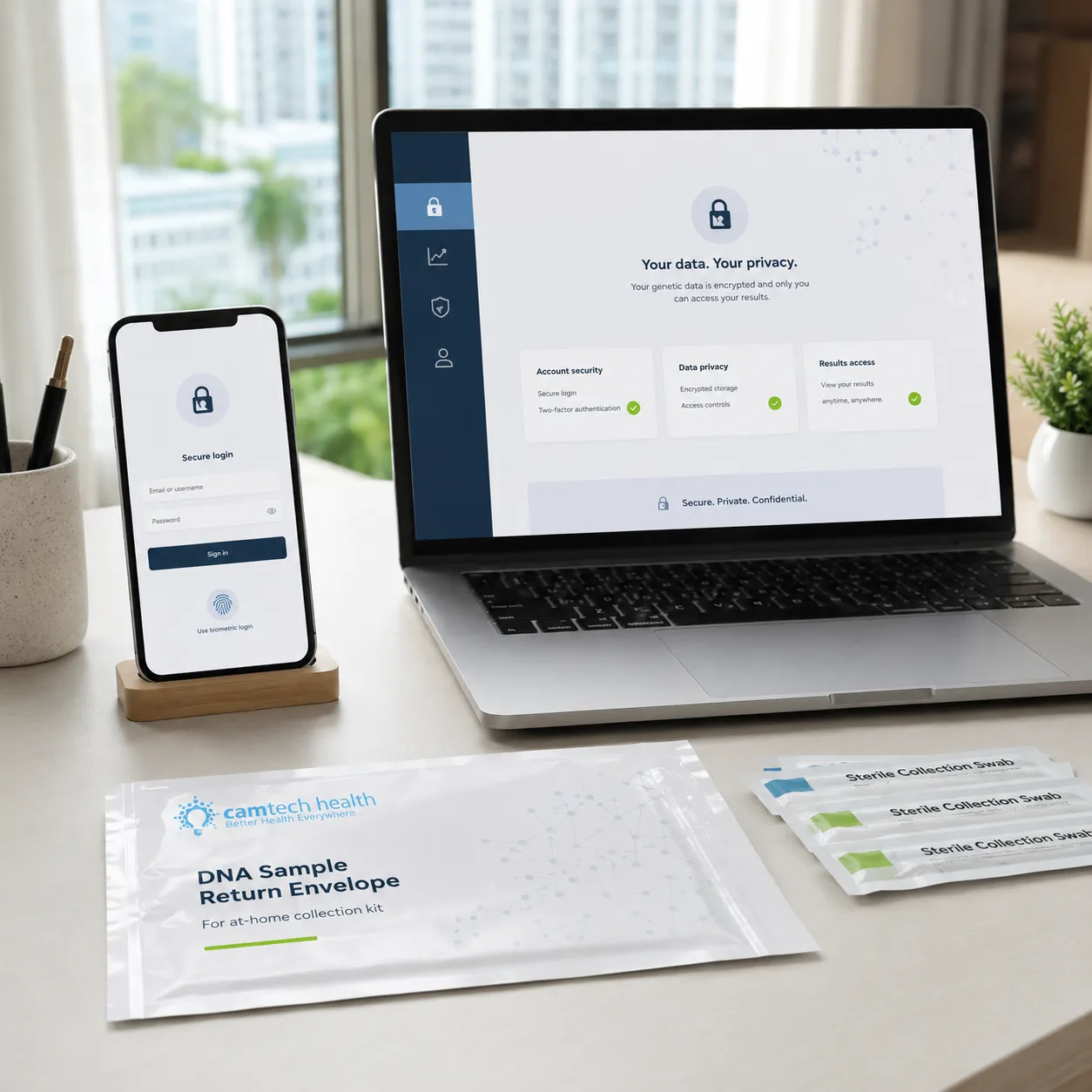
The Ministry of Health (MOH) highlights risks linked to direct-to-consumer (DTC) genetic testing, including exaggerated claims, possible sharing or commercial use of genetic data by third parties and a lack of proper medical interpretation. It advises consumers to read a provider’s terms and conditions carefully and to contact the provider or approach a doctor when in doubt.
Before taking a paternity test: questions to ask first
Before buying or using an at-home DNA kit, review the provider’s privacy policy, product information and terms of use. Use the questions below to understand what happens to samples, reports and genetic data before you proceed.
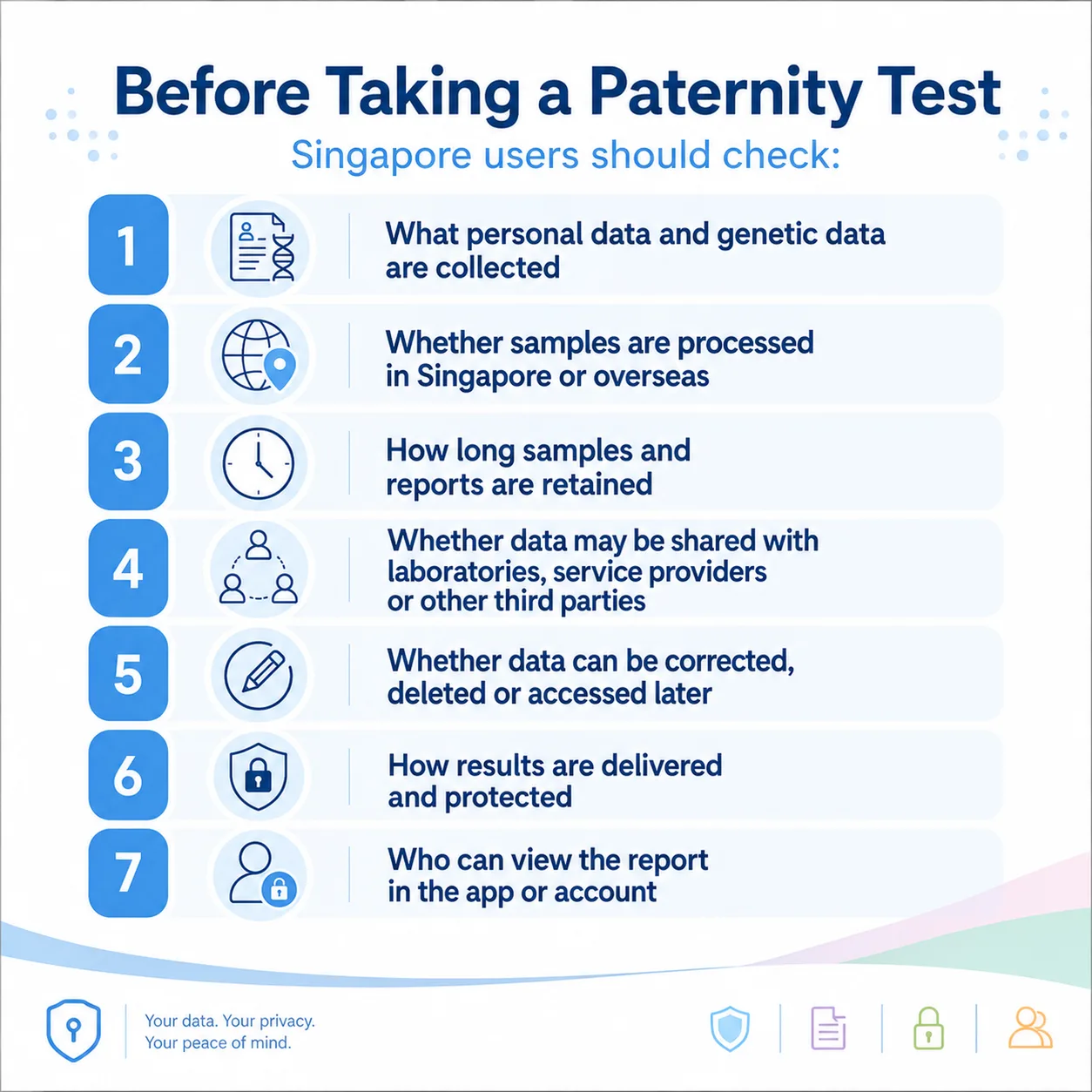
1. What personal and genetic data are collected?
Check whether the provider collects names, contact details, account information, sample identifiers, genetic data, payment information or other personal data. Ask whether the DNA sample is linked to your account or stored under a separate laboratory identifier.
2. Where are samples or data processed?
If samples or data are transferred overseas, ask where processing takes place and what data-protection arrangements apply. The PDPA includes transfer-limitation obligations for organisations that transfer personal data outside Singapore.
3. How long are samples and reports retained?
Ask how long the provider retains physical samples, digital reports, account records and laboratory records. PDPC guidance notes that personal data should not be retained when it is no longer necessary for the purpose for which it was collected or for legal or business purposes.
4. Can data be shared with laboratories or service providers?
At-home testing may involve laboratories, logistics partners, technology providers and customer-support teams. Ask whether data may be shared with these parties, for what purpose and under which terms.
5. Can data be accessed, corrected or deleted later?
Review whether you can access your data, correct account details or request deletion where applicable. HealthHub advises consumers to check whether providers allow deletion requests and to contact the provider if they have doubts.
6. How are results delivered and protected?
Results may be delivered through an app, online account, email or secure portal. Check how access is protected, keep login details private and avoid forwarding a paternity report casually because it may contain sensitive personal and family information.
7. Who can view the report?
Ask whether the report can be accessed only by the account holder, whether another person can be added and whether customer-service staff can view any part of it. If several family members are involved, discuss who should receive the result before testing.
Personal-use and formal paternity testing
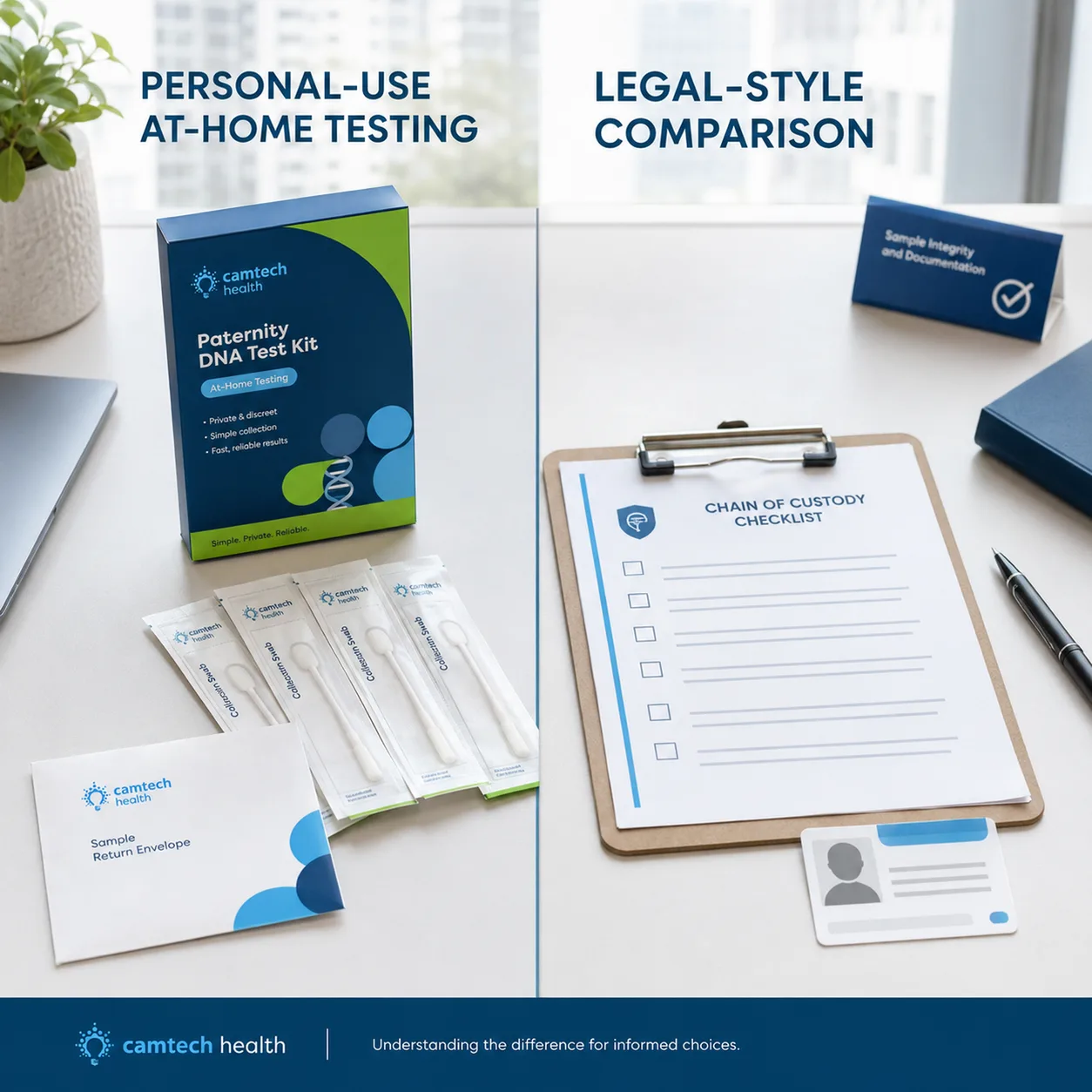
An at-home paternity DNA test is generally intended to provide personal information. It may help you understand a biological relationship, but an at-home collection process may not meet the requirements of a court, government agency, immigration process, inheritance matter or another official purpose.
A formal paternity test may require identity verification, supervised or witnessed sample collection and a documented chain of custody. Chain of custody means a record of who handled the sample, when it was handled and how it was kept secure. If you need a result for an official process in Singapore, ask the receiving organisation or a Singapore legal professional what it will accept before ordering a personal-use kit.
When should you speak with a healthcare or legal professional?
Consider speaking with a qualified professional before testing if the result may affect custody, maintenance, inheritance, immigration, family conflict or another important legal or personal decision. A doctor, counsellor or legal professional can help you consider whether testing is appropriate for your situation and how to interpret the result responsibly.
For wider questions about direct-to-consumer genetic testing, MOH advises you to read the provider’s terms and conditions carefully and to approach a doctor when in doubt. You can also review Camtech Health’s Privacy Policy and Terms of Service before ordering.
Key takeaways
- A paternity DNA test involves sensitive personal and family information.
- Make sure each participant’s consent and the provider’s collection requirements are clear before a sample is collected.
- Review how samples, reports and genetic data are stored, shared and protected.
- An at-home test is generally for personal information, not formal proceedings.
- Seek professional advice if the result may affect family, legal or medical decisions.
References
- HealthHub, Ministry of Health Singapore. Understanding direct-to-consumer genetic tests.
- Ministry of Health Singapore. Direct-to-consumer genetic testing services.
- Personal Data Protection Commission Singapore. Advisory Guidelines for the Healthcare Sector.
- Singapore Statutes Online. Personal Data Protection Act 2012.
Important information
This article is for general education only. It is not medical or legal advice, a diagnosis or a substitute for professional care. Paternity DNA testing involves sensitive genetic information and may have personal, family and legal consequences. Follow the provider’s current instructions, obtain appropriate consent and seek qualified advice if you are unsure whether an at-home kit is suitable for your situation or how a result may be used.
*Visuals are assisted by artificial intelligence (AI)
Frequently Asked Questions
Can I use an at-home paternity test for an official process in Singapore?
Not automatically. A personal-use test may not include the identity checks, witnessed collection or documented chain of custody that an official process requires. Ask the receiving organisation or a qualified legal professional what it will accept before ordering.
Can I collect someone’s DNA sample without telling them?
No. Do not collect another person’s DNA sample secretly. Obtain appropriate consent, and take extra care when a child’s sample is involved by following the provider’s current requirements.
What should I check before sending my DNA sample?
Check what data is collected, where samples are processed, how long data is retained, whether it may be shared, whether access or deletion is possible and how results are protected. Review the provider’s privacy policy and terms before proceeding.
Should I speak with a doctor before doing a paternity test?
A doctor may not be required for every personal-use test, but professional advice can help if there are health, emotional or family concerns. If the result may be used for a legal decision, speak with a qualified legal professional first.