COVID-19 5-in-1 Test: What It Checks
By Stuart Chan
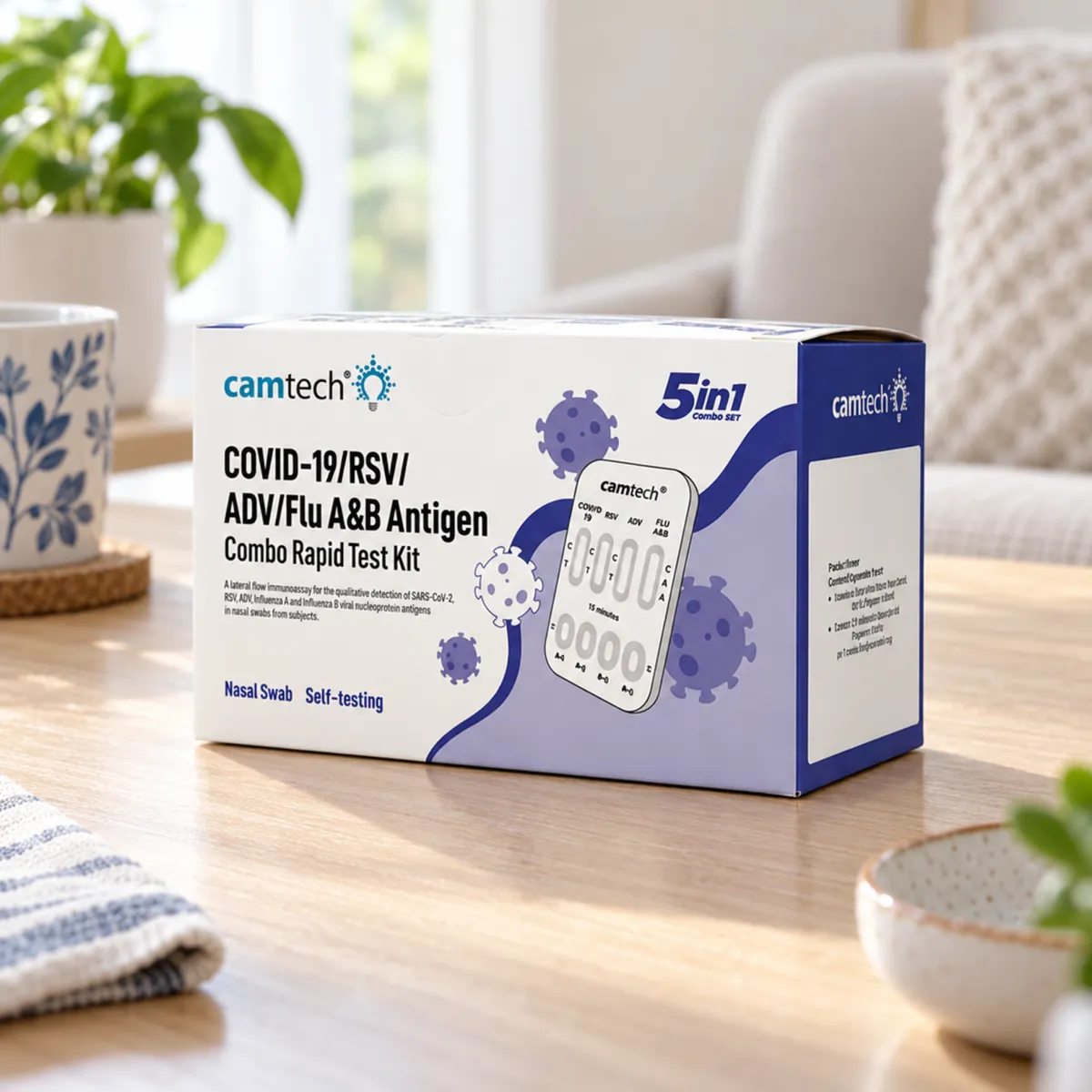
Coronavirus disease 2019 (COVID-19) and other respiratory infections can share symptoms. When a cough, sore throat or fever could have more than one cause, it helps to know exactly what a test is designed to check. The Camtech COVID-19 5-in-1 Test uses a nasal-swab sample to look for antigens associated with five respiratory-virus targets: severe acute respiratory syndrome coronavirus 2 (SARS-CoV-2), which causes COVID-19; respiratory syncytial virus (RSV); adenovirus; influenza A; and influenza B. The Camtech Singapore product information describes the five-target panel and its intended at-home context. This guide explains what that list means, and what a result cannot tell you on its own.
What does “five-in-one” refer to?
The “five” refers to five named antigen targets, rather than five separate swabs. An antigen is a protein associated with a virus that the test is designed to detect in the sample. The targets listed for this kit are SARS-CoV-2, RSV, adenovirus, influenza A and influenza B. These are different viruses, and a respiratory illness may also have a cause outside this list.
Knowing the panel helps set expectations. A COVID-19 5-in-1 test in Singapore is not a general check for every infection that can cause respiratory symptoms. For example, rhinoviruses are among the other viruses associated with common-cold symptoms, and rhinovirus is not one of this kit’s listed targets. A symptom pattern alone cannot show which virus is responsible.

One nasal sample, four result areas
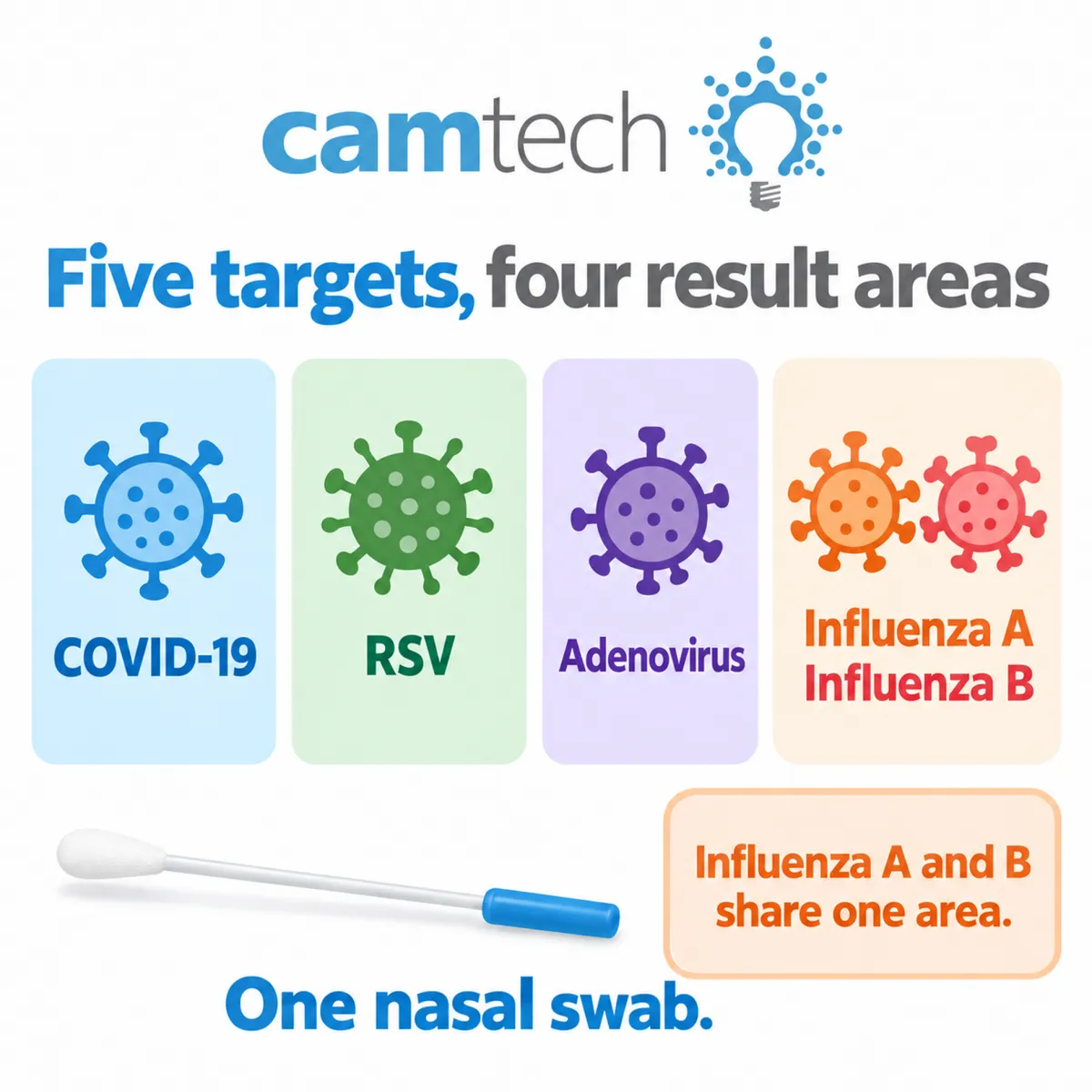
The kit’s Instructions for Use show four result areas on the cassette: one each for COVID-19, RSV and adenovirus, plus a shared area for influenza A and influenza B. The two influenza targets have separate result lines within that shared area. In other words, five targets are represented across four areas; the influenza results are not combined into a single target.
The supplied instructions explain the test’s exact sample, timing and result-reading steps. Follow those instructions for the specific kit in hand, including its reading window, and do not rely on a photograph or an online description to interpret a cassette.

Antigens are clues, not a complete diagnosis
This is a qualitative antigen test: it indicates whether antigens associated with its listed targets were detected in the sample at the time of testing. It does not measure how severe an illness is or establish whether a person is infectious. The supplied instructions state that a positive result does not necessarily determine infectiousness, and that a negative result does not rule out infection with another respiratory virus.
For the COVID-19 component, Singapore’s Health Sciences Authority explains that viral load and the way a nasal sample is collected can affect antigen rapid-test results. A negative result should therefore be considered alongside symptoms and the product’s own limitations, rather than treated as proof that no infection is present.

Five targets at a glance
This simple map summarises the panel: five target antigens appear across four result areas, with influenza A and B sharing one area. The infographic is an overview of the kit’s targets, not a result-reading guide.
When to seek medical advice
If symptoms continue, worsen or concern you, seek advice from a healthcare professional even if a home test result is negative. A test result is one piece of information; it does not replace clinical assessment. Check the packaging and supplied Instructions for Use for the intended age, specimen, timing and any restrictions that apply to the particular kit.
The Ministry of Health’s guidance on getting medical help advises seeking emergency care for symptoms such as difficulty breathing or chest pain. Do not wait for a home-test result if you think you may need urgent care.
References
- Camtech Health: COVID-19 5-in-1 Test
- Health Sciences Authority: Factors that may affect COVID-19 antigen rapid self-test results
- HealthHub: Common cold
- Ministry of Health: Fever and getting medical help
Medical disclaimer
This article is for general education and does not diagnose, prevent or treat illness. Follow the supplied Instructions for Use and consult a healthcare professional about symptoms or test results. Seek urgent care for severe or worsening symptoms.
*Visuals are assisted by artificial intelligence (AI)
Patient frequently asked questions
What five targets does this test check?
It checks a nasal-swab sample for antigens associated with SARS-CoV-2, RSV, adenovirus, influenza A and influenza B.
Does it use five separate swabs?
No. The kit checks one nasal-swab sample across its test panel. Follow the supplied instructions for how to collect and use the sample.
Why are there four result areas for five targets?
The kit shows separate areas for COVID-19, RSV and adenovirus, while influenza A and influenza B share an area with separate lines.
Does a negative result rule out every respiratory infection?
No. It only means that the listed targets were not detected in that sample at that time. Other infections, including viruses outside the panel, may still be present.
Can a positive result tell me whether I am infectious?
No. The kit’s instructions say a positive result does not necessarily determine whether a person is infectious. Ask a healthcare professional if you are unwell or unsure what to do next.