COVID, Flu or Dengue Symptoms? When to Test in Singapore
By Stuart Chan
Fever, cough, sore throat and body aches can make it difficult to know what to do next. In Singapore, coronavirus disease 2019 (COVID-19), influenza, dengue and haze-related airway irritation can overlap at the start, but they do not follow the same testing pathway.
The most useful first question is not “Which illness do I have?” but “What does this test actually check, and are there warning signs that need medical care?” A home respiratory test may help you screen for its named targets when you are well enough to test and can follow the instructions. It cannot test for dengue, measure haze exposure or replace a clinician’s assessment.
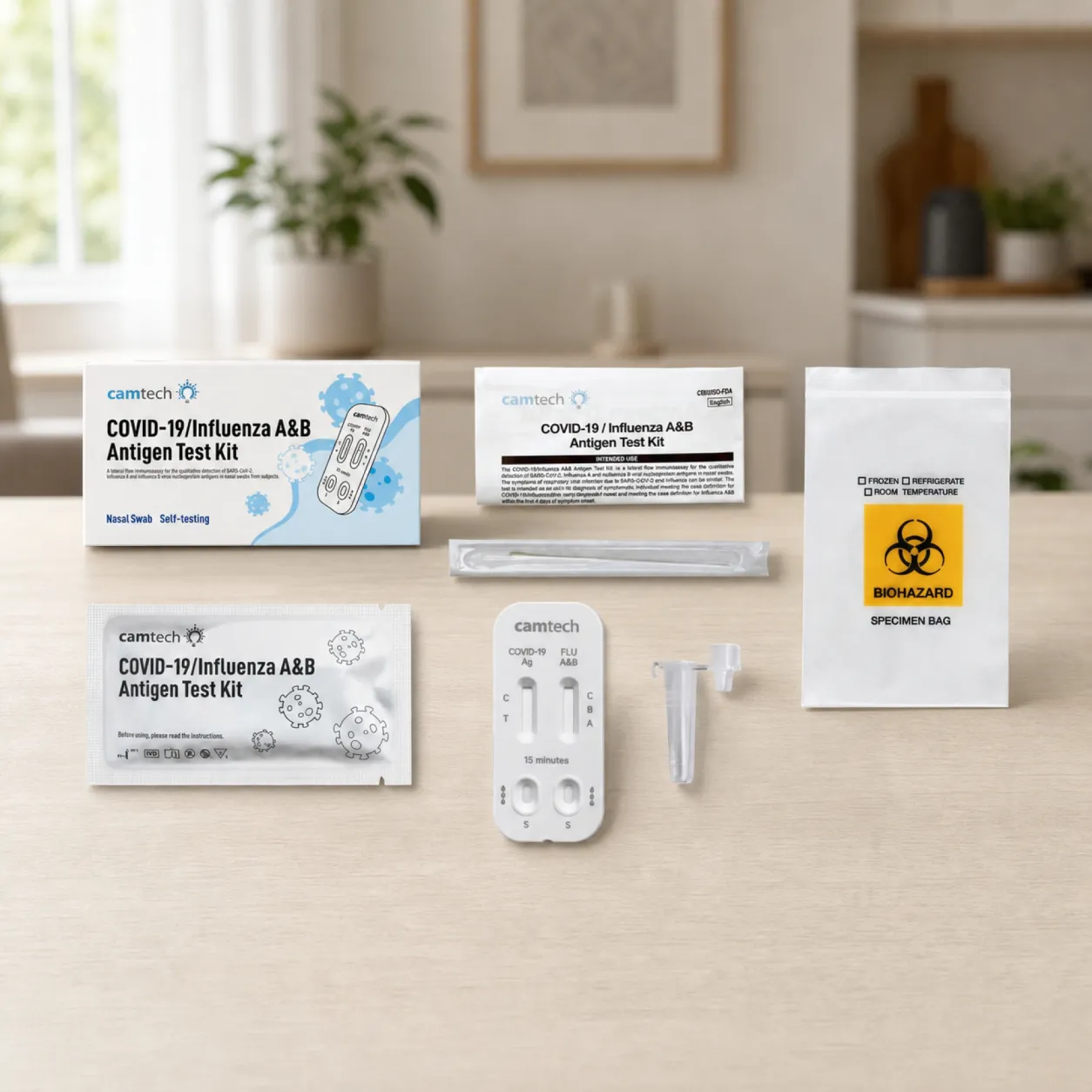
At Camtech Health, our Singapore product information describes the COVID-19 and Flu A/B Test Kit as a three-in-one nasal-swab test for COVID-19, influenza A and influenza B, with results in about 15 minutes when used as directed. The result is one piece of information, not a measure of how serious your illness is or a diagnosis of every possible cause of your symptoms.
If you have severe or rapidly worsening symptoms, seek medical help rather than waiting for a home result. The Ministry of Health (MOH) guidance on getting medical help lists warning signs that require urgent attention.
The short answer: start with the symptom pattern
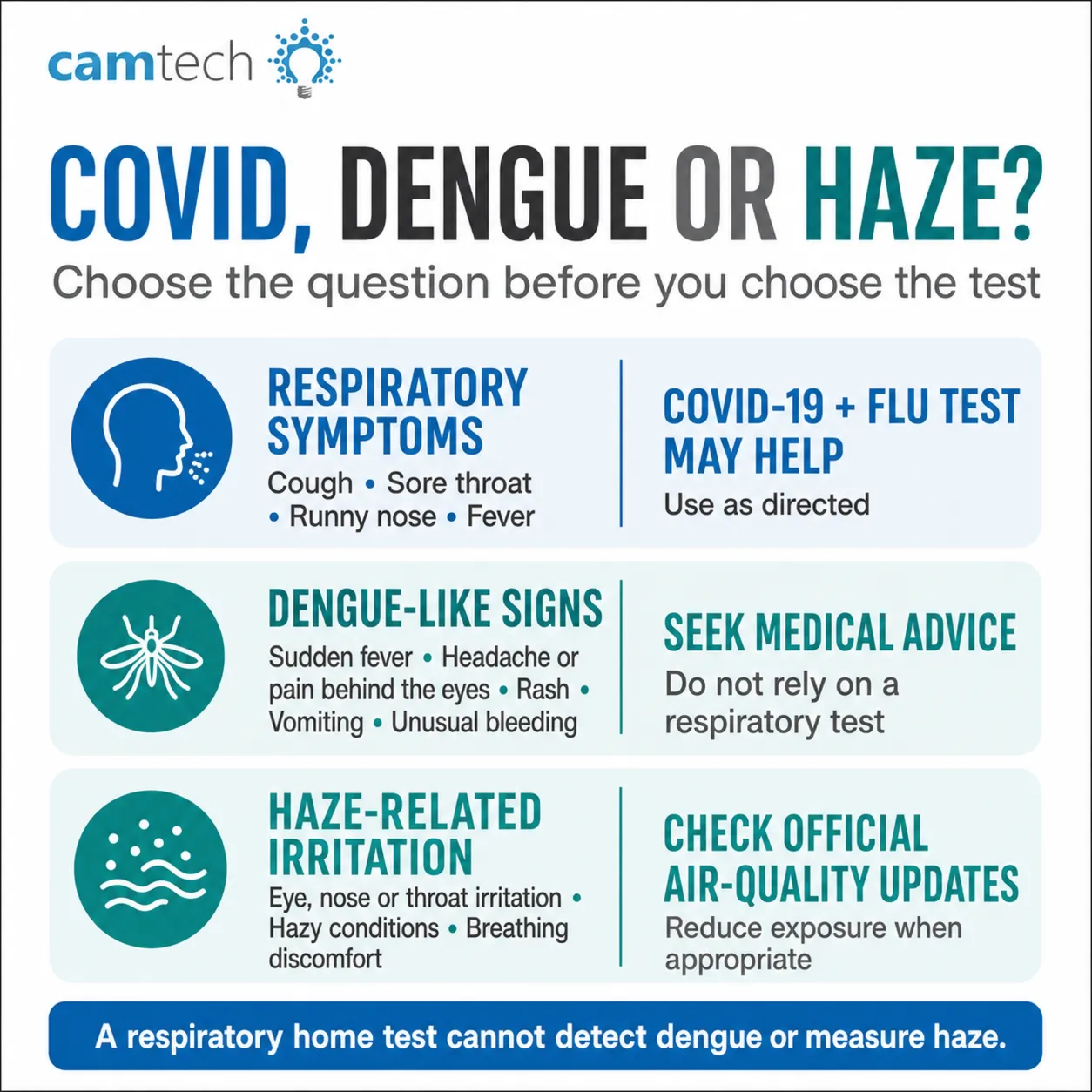
Symptoms can overlap, so use their pattern, timing, recent exposure and severity together. A useful distinction is whether your main concern is a respiratory infection, dengue-like illness or irritation from air quality.
When a respiratory home test may be relevant
A COVID-19 and flu test may be a reasonable initial screening step when you have symptoms such as a new cough, sore throat, runny nose, fever, chills, tiredness or body aches, and you feel well enough to collect a sample. It is more useful when you can follow the kit instructions carefully and record when the symptoms and result occurred.
When dengue needs a different pathway
Sudden fever, severe headache, pain behind the eyes, marked muscle or joint pain, rash, nausea, vomiting, unusual bleeding or easy bruising should not be explained away by a negative respiratory test. Arrange medical assessment promptly if dengue is a concern.
When haze or airway irritation may be contributing
Eye, nose or throat irritation during hazy conditions may reflect air-quality exposure. Check official air-quality information and pay attention to breathing symptoms. Haze can coexist with an infection, so do not use it as a reason to dismiss fever or a worsening illness.
When the first step is urgent care
Breathing difficulty, chest pain, sudden confusion, uncontrolled bleeding or other severe symptoms take priority over home testing. Do not delay urgent care to obtain, repeat or interpret a test.
Why COVID-19 and flu symptoms can be hard to separate
COVID-19 and influenza can both cause fever, cough, sore throat, headache, tiredness and muscle aches. Some people have mild symptoms, and symptoms can change over the first few days. Symptoms alone cannot reliably identify which respiratory infection is present.
That is why the timing of the sample matters. A test result is a snapshot of the sample collected at that time. It should be considered alongside when symptoms began, whether you have had a relevant exposure, whether you are improving or worsening, and whether a personal health risk makes early medical advice sensible.
The word “screening” means checking for a possible condition before a diagnosis is made. In this article, home screening refers only to using a test for its named targets. It does not mean that a home result confirms the full cause of your illness.
What the COVID-19 and Flu A/B Test can and cannot tell you
The Camtech kit is intended to check a nasal-swab sample for markers associated with COVID-19, influenza A and influenza B. The manufacturer’s instructions for use explain the intended targets, sample procedure and result window. Use the current leaflet supplied with your kit, because instructions and product information can change.
An antigen rapid test (ART) looks for a target from the virus rather than measuring every feature of an illness. In practical terms, the kit can:
- indicate whether its test detected a marker for COVID-19, influenza A or influenza B in the sample;
- give you information to discuss with a healthcare professional; and
- help you decide whether to follow up, especially when the result is considered with symptoms and timing.
The kit cannot:
- detect dengue or explain a dengue-like fever;
- measure haze, air pollution or airway irritation;
- identify every respiratory virus;
- tell you how severe the illness is; or
- prove that you are no longer infectious.
A positive result should therefore lead to sensible follow-up, not a conclusion that no further assessment is needed. A negative result should not be used to ignore symptoms that persist or worsen.
How to use a respiratory home test thoughtfully
If you decide that a respiratory home test is relevant, read the complete current instructions before opening the kit. Use only the supplied components, collect the sample as directed and read the cassette within the stated time window. Record the date, time, symptoms and result so that you can describe the sequence clearly if you need medical advice.
The Health Sciences Authority (HSA) advisory on antigen rapid test accuracy explains that results can be affected by factors such as the amount of virus in the sample, the timing of testing and sample-collection technique. This is why one result should be interpreted with the wider clinical picture.
If the result is positive
A positive result means that the test has detected a marker for one of its named respiratory targets. It does not measure severity or determine whether someone is infectious. Follow the kit instructions and current local medical advice, stay home when unwell and reduce close contact with other people, especially those who may be at higher risk.
Contact a healthcare professional promptly if you are pregnant, an older adult, living with a long-term heart or lung condition, or have a weakened immune system. Seek advice sooner if symptoms are worsening or not settling.
If the result is negative
A negative result is not a guarantee that you do not have a respiratory infection. The viral amount in a sample can be low, particularly early in an illness, and a difficult sample can affect the result. If you remain symptomatic after a negative ART, HSA advises repeating the test after 1 to 2 days, following the kit instructions.
If repeat tests are negative but you remain unwell, speak with a healthcare professional. Do not keep testing indefinitely, and do not treat a negative result as permission to ignore breathing difficulty, chest pain, persistent symptoms or other warning signs.
If the result is invalid
An invalid result is neither positive nor negative because the control line or another required part of the procedure has not worked as expected. Follow the current instructions about repeating the test with a new cassette and freshly collected sample. If invalid results recur, contact the supplier or a healthcare professional rather than relying on the result.
Dengue symptoms need a different pathway
Dengue is a mosquito-borne infection spread by infected Aedes mosquitoes; it is not passed directly from person to person. It can begin with a sudden fever and symptoms that overlap with flu, but the appropriate investigation is different from a respiratory home test.
The HealthHub information on dengue describes possible symptoms including sudden fever lasting 2 to 7 days, severe headache or pain behind the eyes, joint or muscle pain, rash, nausea or vomiting, nose or gum bleeding and unusual bruising. You do not need to have every symptom for dengue to be worth discussing with a clinician.
A COVID-19 and Flu A/B Test cannot detect dengue. If sudden fever is accompanied by a severe headache, pain behind the eyes, rash, persistent vomiting, unusual bleeding or easy bruising, seek medical attention promptly and mention when the fever began, how the symptoms have changed and any relevant mosquito exposure. Do not wait for repeated respiratory tests to answer a dengue concern.

Haze can irritate the airways without causing an infection
Haze may irritate the eyes, nose and throat and can make an existing breathing condition feel worse. It can occur at the same time as a respiratory infection, so the surrounding circumstances matter: look at the timing of outdoor exposure, fever, body aches, close contact and any change in breathing.
The National Environment Agency (NEA) haze frequently asked questions explains that Singapore’s official air-quality information includes the 24-hour Pollutant Standards Index (PSI) and one-hour fine-particulate-matter readings. Use current official readings rather than smell or visibility alone when deciding whether to reduce outdoor exposure.
If the air is poor, reduce prolonged or strenuous outdoor activity in line with current public guidance and your own health needs. Children, older adults, pregnant people and those with chronic heart or lung conditions may need extra care. A respiratory home test cannot measure haze or prove that irritation is caused by air pollution. If breathing becomes difficult or your usual respiratory symptoms worsen, arrange medical assessment.

When to seek medical care urgently
Do not wait for a home test if you have any of the following:
- difficulty breathing or shortness of breath;
- chest pain;
- sudden confusion or disorientation;
- uncontrolled bleeding, or coughing or vomiting blood;
- sudden dizziness, numbness, weakness or a change in vision; or
- continuous vomiting or diarrhoea.
These warning signs are included in MOH guidance on getting medical help. Suspected dengue, persistent vomiting, dehydration, worsening fever or a significant change in your condition also deserve prompt professional advice, even if there is no emergency sign.
A practical plan for the next 24 to 48 hours
When symptoms are not immediately severe, this sequence can help you make a calm decision:
- Note when the symptoms began and whether they are improving, stable or worsening.
- Check for dengue-like features, breathing difficulty or other warning signs before relying on home testing.
- If respiratory symptoms are present and you are well enough to test, use the kit exactly as instructed.
- Record the result and timing. If symptoms continue after a negative ART, follow HSA advice about repeating after 1 to 2 days.
- Seek medical advice when symptoms persist, worsen, do not fit the result or concern you because of pregnancy, age or an existing condition.
For more plain-language health education, you can also browse the Camtech Health Singapore blog. Information online should support a conversation with a qualified healthcare professional, not replace it.
References
- Camtech Health Singapore: COVID-19 and Flu A/B Test Kit
- Camtech Diagnostics: COVID-19 / Influenza A&B Antigen Test Kit instructions for use
- Health Sciences Authority: factors that may affect antigen rapid test accuracy
- HealthHub Singapore: Dengue
- National Environment Agency: Haze frequently asked questions
- Ministry of Health Singapore: Getting medical help
Medical disclaimer
This article is general educational information for Singapore readers and does not replace personalised advice, diagnosis or treatment from a qualified healthcare professional. Use the current kit leaflet because product details and instructions may change. Interpret a home result with symptoms, timing, exposure and personal risk factors. Seek prompt medical advice for suspected dengue, persistent or worsening symptoms, or concerns related to pregnancy, age or a long-term condition. Seek emergency help for breathing difficulty, chest pain, confusion, uncontrolled bleeding or other severe symptoms.
*Visuals are assisted by artificial intelligence (AI)
Frequently Asked Questions
Can the COVID-19 and Flu A/B Test detect dengue?
No. The kit is designed for COVID-19, influenza A and influenza B, so suspected dengue needs a separate medical assessment.
What should I do if my first result is negative but symptoms continue?
Follow the current kit instructions. HSA advises repeating an antigen rapid test after 1 to 2 days when symptoms remain, then seeking medical advice if you continue to feel unwell.
Can haze cause a cough or sore throat?
Yes. Haze can irritate the eyes, nose and throat. Check official air-quality information, reduce exposure when appropriate and seek care if breathing symptoms worsen.
Does a positive result show how serious my illness is?
No. A positive result indicates detection of a marker for a named target, but it does not measure severity or prove whether someone remains infectious.
When should I see a doctor instead of relying on home testing?
Seek urgent help for breathing difficulty, chest pain, sudden confusion, uncontrolled bleeding or other severe symptoms. Arrange medical advice for persistent or worsening illness, suspected dengue or higher-risk health concerns.