
FIT vs Colosafe: What Singapore Adults Should Know
By Stuart Chan
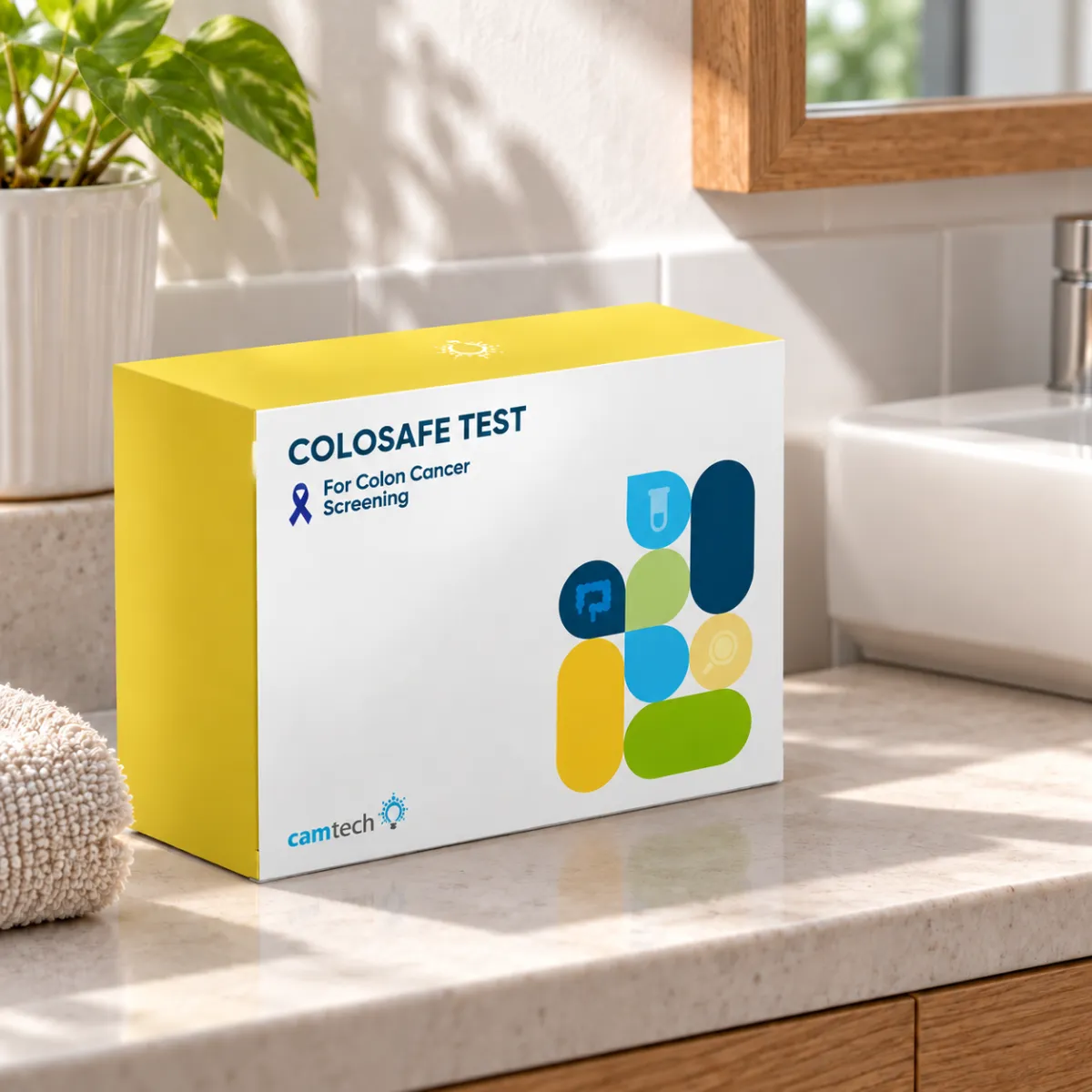
Both use a stool sample, but they look for different signals. Here is how the tests differ, what a result can mean and when to speak with a doctor.
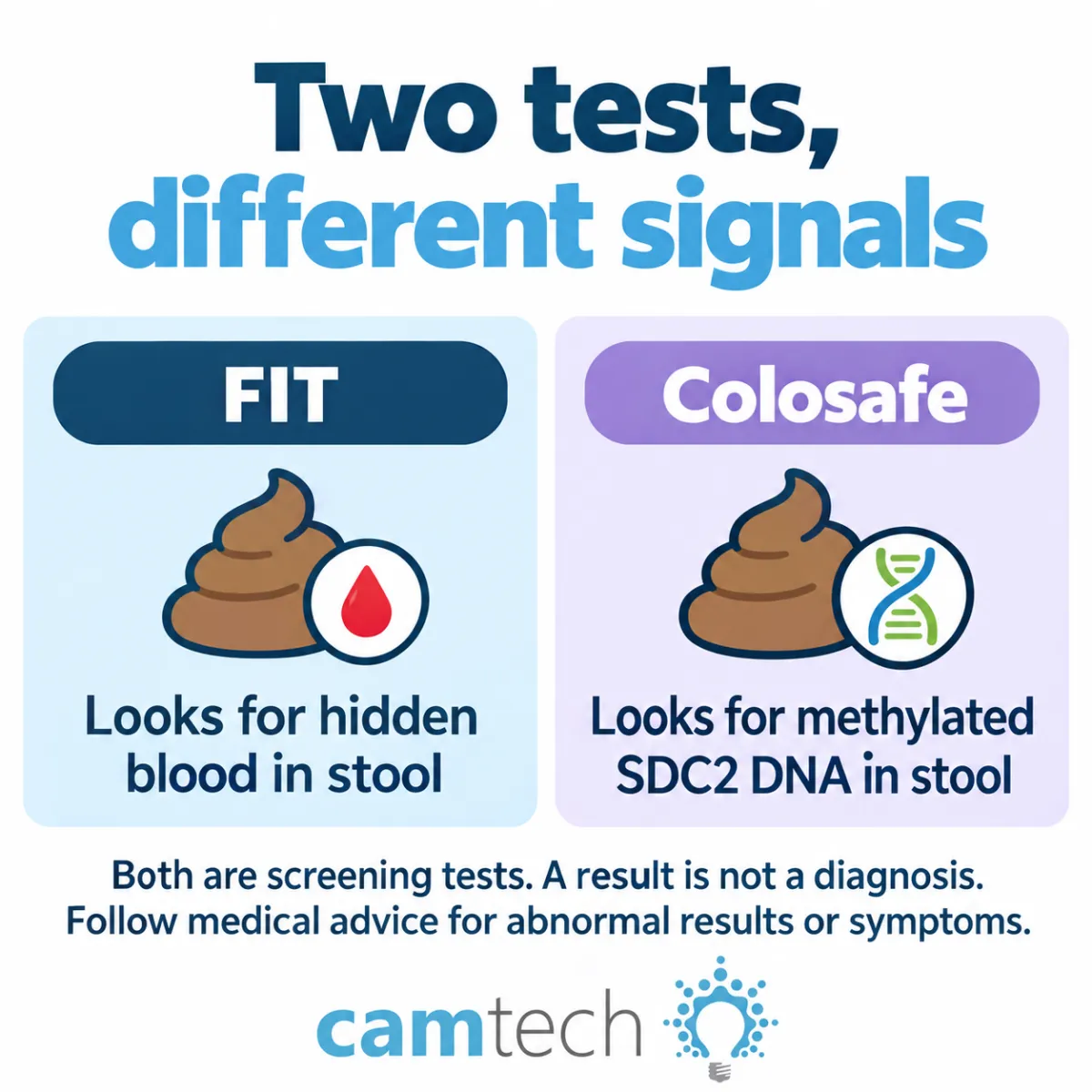
The Faecal Immunochemical Test (FIT) and Camtech Health’s Colosafe Test both begin with a stool sample. They are different tests: FIT looks for small amounts of hidden blood, while Colosafe is a stool deoxyribonucleic acid (DNA) test that looks for methylated syndecan-2 (SDC2) DNA. Both are screening approaches, not stand-alone diagnoses.
In Singapore, the right next step depends on more than the test name. Age, symptoms, personal or family history and follow-up all matter. The Ministry of Health (MOH) reaffirmed on 17 September 2026 that routine colorectal screening for average-risk individuals should start at age 50. People at higher risk may need tailored advice about starting earlier; read the Ministry of Health’s 17 September 2026 update.
FIT and Colosafe at a glance
FIT: Checks for hidden blood in stool. HealthHub’s Healthier SG Screening pathway offers FIT to eligible Singapore Citizens aged 50 or older who have not had a FIT within the past year. HealthHub recommends annual FIT for average-risk individuals.
Colosafe: Checks stool for methylated SDC2 DNA. It is a separate Camtech Health product with its own kit instructions and follow-up route. Do not assume that it is included in the Healthier SG Screening pathway or that it follows the same screening interval as FIT.
What FIT checks for
FIT detects small amounts of blood in stool that may not be visible. Blood can have several causes, including a polyp, infection or cancer. A positive result means that the test has found blood above its threshold; it does not tell you why. If your result is positive, follow the clinic’s advice about further assessment.
For routine screening, HealthHub describes FIT as an annual option for average-risk individuals. Under Healthier SG Screening, eligible Singapore Citizens aged 50 and above can check whether they are due for FIT. The programme has its own collection and return instructions, so follow the kit and clinic guidance.

What Colosafe checks for
At Camtech Health, our Colosafe Test is a stool DNA screening test that looks for methylated syndecan-2 (SDC2) DNA, a biomarker described on our Colosafe Test product page. This is a different signal from the blood that FIT checks for.
If you use Colosafe, follow the instructions supplied with that kit for collection and return. FIT and Colosafe use different test kits, so do not transfer collection steps from one to the other. Read Camtech Health’s Colosafe Test product page for current product information and instructions.

What results can and cannot tell you
A positive FIT result or an abnormal Colosafe result is not, by itself, a diagnosis of colorectal cancer. It means that follow-up may be needed. A doctor will consider the specific result alongside your symptoms and medical history; further assessment may include a colonoscopy.
A normal result is not a reason to ignore new or persistent symptoms. HealthHub advises seeking medical care if colorectal symptoms appear even after a normal FIT result. Similarly, the Colosafe result should be interpreted within a healthcare professional’s advice and the product’s intended use.
Which next step fits your situation?
For an average-risk adult who feels well, follow the local screening guidance that applies to you. If you are a Singapore Citizen aged 50 or older, check your eligibility and due date through HealthHub’s Healthier SG Screening guidance before deciding what to do next.
- If you are due for routine screening, ask your clinic about the FIT pathway and follow its instructions through to any recommended follow-up.
- If you are considering Colosafe, discuss whether this separate stool DNA test fits your circumstances and what follow-up would be appropriate.
- If you are younger than 50 but have a personal history of polyps or a close family history of colorectal cancer, ask a doctor whether you should start screening earlier.
A broader overview of local options is available in our guide to colorectal cancer screening in Singapore.
When to speak with a doctor first
Do not wait for a home screening test if you have blood in your stool, unexplained weight loss, a persistent change in bowel habits or ongoing abdominal discomfort. The Ministry of Health advises people with these symptoms to seek medical attention promptly, regardless of age. A doctor can also advise on a personalised screening plan if your personal or family history puts you at higher risk.

Frequently asked questions
Are FIT and Colosafe the same test?
No. FIT looks for hidden blood in stool. Colosafe looks for methylated SDC2 DNA. They are different screening tests and have different instructions.
Does a positive FIT or abnormal Colosafe result mean I have cancer?
No. Either result may need follow-up, but neither one confirms cancer on its own. Speak with a doctor about the next assessment.
Can Colosafe replace the annual FIT screening pathway?
Do not assume that it can. Healthier SG Screening specifies FIT for its colorectal screening pathway. If you are considering another test, ask a healthcare professional how it fits with your screening plan.
Can I use a stool screening test if I have symptoms?
A home screening test should not be used to investigate or delay care for symptoms. Contact a doctor promptly for advice.
Medical disclaimer
This article is for general education and does not replace medical advice or a screening plan tailored to you. Screening choices and follow-up depend on age, symptoms, personal and family history, and current local guidance. A normal result cannot rule out every condition. If you have symptoms, an abnormal result or concerns about your risk, speak with a qualified healthcare professional.
Visuals are assisted by artificial intelligence (AI)
References
- HealthHub: Learn more about recommended screening tests by age
- HealthHub: Colorectal cancer, risk factors, symptoms and different screening methods
- Ministry of Health: Local data considered in recommending the starting age for colorectal cancer screening (17 September 2026)
- Ministry of Health: Screening Test Review Committee Report 2026, Volume 1
- Camtech Health: Colosafe Test