
FIT vs Stool DNA Testing: What Singaporeans Should Know
By Stuart Chan
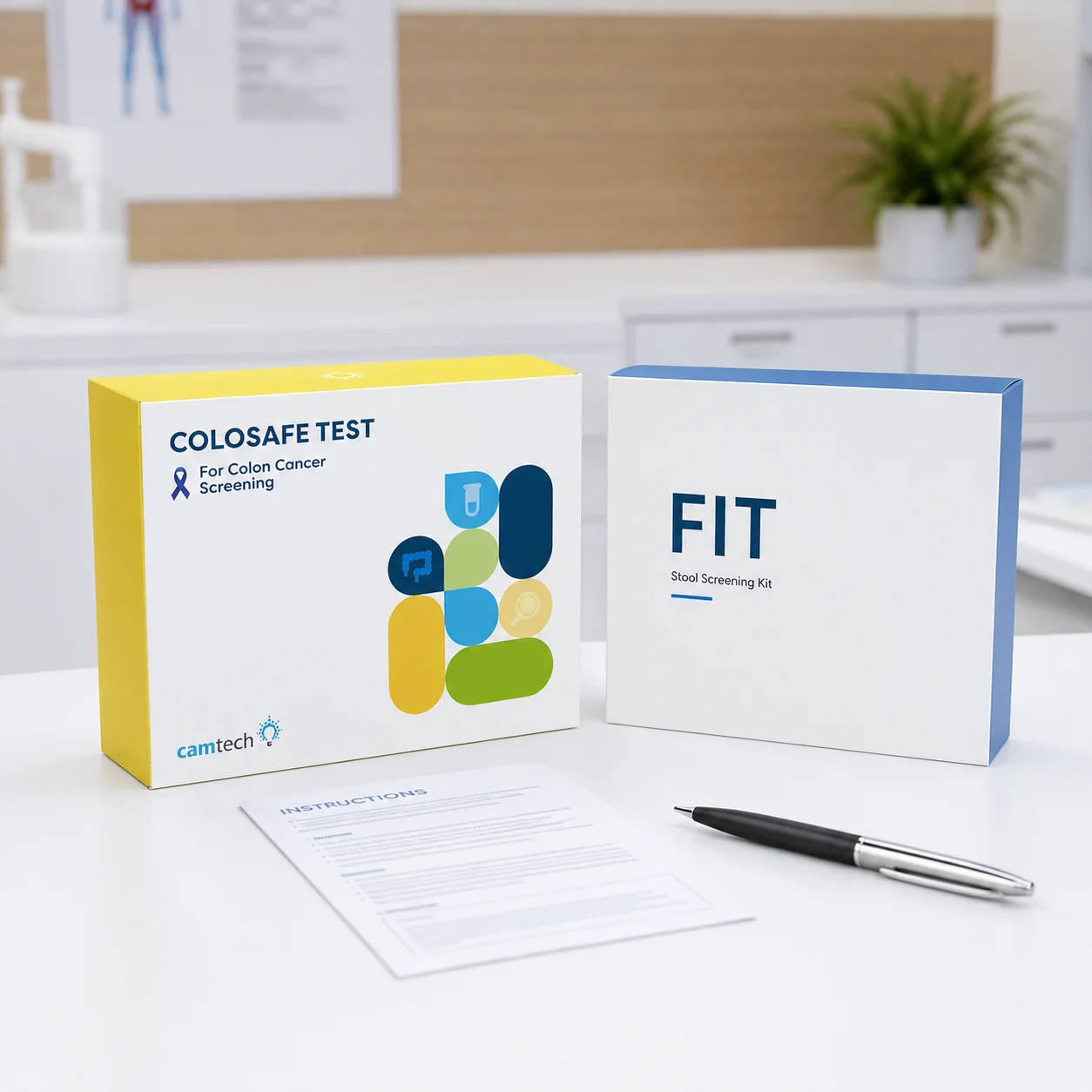
FIT and stool DNA testing are different stool-based colorectal screening approaches.
Colorectal cancer screening can feel uncomfortable to talk about, but it is an important part of preventive health checks in Singapore. For many adults, the first question is simple: should I do a FIT test, a stool DNA test, or speak with a doctor first?
This article explains the difference between the Faecal Immunochemical Test, commonly known as FIT, and stool DNA testing. It is written for general education and does not replace medical advice.
Why Colorectal Screening Matters in Singapore
Colorectal cancer screening in Singapore is commonly recommended because early-stage colorectal cancer may not cause obvious symptoms. HealthHub states that average-risk individuals should generally begin colorectal cancer screening from age 50, and that FIT is one of the recommended screening tests performed annually.
Under Healthier SG Screening, Singapore Citizens aged 50 and above may be eligible for colorectal cancer screening with FIT if they have not done a FIT within one year.
Screening is not the same as diagnosis. If a screening result is abnormal, further medical assessment is needed. This may include colonoscopy, depending on the doctor’s assessment.
What Is FIT?
FIT is a stool-based screening test that checks for hidden blood in the stool. Hidden blood may be associated with colorectal polyps, colorectal cancer, or other bowel conditions.
FIT is commonly used because it is non-invasive, can be done at home, and does not usually require dietary restriction. HealthHub notes that immunochemical stool testing detects human haemoglobin and is more specific than older guaiac-based tests.
Key Points About FIT
FIT may be suitable for average-risk adults who are eligible for routine colorectal screening. In Singapore, it is commonly discussed as an annual screening option for those aged 50 and above.
However, FIT mainly looks for blood. Some polyps or cancers may not bleed at the time of testing. A negative FIT result does not rule out colorectal cancer completely.
What Is Stool DNA Testing?

Stool DNA testing examines stool for selected DNA markers that may be associated with colorectal cancer or certain pre-cancerous changes. Some stool DNA tests may also include a blood detection component, depending on the test design.
For readers who want a broader introduction, this related Camtech Health article explains how stool DNA testing fits into non-invasive colorectal health screening.
For Colosafe DNA, it may be understood as a home-based stool screening option that provides biological information beyond blood detection alone. It should still be interpreted as a screening tool, not a diagnostic test or a guaranteed way to detect or prevent colorectal cancer.
Key Points About Stool DNA Testing
Stool DNA testing may appeal to people who prefer a home sample collection method and want broader stool-based screening information than FIT alone. However, results still require proper interpretation. An abnormal result should be discussed with a doctor, and a follow-up colonoscopy may be recommended.
Stool DNA testing should also not be used to delay medical care if symptoms are present.
FIT vs Stool DNA Testing: Main Differences
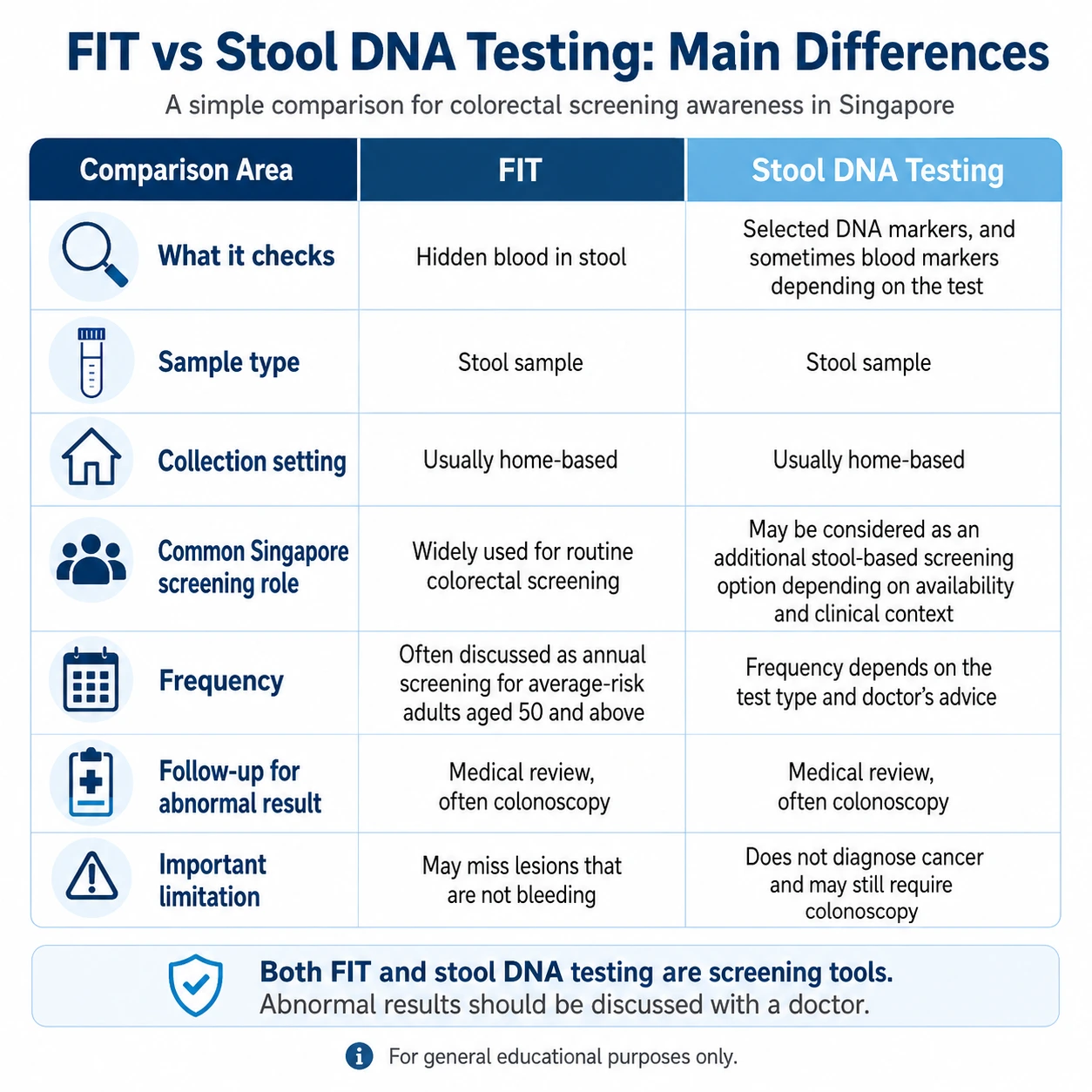
Which Test Should You Choose?
For many Singaporeans aged 50 and above with average risk, FIT is a familiar and widely used screening option. It is also included under Healthier SG Screening eligibility for Singapore Citizens who meet the criteria.
Stool DNA testing may be considered by people who want a home-based screening option that looks beyond hidden blood alone. However, it should be selected with a clear understanding of what the test can and cannot tell you.
A practical approach is:
Consider FIT if:
You are aged 50 or above, average-risk, and looking for a commonly used annual screening test in Singapore.
Consider stool DNA testing if:
You prefer home-based sample collection and want a stool-based test that examines selected DNA markers associated with colorectal changes.
Speak with a doctor first if:
You have rectal bleeding, persistent change in bowel habits, unexplained weight loss, abdominal pain, anaemia, a personal history of polyps, inflammatory bowel disease, or a family history of colorectal cancer.
When Colonoscopy May Be Needed

A colonoscopy allows a doctor to examine the inside of the colon and rectum. It may be recommended after an abnormal stool screening result, or for people with higher risk factors. NCIS notes that individuals with a positive FIT result will go through colonoscopy to rule out cancer.
Stool-based screening can support early detection pathways, but it does not replace medical evaluation when symptoms or risk factors are present.
How Colosafe DNA Fits Into the Screening Conversation
Colosafe DNA may be considered by individuals who want to take a more structured first step at home using a stool-based screening option. It should be understood as part of a broader screening and follow-up process, especially for people with symptoms, risk factors, or abnormal results.
Results should be reviewed alongside personal risk factors, symptoms, family history, and medical advice where appropriate.
You may also read Camtech Health’s article on Singapore’s colorectal cancer screening gap for more context on why convenient screening options are being discussed.
Practical Tips Before Taking a Stool-Based Test

Before choosing FIT or stool DNA testing, check the following:
1. Whether the test is suitable for your risk level
If you have symptoms or a strong family history, speak with a doctor before relying on a home-based screening test.
2. How the sample should be collected
Follow the instructions closely. Incorrect collection or delayed submission may affect the test process.
3. What the result means
A normal result does not guarantee that there is no colorectal disease. An abnormal result does not confirm cancer.
4. What follow-up support is available
Choose a provider that explains next steps clearly and encourages medical review where appropriate. You can also browse Camtech Health’s approved test category to understand available home-based test options.
Patient FAQ
1. Is FIT the same as stool DNA testing?
No. FIT checks for hidden blood in stool. Stool DNA testing checks for selected DNA markers, and some test designs may include additional stool markers. Both are screening tools, not diagnostic tests.
2. Does a normal stool test result mean I do not have colorectal cancer?
No. A normal result reduces concern but does not rule out colorectal cancer completely. See a doctor if you have symptoms such as rectal bleeding, persistent bowel habit changes, unexplained weight loss, or ongoing abdominal discomfort.
3. What happens if my result is abnormal?
You should speak with a doctor. Depending on your result, symptoms, and risk factors, further assessment such as colonoscopy may be recommended.
4. Should I do FIT, stool DNA testing, or colonoscopy?
It depends on your age, symptoms, family history, and risk level. FIT is commonly used for routine screening in Singapore for eligible average-risk adults. Stool DNA testing may be considered as another home-based screening option. Colonoscopy may be recommended if you have symptoms, higher risk factors, or an abnormal stool screening result.
Disclaimer
This article is for general educational purposes only and is not a substitute for medical consultation, diagnosis, or treatment. Colorectal screening recommendations may vary depending on age, symptoms, family history, medical history, and individual risk factors. If you have bowel symptoms, an abnormal screening result, or concerns about colorectal cancer, please consult a registered medical practitioner in Singapore.