
High-Risk HPV: What Screening Can and Cannot Tell You
By Stuart Chan
Human papillomavirus (HPV) is common, and many infections clear naturally. The concern is persistent infection with high-risk HPV types, which may increase the chance of abnormal cervical cell changes over time. If you are in Singapore and due for screening, understanding what an HPV DNA test can and cannot tell you can make the next step clearer.
In Singapore, HealthHub's cervical cancer screening guidance explains that an HPV test is used for women aged 30 and above to detect high-risk cancer-causing strains. The Ministry of Health has also stated that women aged 30 and above are recommended to undergo HPV testing at five-yearly intervals, while women aged 25 to 29 are generally advised to undergo Pap smear screening at three-yearly intervals.
What are high-risk HPV types?
HPV types are different strains of the virus. Some are considered low-risk because they are more commonly associated with genital warts rather than cervical cancer. Others are known as high-risk HPV types because persistent infection with these types may be linked with changes in cervical cells.
High-risk does not mean that cancer is present. It means that the detected HPV type belongs to a group that needs appropriate follow-up, risk assessment and continued screening. This is why the result should be interpreted together with your screening history, age, symptoms and doctor's advice.
Key points to understand
- High-risk HPV detection is a risk marker, not a cancer diagnosis.
- HPV 16 and HPV 18 often receive particular clinical attention because of their association with cervical cancer risk.
- Other high-risk HPV types may also require follow-up, especially if infection persists.
- A negative HPV result lowers current concern but does not remove the need for future screening.
What an HPV DNA test can tell you
An HPV DNA test looks for genetic material from high-risk HPV types in a collected sample. Depending on the laboratory test used, the report may show whether high-risk HPV was detected, whether selected higher-risk types such as HPV 16 or HPV 18 were found, or whether other high-risk types were detected as a grouped result.
Camtech Health's At-Home HPV Test Kit checks for 14 high-risk HPV types. It reports selected types individually and groups others together, which may help guide a discussion on follow-up with a doctor.
What screening can tell you, in practical terms
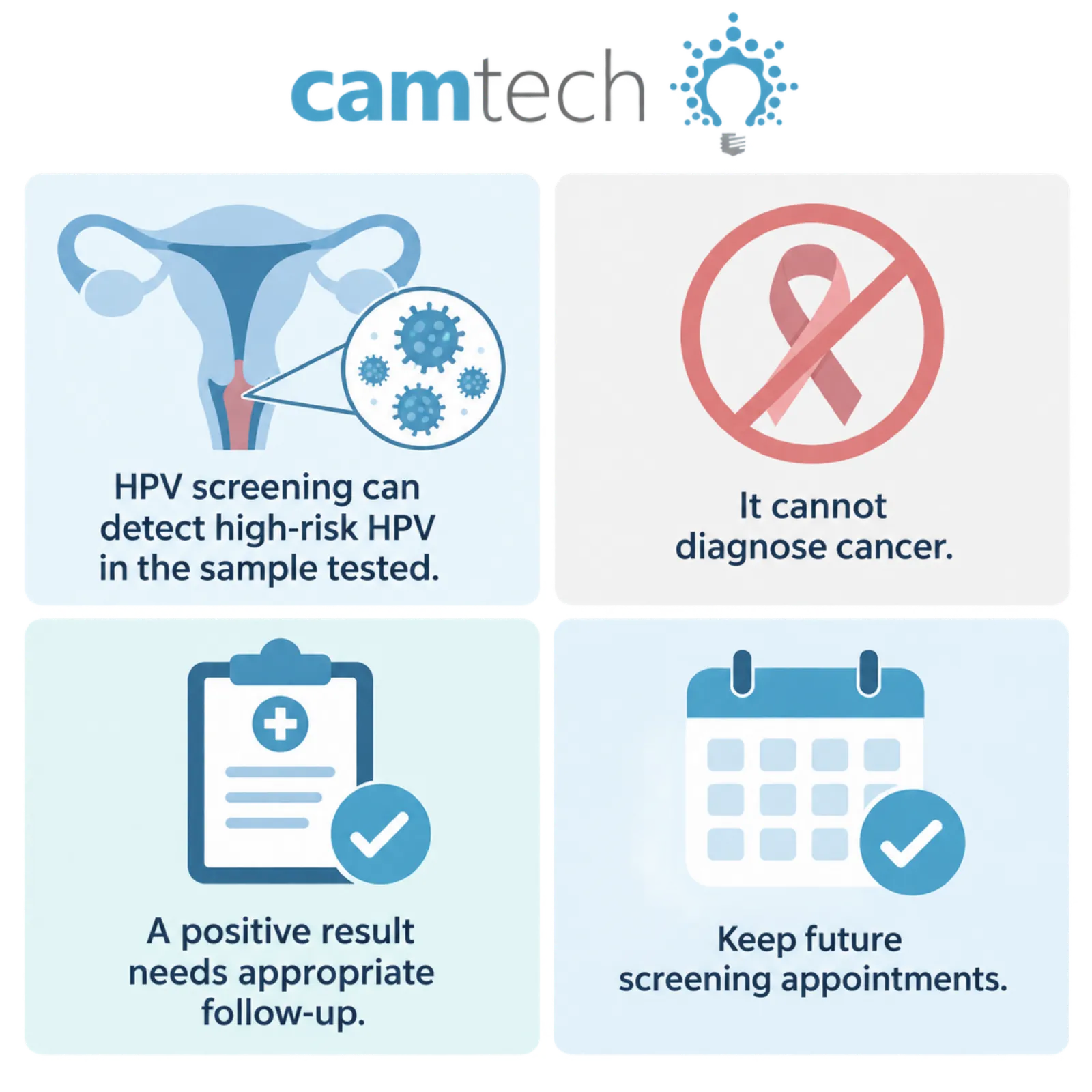
- Whether high-risk HPV DNA is detected. The sample contains genetic material from one or more high-risk HPV types tested by the assay.
- Whether selected higher-risk types are identified. Some tests report certain types separately, which may affect follow-up planning.
- Whether follow-up may be needed. A positive result should be discussed with a doctor, who may advise repeat testing, Pap testing, colposcopy or specialist review depending on the result and clinical history.
- Whether your screening schedule needs attention. The result can help you and your doctor decide when the next screening or follow-up should be arranged.
What HPV screening cannot tell you
HPV screening has clear clinical value, but it has limits. A result should not be read as a complete diagnosis on its own. A positive result does not mean you have cervical cancer, and a negative result does not completely rule out future risk.
- It cannot confirm cervical cancer. Diagnosis requires clinical assessment and, if needed, procedures such as colposcopy or biopsy.
- It cannot show when HPV was acquired. HPV may remain silent for long periods, so timing cannot be reliably inferred from a single result.
- It cannot identify who transmitted HPV. HPV is common and may be detected long after exposure.
- It cannot predict with certainty whether infection will clear. Many infections clear naturally, but persistent high-risk HPV requires follow-up.
- It does not replace medical review if symptoms are present. Symptoms such as abnormal bleeding, pelvic pain or unusual discharge should be assessed by a GP or gynaecologist.
HPV screening accuracy: what affects reliability?
HPV screening accuracy depends on several factors: whether the laboratory test has been clinically validated, whether the correct sample type is used, whether collection instructions are followed, and whether the sample reaches the laboratory in suitable condition. This is why you should follow the instructions in an at-home HPV test carefully and avoid collecting a sample during menstruation unless the kit instructions or doctor's advice indicate otherwise.
The World Health Organization recognises HPV self-sampling as an additional option where HPV testing is available as part of cervical cancer screening. In Singapore, self-sampling may help some women complete screening when clinic-based screening feels difficult, but it should still be linked to proper laboratory testing and clinical follow-up.

At-home HPV testing and clinic-based screening in Singapore
At-home HPV testing can be useful for eligible individuals who are due for screening and prefer private self-collection. Camtech Health's guide to at-home HPV testing in Singapore explains how self-collection fits into the screening journey. If you prefer in-person care, cervical cancer screening is also available through GPs, polyclinics and selected Screen for Life Community Health Assist Scheme (CHAS) clinics.
If you are deciding between an at-home HPV test and a clinic-based appointment, consider your symptoms, age, screening history, pregnancy status, previous abnormal results and comfort with self-collection. A doctor can advise whether a home sample is appropriate for your situation.
How to think about common HPV result patterns
High-risk HPV not detected
This is generally reassuring for the current screening round. Continue screening at the interval recommended by your doctor or national guidance.
HPV 16 or 18 detected
These types usually need clinical follow-up because they are more strongly associated with cervical cancer risk.
Other high-risk HPV detected
Follow-up depends on the exact report, age, screening history and whether the infection persists. A doctor may advise repeat testing or further assessment.
When to speak with a doctor in Singapore
You should speak with a general practitioner (GP), polyclinic doctor or gynaecologist if you receive a positive HPV result, have a previous abnormal Pap smear or HPV result, are unsure whether you are due for screening, or have symptoms such as abnormal vaginal bleeding, bleeding after sex, pelvic pain or unusual discharge. HealthHub notes that symptoms such as abnormal bleeding and changes in discharge should be assessed clinically.

For national screening options, you can check HealthHub's Healthier SG Screening information or contact your preferred CHAS GP, polyclinic or gynaecology clinic.
Considering an at-home HPV DNA test?
If you are aged 30 and above, have no concerning symptoms, and are looking for a private self-collection option, you can learn more about the Camtech Health At-Home HPV Test Kit. You can also view how digital result access fits into the wider care journey through the Camtech Health App. If you have symptoms or are unsure whether the test is suitable, consult a doctor before testing.

References
- HealthHub Singapore. Cervical Cancer, Screening and HPV Vaccinations.
- HealthHub Singapore. Preventing HPV Infection and HPV Immunisation.
- Ministry of Health Singapore. Awareness of Need for Cervical Cancer Checks.
- World Health Organization. HPV Self-Sampling as Part of Cervical Cancer Screening and Treatment.
Important information
This article is for general education only and does not replace consultation with a qualified doctor or healthcare professional. It should not be used for self-diagnosis or to decide treatment. If you have symptoms, a positive HPV result, a previous abnormal cervical screening result, or concerns about your risk, consult a Singapore-registered doctor, GP, polyclinic or gynaecologist for assessment and follow-up.
*Visuals are assisted by artificial intelligence (AI)
Frequently Asked Questions
What does high-risk HPV mean?
High-risk HPV refers to HPV types that are associated with a higher chance of abnormal cervical cell changes if infection persists. It does not mean that cancer is present.
Does a positive high-risk HPV result mean I have cervical cancer?
No. A positive result means high-risk HPV was detected in the sample. You should discuss the result with a doctor, who may recommend follow-up testing or examination based on your result and screening history.
Can an at-home HPV test replace a Pap smear or doctor visit?
An at-home HPV test may support screening for eligible individuals, but it does not replace medical assessment when symptoms are present. If you have abnormal bleeding, pain, unusual discharge or a previous abnormal result, seek clinical advice.
What should I do if my HPV test is positive in Singapore?
Arrange a review with a general practitioner (GP), polyclinic doctor or gynaecologist. The next step may include repeat HPV testing, Pap testing, colposcopy or specialist referral, depending on the type detected and your clinical history.