
HYROX Fiasco: Gut Symptoms and Screening
By Stuart Chan

The recent HYROX Beijing controversy has prompted an uncomfortable but useful question for athletes in Singapore: what should you do when your gut reacts badly during hard exercise? The incident involved an athlete experiencing faecal incontinence during a race and continuing to the finish, leading to criticism of how safety and competition rules were applied. It is a story about race-day judgement and duty of care, not proof that an acute bowel episode means someone has colorectal cancer.
For anyone training for a HYROX event, the practical lesson is simple: do not treat severe or repeated bowel symptoms as something to hide or "push through". Understand common exercise-related gut symptoms, know which warning signs need medical advice, and keep screening separate from the investigation of symptoms. In Singapore, the HealthHub colorectal cancer screening guidance and an appropriate conversation with a healthcare professional are the right starting points.
What happened in the HYROX Beijing incident
Reports about the Beijing race described an Australian athlete who lost control of her bowels during competition but continued and won her category. The episode went viral because it raised questions about whether the athlete should have been stopped, whether officials had a clear protocol, and how an elite result should be treated when a health event occurs during a mass-participation race. HYROX later apologised and said it would clarify its rules and procedures. You can read the current HYROX rulebooks alongside the reported apology and rule-change response.
The story should not be used to diagnose the athlete or to imply that a race-day bowel event has one single cause. Exercise, heat, intensity, food, fluid, nerves, existing digestive conditions and medication can all be relevant. A public report also cannot tell you what clinical assessment the athlete did or did not receive.
The responsible takeaway for competitors is to have a plan that includes permission to slow down, stop or ask for help. A finish time is never more important than immediate safety. Race organisers also need clear procedures for medical incidents, privacy and decisions about whether a participant can continue.

Why hard exercise can trigger gut symptoms
Exercise-associated gastrointestinal (GI) symptoms are not limited to HYROX. Athletes may experience nausea, cramping, bloating, urgency, diarrhoea or an unexpected need to use the toilet. Research in endurance athletes has found that lower-gut symptoms can be common, particularly during running, and that symptoms during training can be relevant to what happens in competition. A recent study of endurance and ultra-endurance athletes found that symptoms reported during training were associated with a higher likelihood of symptoms during competition; that does not predict what will happen to one individual, but it supports taking recurring training symptoms seriously. See the 2026 research on digestive vulnerability and race withdrawal.
HYROX combines repeated running with demanding functional stations. That combination can increase mechanical movement, breathing effort and stress while you are also trying to fuel and hydrate. The cause of symptoms is often multifactorial rather than one "bad" food. Eating too close to a high-intensity session, changing your normal race nutrition suddenly, dehydration, excess fluid, heat, anxiety, infection and an underlying digestive problem may each matter.
That is why a sensible training log is more useful than internet speculation. Note what you ate and drank, when you consumed it, the session intensity, the weather, sleep, stress and the exact symptoms. Do not use a restrictive diet, supplements or anti-diarrhoeal medicine as a race-day experiment without qualified advice. If symptoms keep returning, arrange a clinical assessment before increasing training load.

When race-day bowel symptoms need medical attention
Mild, short-lived urgency can happen during strenuous exercise, but you should stop and seek prompt medical advice if symptoms are severe, recurrent, worsening or accompanied by warning signs. These include blood in the stool, black stools, persistent diarrhoea, severe or localised abdominal pain, repeated vomiting, fever, fainting, confusion, signs of dehydration, unexplained weight loss or a persistent change in bowel habits. New loss of bowel control also deserves medical discussion, especially if it happens outside hard exercise or comes with numbness, weakness or back pain.
Do not assume that a normal screening result explains away symptoms. HealthHub advises seeing a doctor promptly for symptoms such as blood in the stool or changes in bowel habits, even after a normal faecal test. Screening is for people who do not have symptoms; symptoms need assessment to identify their cause. In an emergency, use Singapore's urgent medical services rather than waiting for an at-home kit or an online explanation.
Be honest with the healthcare professional about exercise, supplements, medication, menstrual or bowel history, travel, recent infection and family history. The more specific your description, the easier it is to decide whether you need examination, blood tests, stool tests, imaging or referral. A sports dietitian can help with race fuelling after medical causes have been considered, but nutrition advice is not a substitute for medical evaluation.

Where Colosafe fits in Singapore
Colosafe is a Singapore-available stool deoxyribonucleic acid (DNA) screening test that looks for methylated SDC2 (syndecan-2) DNA in a stool sample. It is designed as a non-invasive screening option and is not a diagnostic test. Read the Colosafe Test information from Camtech Health to understand the intended use, home collection process, digital results and professional support described for the product.
The important distinction is timing and purpose. A HYROX episode is an acute event that may need a clinical assessment. Colosafe is a screening step for eligible adults in Singapore; it does not explain sudden diarrhoea or faecal incontinence, confirm colorectal cancer, or rule out every bowel condition. An abnormal screening result means further assessment may be needed, while a normal result does not cancel the need to discuss symptoms or risk factors with a doctor.
For average-risk adults, Singapore's public guidance describes colorectal screening from age 50, with a faecal immunochemical test (FIT) as one recommended option. The right approach can differ when you have symptoms, a first-degree family history, previous polyps, inflammatory bowel disease or another risk factor. HealthHub's recommended screening journey in Singapore explains how an abnormal FIT result is followed up; it should not be read as a replacement for advice about which test is right for you.
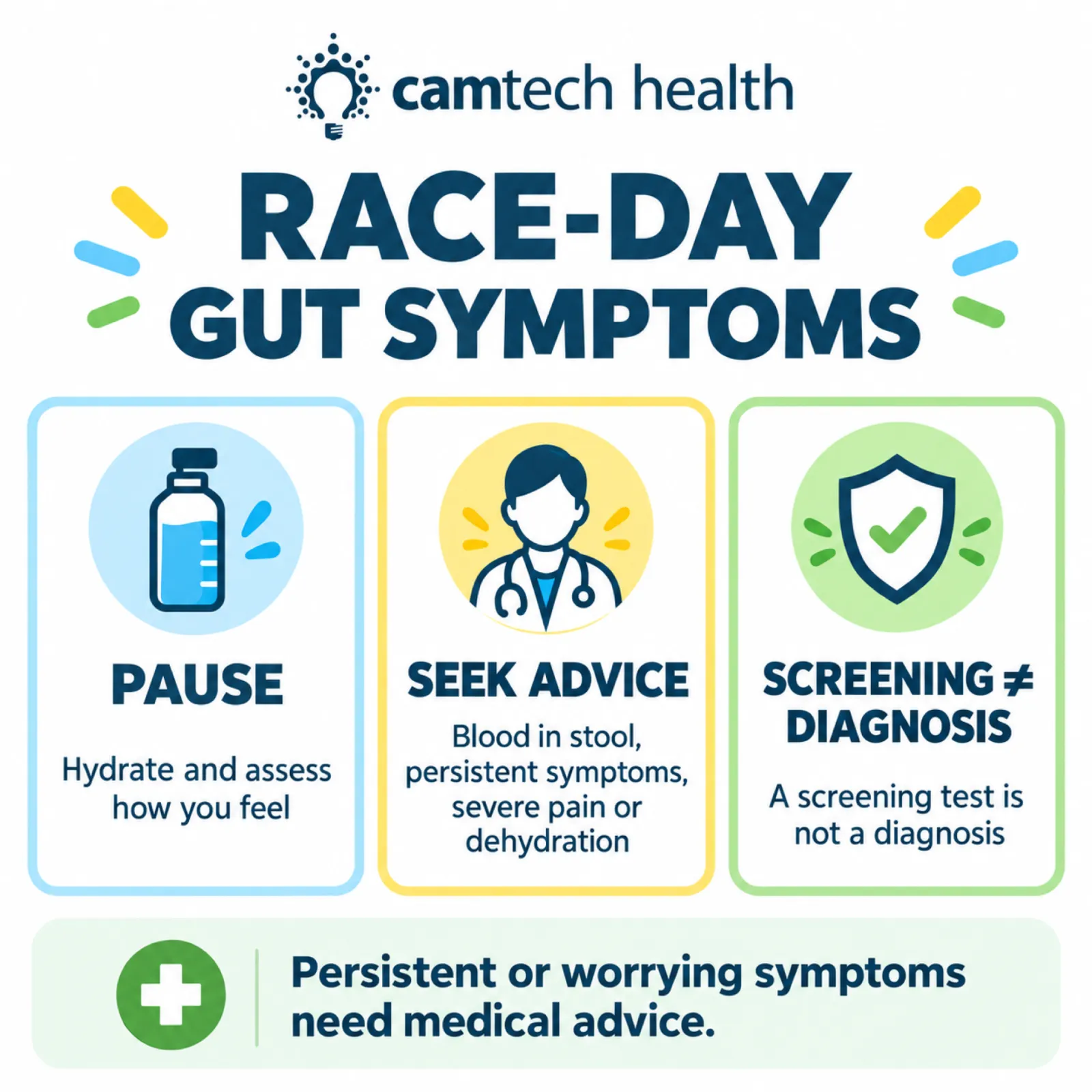
A safer preparation checklist for your next HYROX event
Before race day, practise your food and fluid plan during training rather than trying an unfamiliar strategy at the event. Leave enough time to use the toilet, check the venue's facilities, and tell your coach or teammate what symptoms should trigger a stop. If you have repeated urgency, diarrhoea, bleeding, pain or loss of bowel control, pause hard training and speak to a qualified healthcare professional.
Keep screening on its own timetable. Do not buy a screening test because a dramatic sports story made you anxious, and do not delay medical care because you think a home result will settle an active symptom. The best response to the HYROX fiasco is better preparation, clearer race safety decisions and appropriate medical follow-up when your body is telling you something is wrong.
References
- HYROX rulebooks
- ABC News: HYROX co-founder apologises after athlete continues Beijing race
- PubMed: Digestive Vulnerability and Exercise Exposure as Correlates of Gastrointestinal Symptoms and Race Withdrawal
- HealthHub Singapore: Colorectal cancer risk factors, symptoms and screening
- Camtech Health: Colosafe Test Kit
Medical disclaimer
This article is for general education and does not diagnose the cause of bowel symptoms, determine medical fitness for HYROX, or replace a clinical assessment. Colosafe is a screening test, not a diagnosis. Product availability and intended use vary by market. If you have concerning symptoms, a significant family history, an existing condition, or a new loss of bowel control, seek advice from a qualified healthcare professional promptly.
*Visuals are assisted by artificial intelligence (AI)
Patient frequently asked questions
Can hard exercise cause diarrhoea or bowel urgency?
Yes. Strenuous exercise can be associated with nausea, cramping, urgency or diarrhoea, but repeated, severe or unusual symptoms still need medical advice because exercise is not the only possible cause.
Does the HYROX Beijing incident mean the athlete had colorectal cancer?
No. A public incident cannot establish a diagnosis. Bowel symptoms have many possible causes, and only an appropriate clinical assessment can determine what happened.
Does Colosafe diagnose colorectal cancer?
No. Colosafe is a stool DNA screening test for adults in Singapore. An abnormal result may require follow-up, and a normal result does not rule out every condition or replace advice about symptoms.
Should I use a screening test if I have blood in my stool?
Speak with a healthcare professional promptly rather than relying on a home screening result to explain active bleeding. Singapore guidance advises medical review for concerning symptoms.
How can I reduce the chance of gut problems during HYROX?
Practise your food and fluid plan during training, avoid sudden changes, allow toilet time and record recurring triggers. Stop and seek advice if symptoms are severe, persistent or accompanied by warning signs.