Irregular Cycles: Reading Ovulation Testing Patterns
By Stuart Chan
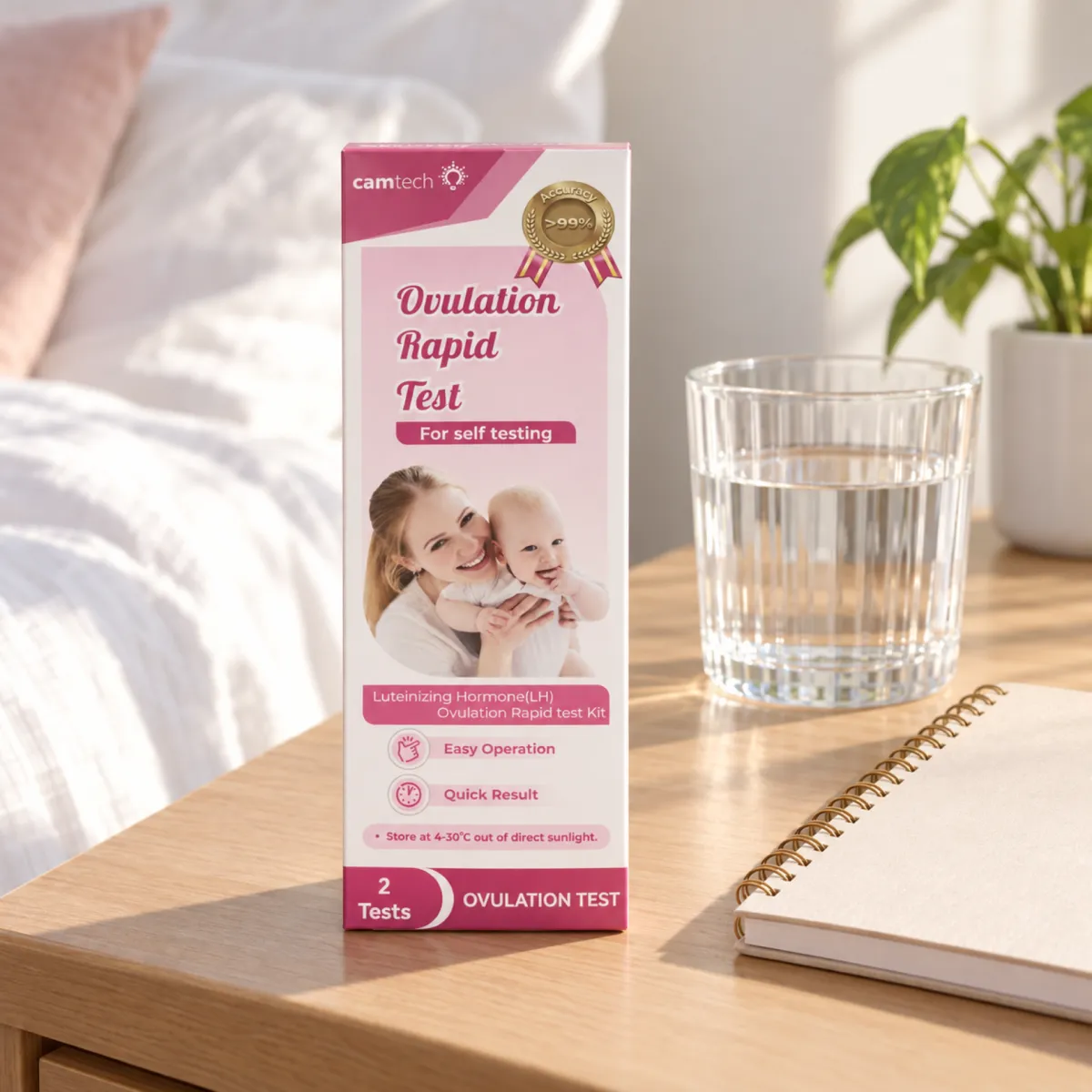
If your period does not arrive on a predictable schedule, fertility tracking can feel frustrating. Calendar apps can estimate a fertile window, but irregular cycles may shift ovulation from month to month. A luteinising hormone (LH) ovulation test can add useful information by detecting a hormone rise linked to ovulation timing. It is a tracking aid, not a diagnosis or a promise of pregnancy.
What counts as an irregular cycle?
The menstrual cycle is counted from the first day of one period to the day before the next period. The National Health Service (NHS) explains that periods may be considered irregular when the gap between periods is less than 21 days or more than 35 days, or when your usual pattern changes. Irregularity can happen during puberty and near menopause, but it can also be linked to pregnancy, hormonal contraception, weight changes, stress, intense exercise, thyroid problems, or polycystic ovary syndrome (PCOS).
For someone trying to understand their cycle, the key issue is that ovulation may not happen on the same cycle day each month. That makes it harder to rely on a single calendar prediction.
How LH ovulation testing fits in
Luteinising hormone (LH) rises before ovulation. The Camtech Health Ovulation Test Kit (LH Ovulation Predictor) is listed on Camtech's Singapore site as a urine-based ovulation predictor for fertility tracking, with results available within minutes and app logging to help track cycle patterns over time.
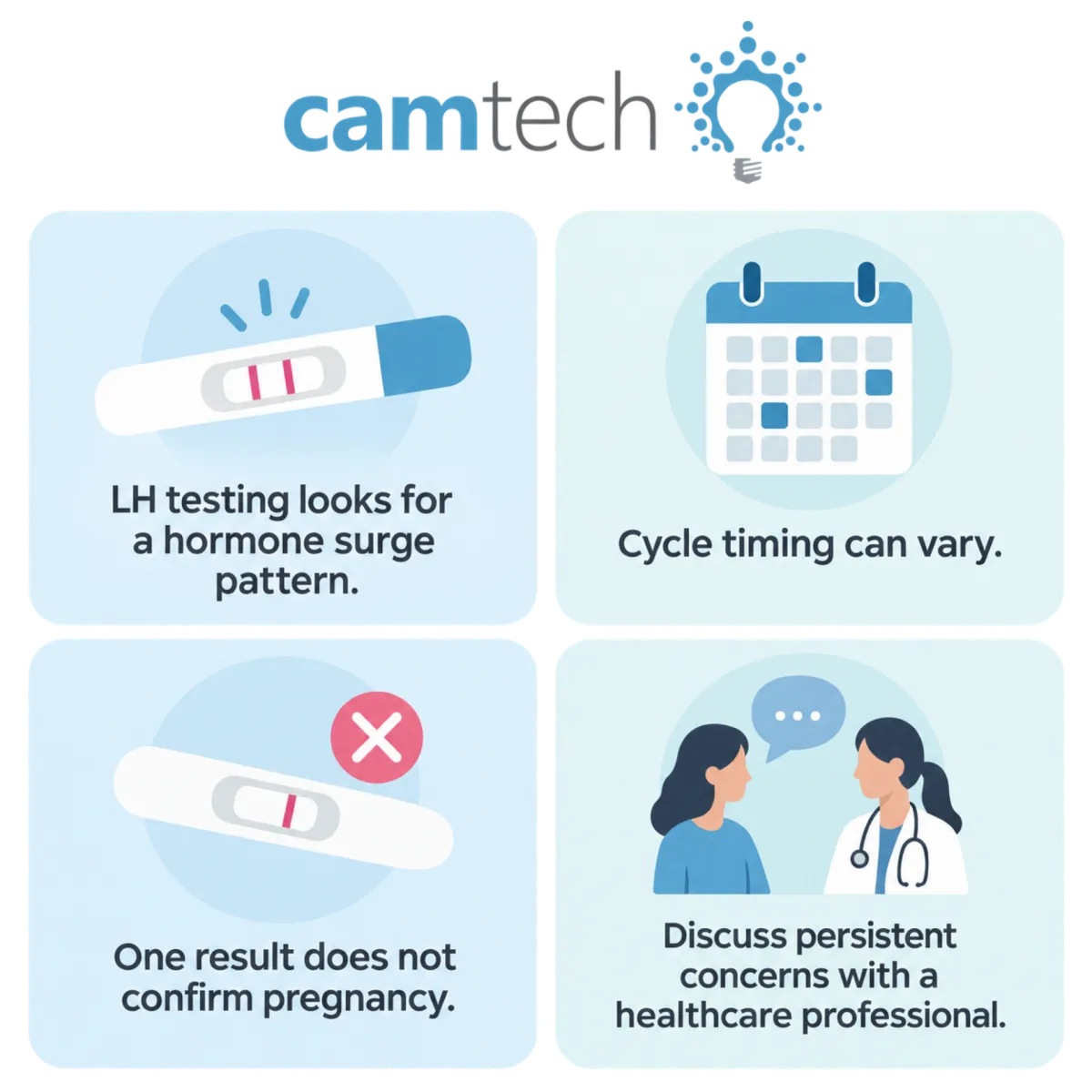
For irregular cycles, an LH surge test can be useful because it looks for a hormone pattern rather than relying only on a predicted day. However, a positive LH test does not confirm that an egg has definitely been released, and a negative test does not rule out ovulation if testing started too late, stopped too early, or missed a short LH surge.

Why irregular cycles may need a wider testing window
In a regular 28-day cycle, many people start LH testing around the middle of the cycle. With irregular cycles, the fertile window may arrive earlier or later than expected. Testing over a wider range of days can make tracking more useful, especially when paired with period dates, cervical mucus observations, and notes about sleep, stress, travel, medication changes, or illness.
Key points
- Irregular cycles can make calendar-only fertility tracking less reliable.
- LH ovulation tests detect a hormone rise that can help identify likely fertile timing.
- Persistent irregular periods, unusual bleeding, or difficulty conceiving should be discussed with a qualified doctor.
How to read the pattern, not just one test
An ovulation test is most useful when it is part of a pattern. A single result can tell you what the test detected at that moment. Several cycles of tracking can show whether your LH surge tends to appear early, late, inconsistently, or not at all.
A simple tracking record can include:
- the first day of each period
- cycle length
- days when LH tests are negative, positive, or invalid
- changes in cervical mucus, if you track them
- medication, travel, stress, illness, sleep disruption, or major weight change
- any pain, heavy bleeding, bleeding between periods, or missed periods
If you use Camtech's ovulation test kit, follow the product instructions and interpret the result according to the specific format you are using. The Camtech Singapore Women's Health category lists the LH Ovulation Predictor alongside other local women's health tests.

Timing intercourse when cycles are irregular
The NHS notes that pregnancy is more likely around ovulation, which usually happens about 14 days before the next period, but this depends on cycle length. When cycles are irregular, having sex every two or three days through the cycle may be simpler than trying to predict one exact date.
LH testing can help narrow the likely timing, but it should not become the only signal. Some people may miss a surge if they test once daily, have a short surge, dilute urine heavily before testing, or start testing after ovulation has already passed. If your pattern is confusing, bring your tracking record to a general practitioner (GP), polyclinic, gynaecologist, or fertility clinic.
When to seek medical advice
Irregular cycles are common, but they should not be ignored when they are new, persistent, or accompanied by other symptoms. Speak with a qualified healthcare professional if your periods are irregular, last longer than seven days, include bleeding between periods, or are linked with symptoms such as weight gain, tiredness, facial hair growth, acne, or very dry or oily skin. Seek care promptly for severe pain, very heavy bleeding, faintness, or a suspected pregnancy concern.
The World Health Organization defines infertility as failure to achieve pregnancy after 12 months or more of regular unprotected sexual intercourse. In Singapore, earlier review may be appropriate if you are older, have irregular or absent periods, have a known reproductive health condition, or have a partner with known fertility concerns.

A practical cycle monitoring plan
For many people, the most useful approach is simple and consistent:
- Track at least three cycle starts so you know your shortest and longest recent cycles.
- Begin LH testing earlier than your predicted fertile window if your cycles vary widely.
- Keep testing long enough to avoid missing a late surge.
- Record positive, negative, and invalid results instead of relying on memory.
- Seek professional advice if results stay confusing or if irregular periods persist.
This approach can support fertility tracking and cycle monitoring without turning an at-home test into a substitute for clinical assessment.
References
- Ovulation Test Kit (LH Ovulation Predictor), Camtech Health Singapore.
- Irregular periods, NHS.
- Trying to get pregnant, NHS.
- Infertility, World Health Organization.
Important information
This article provides general educational information in Singapore and does not replace personalised advice, diagnosis, or treatment from a qualified doctor or healthcare professional. An LH ovulation test can support fertility tracking, but it does not diagnose the cause of irregular periods, confirm ovulation in every cycle, or replace clinical assessment. If your periods are persistently irregular, unusually heavy, painful, absent, or associated with other concerning symptoms, seek medical advice.
*Visuals are assisted by artificial intelligence (AI)
Frequently Asked Questions
Can I use an LH ovulation test if my periods are irregular?
Yes, but you may need to test across a wider range of days because ovulation timing can shift. Follow the product instructions and keep a record of cycle dates and test results.
Does a positive LH test mean I have definitely ovulated?
No. A positive LH test suggests that an LH surge has been detected, which can help identify likely fertile timing. It does not confirm that ovulation definitely occurred.
When should I see a doctor about irregular cycles?
Seek medical advice if your periods are persistently irregular, last longer than seven days, include bleeding between periods, are associated with other symptoms, or if you are struggling to get pregnant.
Can ovulation testing replace fertility assessment?
No. Ovulation testing can support cycle monitoring, but fertility can be affected by many factors. A doctor or fertility specialist can assess menstrual, ovarian, uterine, tubal, sperm, and general health factors when needed.