
Preventive Screening for Busy Adults: A Singapore Guide
By Stuart Chan

Preventive screening is easier to manage with a clear plan. Singapore’s 2026 recommendations group common checks by life stage, giving you a practical starting point for what may be due. Use this guide to organise screening dates, note personal or family risk factors and prepare for a focused conversation with your family doctor.
Screening is planned, not one-size-fits-all
Screening means testing people who do not have symptoms for signs of disease that have not yet become clinically apparent. It is different from investigating symptoms, monitoring a known condition or confirming an abnormal result. The Ministry of Health’s 2026 Screening Test Review Committee report explains that screening should be a continuing process rather than a one-off package.
Start with the checks recommended for your age and health profile. Your family doctor can help identify what is due, explain what a result may mean and plan follow-up. Eligible Singapore Citizens can use the Healthier SG Screening programme to check subsidised options.
Preventive screening checklist by life stage
Use the table as a starting checklist. The 2026 Singapore framework summarises common tests by life stage. Your doctor can adjust timing based on symptoms, previous results, family history and individual risk.
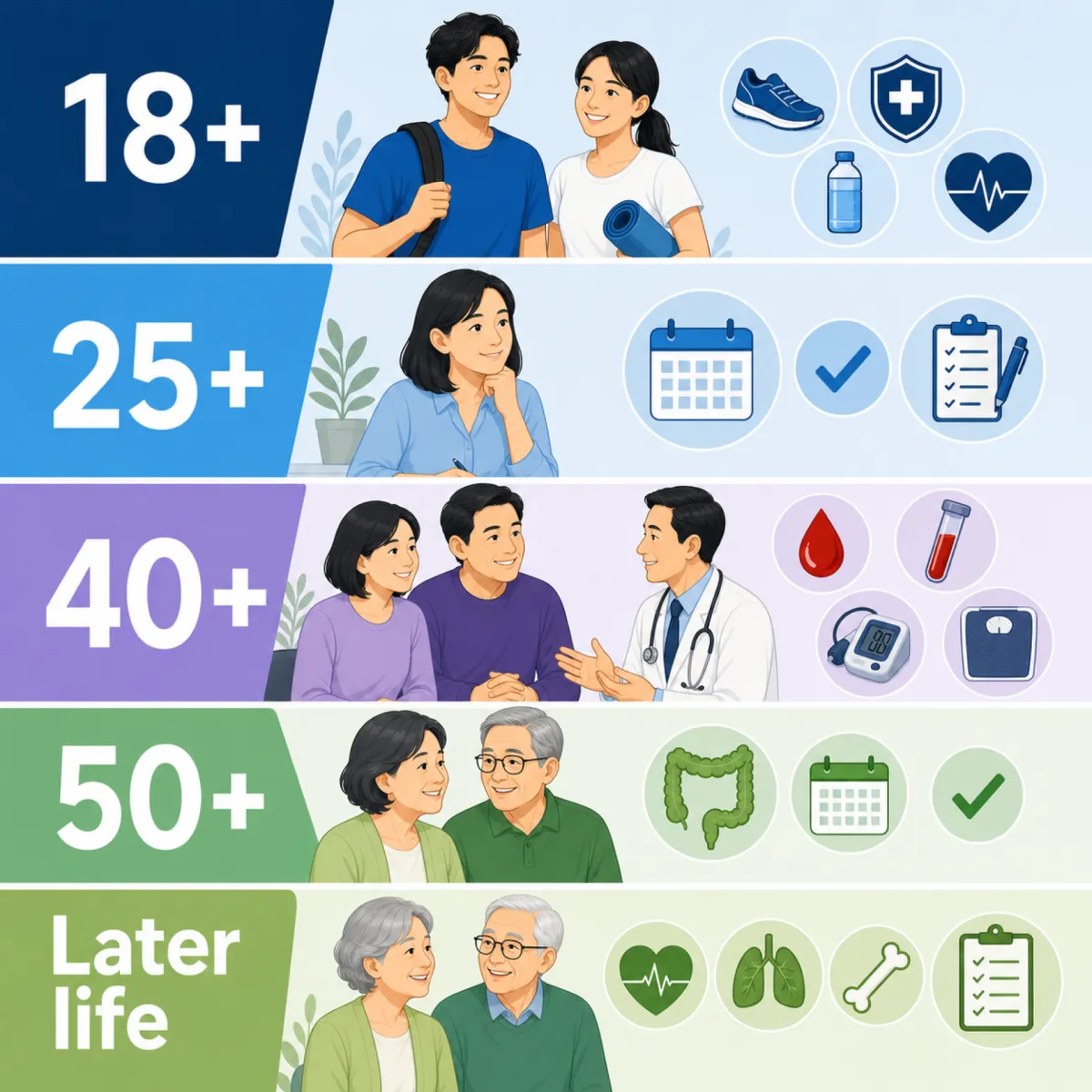
| Life stage | Checks to discuss | Practical note |
|---|---|---|
| From age 18 | Blood pressure opportunistically and at least annually; body mass index and waist circumference annually. | Ask earlier about diabetes or cholesterol screening if you have relevant risk factors or family history. |
| Women aged 25 to 29 | For women who have ever had sexual intercourse, a Pap test every three years. | Symptoms such as unusual bleeding, pain or discharge need clinical assessment rather than routine screening alone. |
| Women from age 30 | For women who have ever had sexual intercourse, human papillomavirus testing every five years. | A positive result is a prompt for follow-up; it does not by itself confirm cancer. |
| From age 40 | Diabetes screening with fasting plasma glucose or glycated haemoglobin (HbA1c) every three years; fasting or non-fasting lipids every three years. | Women aged 40 to 49 are recommended to have a mammogram each year; ask your doctor about individual risk and preferences. |
| From age 50 | Average-risk colorectal screening with annual faecal immunochemical testing or colonoscopy every five to ten years. Women aged 50 to 74 may have mammography every two years. | Women may also begin osteoporosis risk assessment from age 50 or after menopause, whichever is earlier. |
| From age 65 | Men may begin a clinical and lifestyle risk assessment for osteoporosis, with bone mineral density testing based on clinical discretion. | At older ages, discuss how health, previous results and preferences affect whether a screening test is still useful. |
What can change your screening plan?
- A first-degree relative with cancer, diabetes, high cholesterol or early cardiovascular disease.
- Smoking history, higher blood pressure, chronic kidney disease, pregnancy history or long-term medication use.
- Previous polyps, abnormal cervical results, breast findings or other abnormal screening results.
- New or persistent symptoms, which require clinical assessment rather than waiting for a routine screening date.
Make screening fit your calendar
A screening plan is more likely to happen when it is attached to a reliable routine. Use a birthday month, annual leave cycle or Healthier SG review as your reminder point. Keep one list of the test, last date, result, recommended interval and follow-up status. This prevents repeated testing while helping you spot genuinely overdue items.
Before booking, ask whether fasting is needed, how long the visit may take and when results will be available. Schedule a follow-up slot at the same time if the service allows it. The Healthier SG Screening page lets eligible Singapore Citizens check recommended tests and book participating services, while your enrolled clinic can place results in the context of your broader health history.

Where at-home tests may fit
For selected needs, at-home collection can make testing easier to fit into your routine. Check that the test matches your purpose, follow the instructions and know where to go for follow-up.
For example, Camtech Health lists selected tests intended for specific jurisdictions such as Singapore. Availability on a website does not mean every test is suitable for every person. An HPV self-collection option may support access for an eligible asymptomatic woman, while a respiratory self-test addresses an acute infection question rather than long-term preventive screening. Product instructions and professional advice should control the next step.

The result is only useful when follow-up is clear
A normal result does not cancel future screening, and an abnormal result is not automatically a diagnosis. Record the result, note when the next screen is due and complete any recommended follow-up. If you already have a diagnosed chronic condition, continue the monitoring plan set by your doctor rather than treating routine screening intervals as your care schedule.
Seek medical advice promptly for new or persistent symptoms, including unusual bleeding, a breast lump, blood in the stool, unexplained weight loss, chest pain, breathlessness or other concerning changes. Do not wait for a scheduled screening appointment or a home test to decide whether symptoms need assessment.

Your simple next step
- Write down your age, sex, family history, existing conditions, medicines and last screening dates.
- Check your HealthHub screening eligibility and identify one overdue or uncertain item.
- Book a primary care discussion or the recommended screening appointment.
- Set a reminder for results and follow-up before closing the task.
A useful screening plan helps you keep up with the checks recommended for your age and health profile, then follow through on the next step.
References
- Screening Test Review Committee Report 2026, Volume 1, Ministry of Health Singapore and Academy of Medicine, Singapore.
- Healthier SG Screening: National Health Screening Programme, Health Promotion Board.
- Screening for Colorectal Cancer, HealthHub and National University Hospital.
- Approved Tests, Camtech Health.
Frequently Asked Questions
Do I need every test in a health screening package?
A screening package may include tests that are not due for you. Use national guidance and your health profile to choose the checks most relevant to you, and ask a primary care doctor about anything uncertain.
Should I wait for my routine screening if I have symptoms?
No. Screening is intended for people without symptoms. New, persistent or concerning symptoms need clinical assessment and may require a different diagnostic pathway.
Can an at-home test replace a clinic screening appointment?
An at-home test may be an option for a specific need, but the right method depends on the test and your health profile. Confirm how results and follow-up are handled.
How can I check which subsidised screening tests I am due for in Singapore?
Use the Healthier SG Screening service on HealthHub and discuss the result with your enrolled clinic. Eligibility depends on factors including age, sex, existing conditions and your last screening date.
Important information
This article is general health information and is not a substitute for personalised medical advice, diagnosis or treatment. Screening recommendations vary with age, sex, symptoms and health history; follow the current advice of your healthcare professional. Seek prompt assessment for concerning or persistent symptoms.
*Visuals are assisted by artificial intelligence (AI)