
Understanding HPV Test Results and How Testing Works
By Stuart Chan
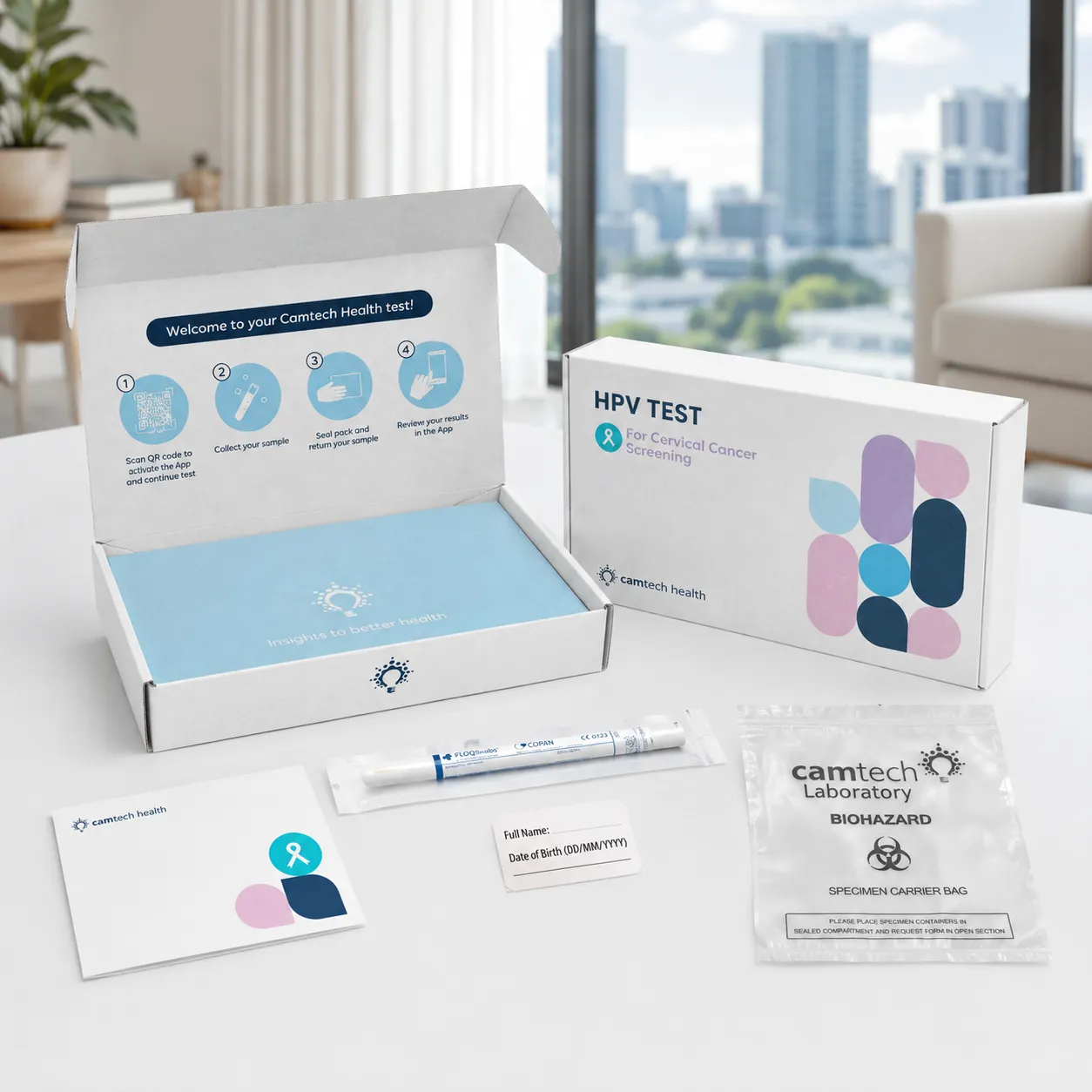
Human papillomavirus, commonly known as HPV, is a group of viruses that can affect the skin and mucosal areas of the body. Most HPV infections are cleared naturally by the body, but persistent infection with certain high-risk HPV types can increase the risk of cervical cancer over time. The World Health Organization explains that persistent high-risk HPV infection is the cause of cervical cancer.
For women in Singapore, HPV testing is an important part of cervical cancer screening. According to HealthHub, women aged 25 and above who have ever had sex should go for regular cervical screening, with HPV DNA testing generally recommended once every five years for women aged 30 and above.
This article explains how HPV testing works, what different HPV test results may mean, and how an at-home collection option can support more convenient access to screening information.
What Is an HPV Test?
An HPV test checks for the presence of high-risk HPV types that are associated with cervical cancer risk. Unlike a Pap test, which looks for abnormal cervical cell changes, an HPV DNA test looks for viral DNA from specific HPV types. HealthHub explains that HPV testing is used to detect high-risk cancer-causing strains.
An HPV test does not diagnose cervical cancer. Instead, it helps identify whether high-risk HPV has been detected, so that appropriate follow-up can be considered.
How the HPV Test Works
1. Sample Collection
For an at-home HPV test, the user collects a sample according to the kit instructions. This may involve a self-collection swab. The sample is then sent for laboratory testing.
The key point is that the accuracy of the test depends on proper sample collection, correct handling, and laboratory processing. Users should follow the instructions carefully and avoid interpreting the test outside the intended process.
2. Laboratory Analysis
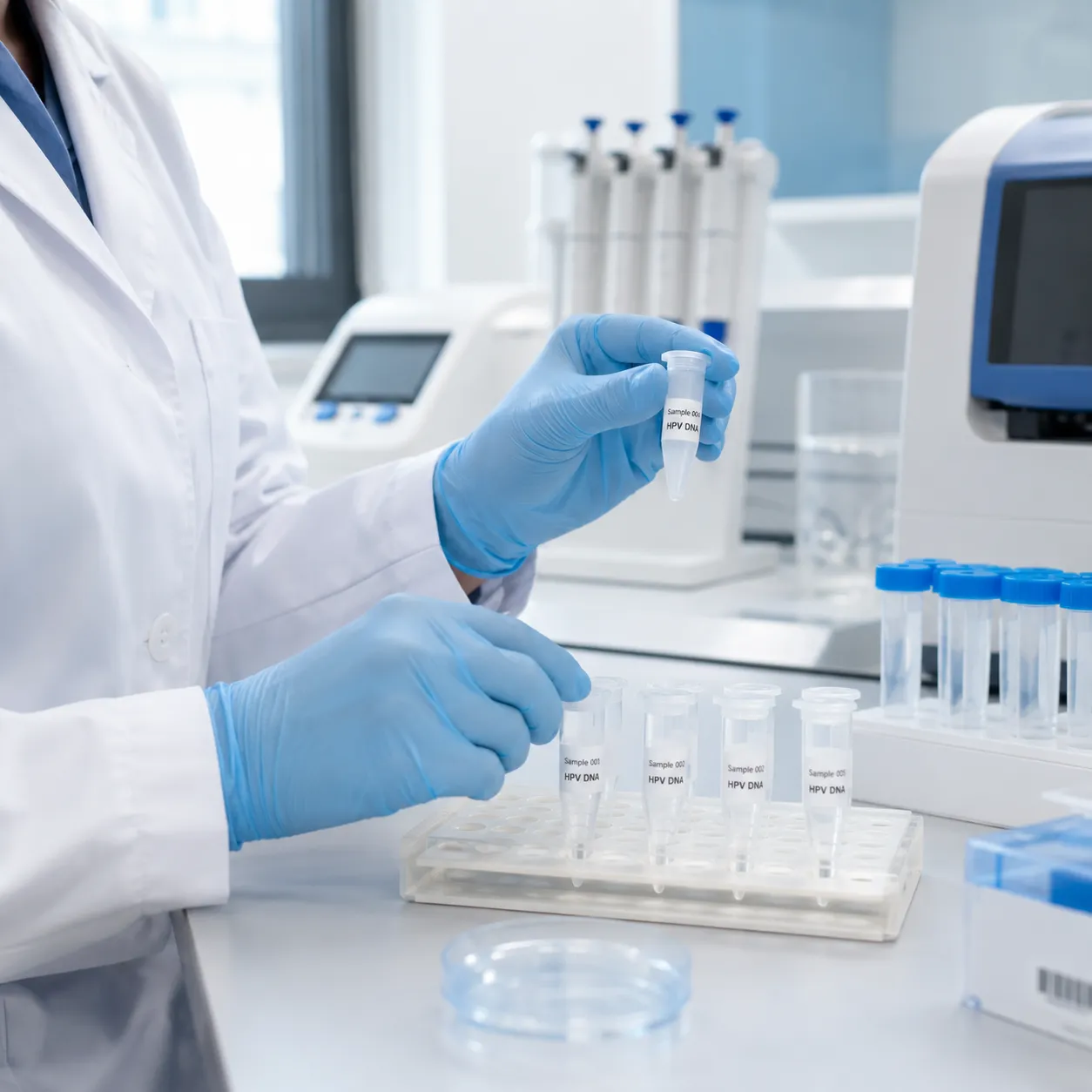
In the laboratory, the sample is analysed to check whether HPV DNA is present. Depending on the test panel, the report may indicate whether high-risk HPV types were detected.
Some HPV tests may identify specific higher-risk types, such as HPV 16 and HPV 18, while others may report high-risk HPV as a group. HealthHub notes that HPV 16 and HPV 18 are high-risk strains that may cause persistent infection and can lead to cervical cancer over time.
3. Digital Result Access

Camtech Health’s at-home HPV test supports self-collection and laboratory testing in Singapore, with digital results available through the Camtech Health app. This allows users to review their results privately and keep a record for follow-up.
The service supports cervical screening, but it does not replace medical assessment. People with a positive, invalid, unclear or concerning result should consult a qualified healthcare professional.
What Your HPV Test Results May Mean
HPV Not Detected
An “HPV not detected” result means the test did not detect the HPV types included in the test panel at the time of sampling.
This does not mean a person can never develop HPV in the future. HPV exposure can occur later, and regular screening remains important according to age and clinical risk factors.
High-Risk HPV Detected
A “high-risk HPV detected” result means that one or more HPV types linked to a higher risk of cervical cell changes were found.
This does not mean the person has cervical cancer. Many HPV infections clear naturally. However, persistent high-risk HPV infection may require follow-up, such as a doctor’s consultation, repeat testing, Pap test, or referral depending on the result and clinical history.
HPV 16 or HPV 18 Detected
If the report identifies HPV 16 or HPV 18, follow-up is especially important because these types are more strongly associated with cervical cancer risk.
A healthcare professional can advise on the next step based on age, screening history, symptoms, vaccination status, and previous results.
Invalid or Inconclusive Result
An invalid or inconclusive result may occur if the sample was insufficient, affected during handling, or could not be processed properly.
In this situation, repeat collection or medical advice may be needed.
Why HPV Testing Matters in Singapore
HPV is common, and many people may not know they have it because it often causes no symptoms. HealthHub notes that HPV is a common virus and that most people will get it at some point. It also explains that cervical cancer usually develops slowly, which is why regular screening can help detect risk earlier.
For Singaporean women who may delay screening due to time, discomfort, embarrassment, or clinic scheduling concerns, at-home sample collection can provide a more convenient first step. However, convenience should still be paired with proper follow-up when results require medical review.
At-Home HPV Testing vs Clinic-Based Screening

At-home HPV testing may be suitable for users who prefer private sample collection and digital result access. It can reduce practical barriers such as clinic appointment timing or discomfort with in-clinic collection.
Clinic-based screening remains important for users who have symptoms, previous abnormal results, are unsure about the correct test, or need a physical examination. Symptoms such as abnormal bleeding, bleeding after sex, unusual discharge, pelvic pain, or persistent discomfort should be assessed by a doctor rather than managed through home testing alone.
When to Speak With a Doctor
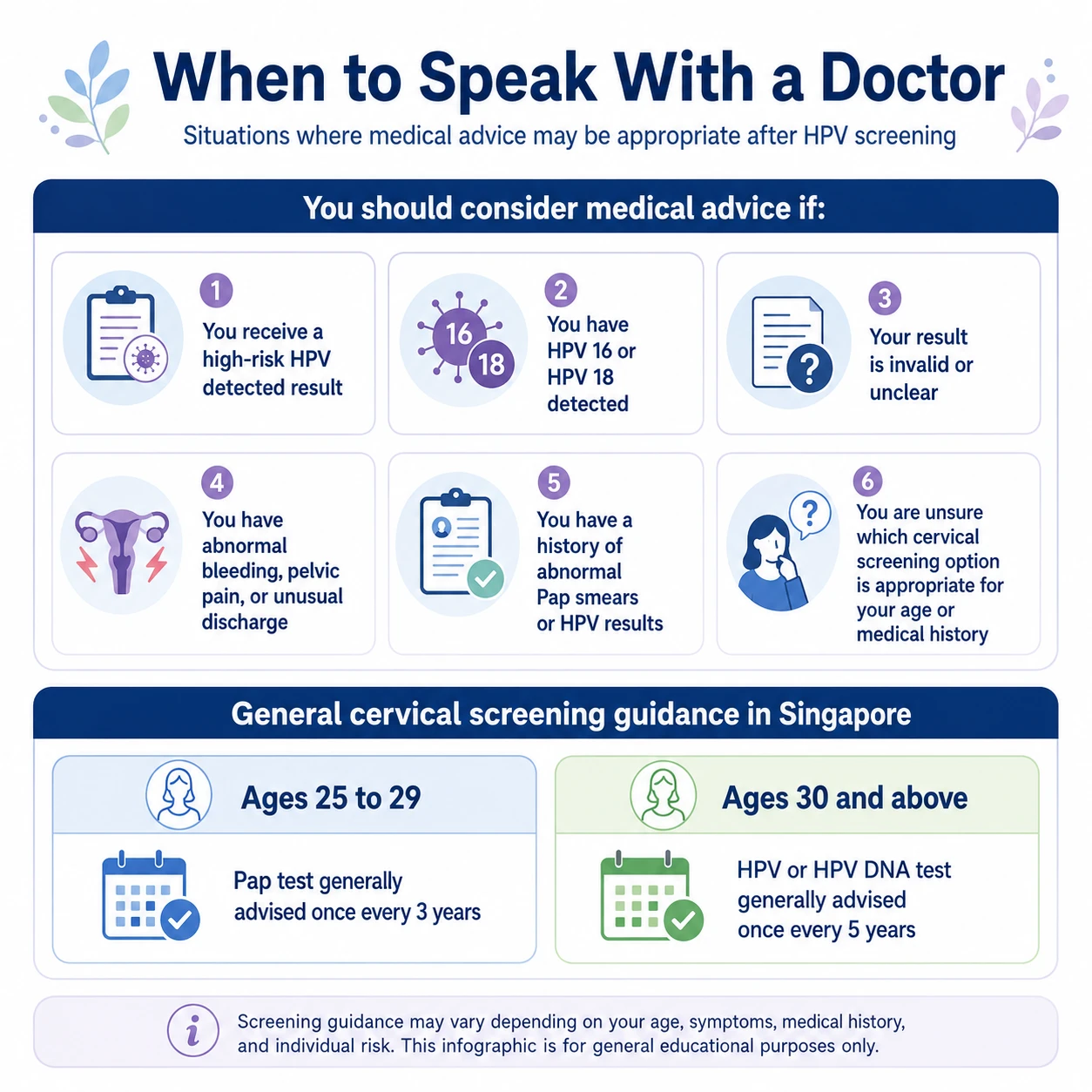
You should consider medical advice if:
- You receive a high-risk HPV detected result.
- You have HPV 16 or HPV 18 detected.
- Your result is invalid or unclear.
- You have abnormal bleeding, bleeding after sex, pelvic pain or unusual discharge.
- You have a history of abnormal Pap test or HPV results.
- You are unsure which cervical screening option is appropriate for your age or medical history.
In Singapore, cervical screening guidance may vary depending on age and individual risk. HealthHub states that women aged 25 to 29 are generally advised to do a Pap test once every three years, while women aged 30 and above are generally advised to do an HPV or HPV DNA test once every five years.
References
- HealthHub Singapore. Evidence-based recommendations on health screening tests.
- HealthHub Singapore. Preventing HPV infection: HPV vaccination.
- World Health Organization. Human papillomavirus and cancer.
- Camtech Health. At-Home HPV Test Kit for Singapore.
Disclaimer
This article provides general educational information and does not replace personalised medical advice, diagnosis or treatment from a qualified healthcare professional. Seek medical advice if you have symptoms, receive a positive, invalid or unclear result, or are unsure about the next step.
*Visuals are assisted by AI
Patient FAQ
1. Does a positive HPV test mean I have cervical cancer?
No. A positive HPV test means that HPV was detected, and the result should be reviewed based on the type detected and your clinical history. Many HPV infections clear naturally, but persistent high-risk HPV may require follow-up.
2. Can I use an at-home HPV test instead of visiting a clinic?
At-home HPV testing may be a convenient screening option for some users. However, it does not replace medical consultation when symptoms are present, when results are positive or unclear, or when you have a history of abnormal screening results.
3. How often should I do HPV testing in Singapore?
HealthHub states that women aged 30 and above who have ever had sex are generally advised to do an HPV or HPV DNA test once every five years. Women aged 25 to 29 are generally advised to do a Pap test once every three years. Individual advice may differ depending on your medical history.
4. What should I do if high-risk HPV is detected?
Book a consultation with a qualified healthcare professional. The next step may depend on the HPV type detected, your age, symptoms, previous screening results, and whether additional tests are needed.