When to Start Ovulation Testing: A Singapore Guide
By Stuart Chan
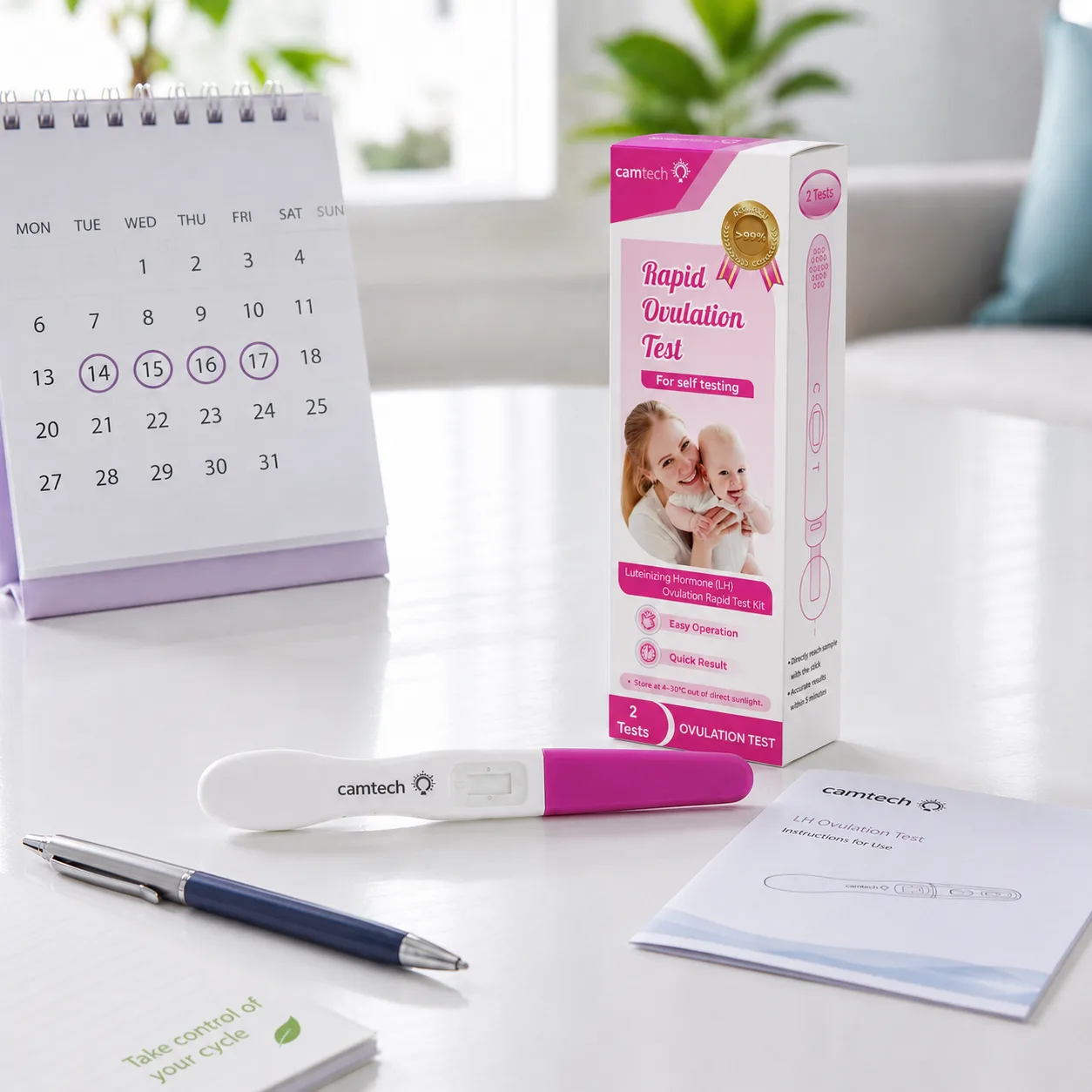
Ovulation timing can feel confusing, especially if your menstrual cycle does not follow the same pattern every month. For many people trying to understand their fertile window, the question is not only how to use an ovulation test, but when to start testing.
An LH ovulation test detects luteinising hormone in urine. According to Cleveland Clinic’s guide to ovulation predictor kits, LH levels rise before ovulation and ovulation strips are used to detect this hormone change. In Singapore, where work schedules, travel, sleep, and stress can affect routine tracking, knowing when to start testing may make ovulation tracking more practical.
For users who want to explore ovulation and reproductive health-related test options, Camtech Health’s Women’s Health test category includes home test options listed for Singapore users.
What Is an LH Ovulation Test?
LH stands for luteinising hormone. It is one of the hormones involved in reproductive function. MedlinePlus explains that LH plays an important role in fertility and may be measured in blood or urine, depending on the type of test being used.
A urine LH test does not confirm pregnancy and does not guarantee that ovulation has occurred. Instead, it helps detect a hormone pattern that may suggest ovulation is approaching. This makes it useful as part of menstrual cycle tracking, especially when used over several days.
When Does Ovulation Usually Happen?
Ovulation is the release of an egg from the ovary. The timing varies from person to person, but it often happens around two weeks before the next period. The Better Health Channel’s explanation of ovulation and fertility notes that pregnancy is possible in the days before ovulation and on the day of ovulation. This period is commonly called the fertile window.
However, it is important to remember that cycle length, stress, illness, sleep changes, travel, and hormonal conditions can affect timing. A single cycle may not represent your usual pattern.
When Should You Start Ovulation Testing?
A practical way to estimate your testing start day is to use your average menstrual cycle length. Cycle day 1 is the first day of full menstrual bleeding, not spotting. For a regular 28-day cycle, many users start testing around cycle day 10.
A Singapore fertility article by Thomson Medical explains that ovulation tests detect the LH rise in urine before ovulation. Because the LH surge may be brief, starting before your expected fertile window can reduce the chance of missing it.
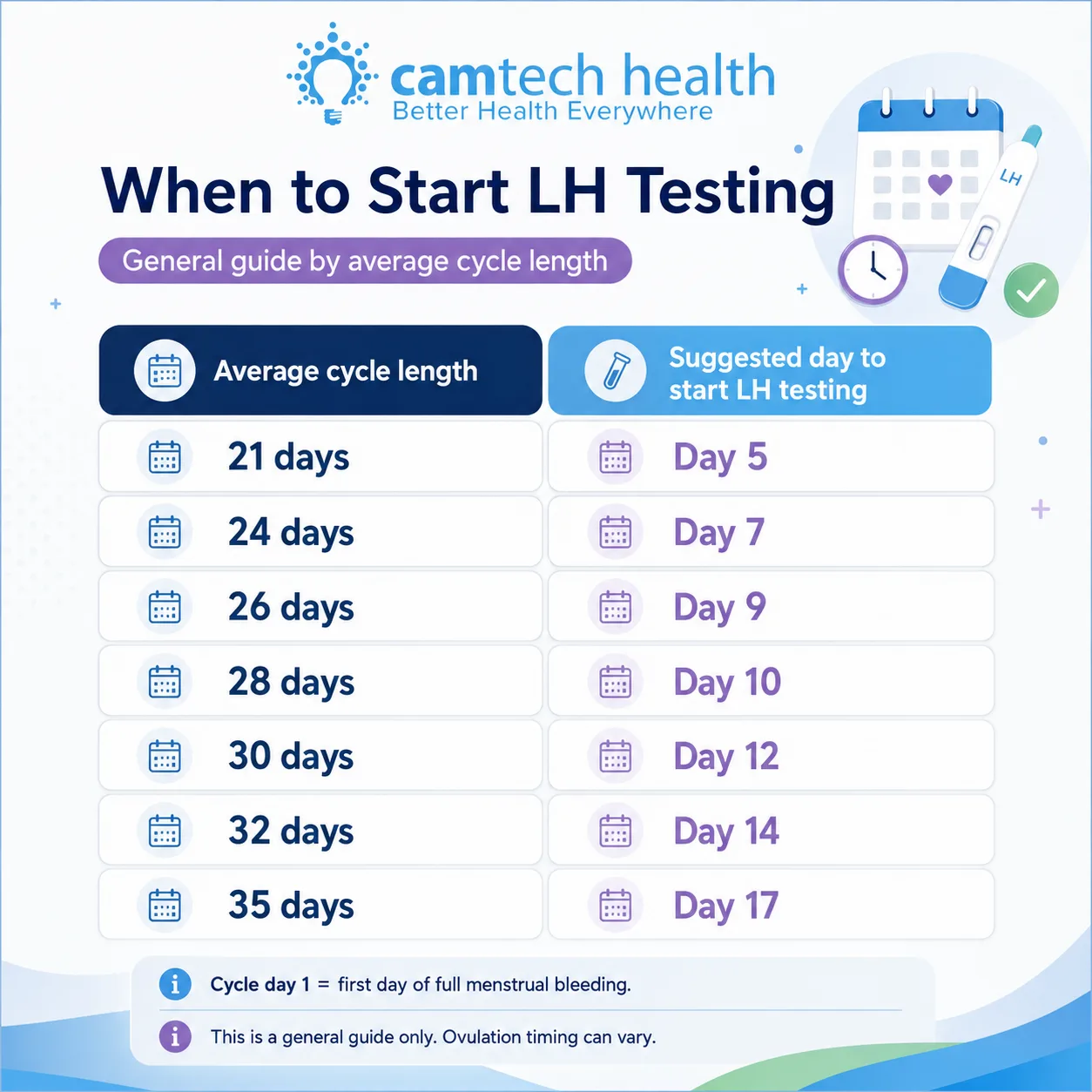
| Average cycle length | Suggested day to start LH testing |
|---|---|
| 21 days | Day 5 |
| 24 days | Day 7 |
| 26 days | Day 9 |
| 28 days | Day 10 |
| 30 days | Day 12 |
| 32 days | Day 14 |
| 35 days | Day 17 |
Note: This table is a general guide only. It may not apply well to irregular cycles, recent childbirth, recent contraceptive changes, or known hormonal conditions.
How Often Should You Test?
Many users begin with once-daily testing during the expected fertile window. Some may test twice daily when the test line begins to darken or when ovulation is expected soon, depending on the instructions provided with their test kit.
For more consistent tracking, test at around the same time each day, follow the stated urine collection and reading instructions, and avoid interpreting the test after the stated reading window. Recording the date, cycle day, and result can help you identify your pattern over several cycles.

What If Your Cycles Are Irregular?
If your cycle length changes often, it can be harder to choose a testing start day. In this situation, you may need to start earlier based on your shorter cycle length and continue testing for more days.
LH testing may also be harder to interpret if you have conditions that affect hormone patterns, such as polycystic ovary syndrome, very irregular periods, or absent periods. If your results are repeatedly unclear or do not match your cycle pattern, it may be useful to speak with a doctor.
Can You Use Other Ovulation Signs Together With LH Testing?
Yes. LH testing can be used together with menstrual cycle tracking, cervical mucus observation, and basal body temperature tracking. These methods provide different types of information.
LH testing may suggest that ovulation is approaching. Basal body temperature tracking usually shows a pattern after ovulation has already happened. Cervical mucus changes may provide another sign, but interpretation can vary between individuals.
Common LH Testing Mistakes to Avoid
Starting too late
If you start testing only when you think ovulation is already happening, you may miss the LH surge.
Testing at random times
Testing at very different times each day can make results harder to compare.
Reading the result too late
A result read outside the stated time window may not be reliable. Always follow the instructions provided with your test kit.
Assuming a positive LH test confirms pregnancy
LH tests are designed for ovulation tracking, not pregnancy confirmation. If pregnancy is suspected, use a pregnancy test and seek medical advice where appropriate.
When to Speak With a Doctor in Singapore
Consider speaking with a doctor if your periods are consistently irregular or absent, if you have persistent pelvic pain, abnormal bleeding, or unusual discharge, or if you have been trying to conceive for some time without success.
In Singapore, you may start with a GP, polyclinic, women’s health clinic, or fertility specialist depending on your symptoms, age, medical history, and how long you have been trying to conceive.

Key Takeaway
For many people with regular cycles, LH ovulation testing can begin a few days before the expected fertile window. For a 28-day cycle, day 10 is a practical starting point. If your cycles are shorter, longer, or irregular, adjust the start day accordingly and track over several cycles. LH testing can support ovulation tracking, but it should not be treated as a guarantee of ovulation, pregnancy, or fertility status.
Patient FAQ
1. When should I start ovulation testing if I have a 28-day cycle?
For a regular 28-day cycle, starting around cycle day 10 is a practical approach. Cycle day 1 is the first day of full menstrual bleeding. Continue testing until you detect an LH surge or until the expected fertile window has passed.
2. What time of day should I use an LH ovulation test?
Follow the instructions that come with your test kit. Many users test at a consistent time each day. Try not to change the timing too much, as this can make daily results harder to compare.
3. Does a positive LH test mean I will definitely ovulate?
No. A positive LH test suggests that your LH level has risen and ovulation may be approaching. It does not guarantee that ovulation will occur or that pregnancy will happen.
4. Should I see a doctor if I never get a positive LH test?
Consider speaking with a doctor if you repeatedly do not detect an LH surge, especially if your cycles are irregular, very long, absent, or if you have been trying to conceive for some time. A doctor can assess possible hormonal or reproductive factors.
Medical Disclaimer
This article is for general education only and does not replace consultation with a qualified doctor or healthcare professional. Ovulation timing, fertility factors, and menstrual cycle patterns can vary between individuals. If you have irregular periods, ongoing pelvic pain, repeated difficulty conceiving, or concerns about your reproductive health, seek personalised medical advice in Singapore. *Visuals are assisted by AI